Case Study
Rotwell Composting Service
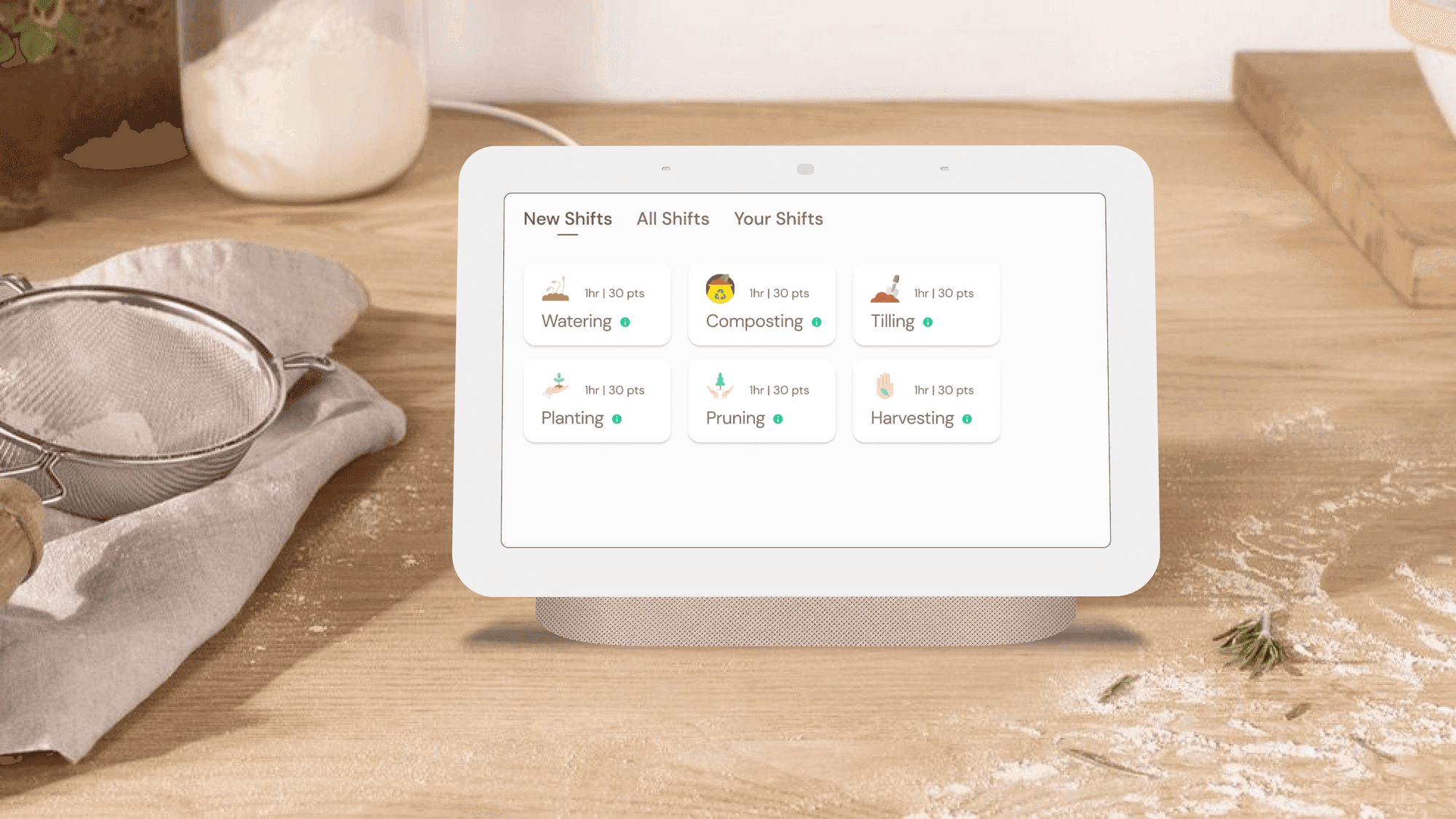
Urban composting service that partners with property developers to provide easy and rewarding compost solutions for Multiple Dwelling Units (MDUs). It installs and maintains infrastructure — compost chutes, community green spaces, produce pantries, and in-unit tablets — that enable renters to compost effectively and engage with their community. Composting within the context of a home.
- Team
- Graduate school project, 4 students
- My Role
- Concept, Design, Specification, Research, Prototype
- Timeline
- Sep – Dec 2023 (12 weeks)
- Output
- Service Blueprint and Prototype
About
Rotwell is a food-waste management service for multi-dwelling buildings — compost chutes, community gardens, produce pantries, and in-unit tablets that make composting feel easy and rewarding at home.As lead designer on a four-person grad team, I drove concept, design, and specification, and ran the user research that shaped our decisions. We shipped a prototype, service blueprint, and spec doc.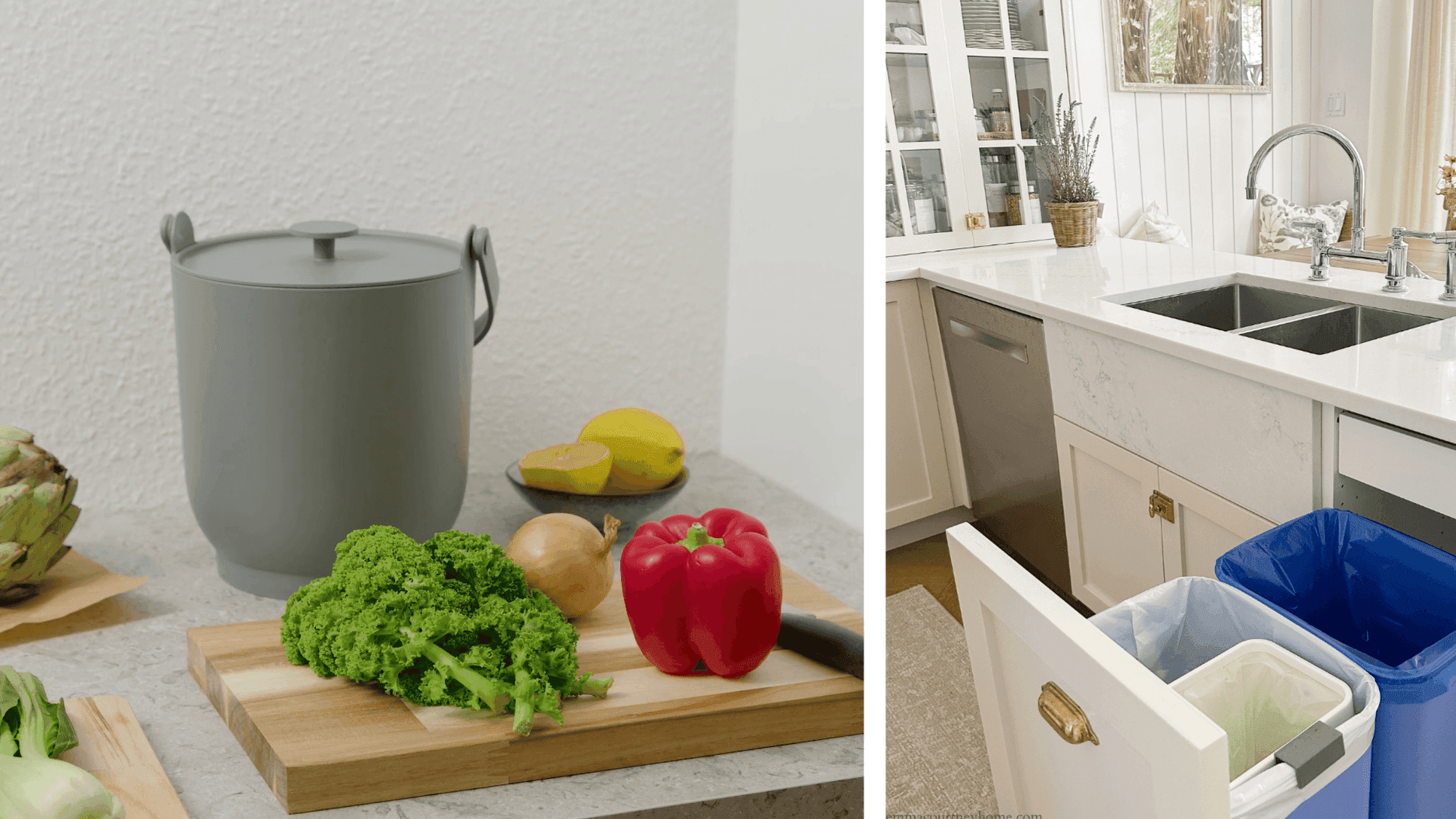
Core Features
The Service
How might we make composting more accessible for renters in MDUs through enhanced building infrastructure, reducing their skill and knowledge gaps, and fostering a sustainable community within the building? Compost ChutesIn-unit chutes route food scraps directly into building infrastructure — no bins, no trips to the curb.Community Green SpacesRooftop gardens and shared courtyards turn waste into produce residents can harvest and share.In-Unit TabletsA smart-home tablet guides composting decisions, schedules pickups, and surfaces community rewards.Goals
Make composting infrastructure in MDUs more accessible.Increase individual knowledge of composting practices.Ease the individual burden by fostering community-based composting in MDUs.Design Principles
01EncourageGreater adoption of sustainable practices.02MinimizeThe physical and cognitive load of composting.03ProvideOngoing support.04CreateA sense of community through engagement with green space.05ClarifyThe tangible impact of composting.Generative Research
Why does composting matter to us?
Inaction on composting contributes significantly to climate change. Composting diverts our organic waste from landfills, which lowers greenhouse emissions, making it an essential practice for a more sustainable future. Soil is the foundation of agriculture, and compost-enriched soil is vital for food production.
20%Residential buildings account for 20% of US greenhouse gas emissions.67%While 72% of Americans don't compost their food waste, 67% of these non-composters would be willing to if it were more convenient in their community.50%Individual food waste has increased significantly — American consumers waste 50% more on average today than in 1970.Given inefficient home waste management's significant contribution to the global climate crisis, we are aiming to explore methods for streamlining effective waste practices.
Definitions
🌱 CompostingTurning food scraps and organic material into fertilizer. Think recycling — leftover food becomes compost soil that grows more food, on repeat.🏢 MDUMulti-dwelling unit — separate housing units sharing one building. Apartments, duplexes, mixed-use properties.🌳 Community Green SpacesPlots and gardens maintained by a collective. We imagined an MDU fitted with rooftop greenhouses and shared planters, primed to grow produce from compost.Stakeholders
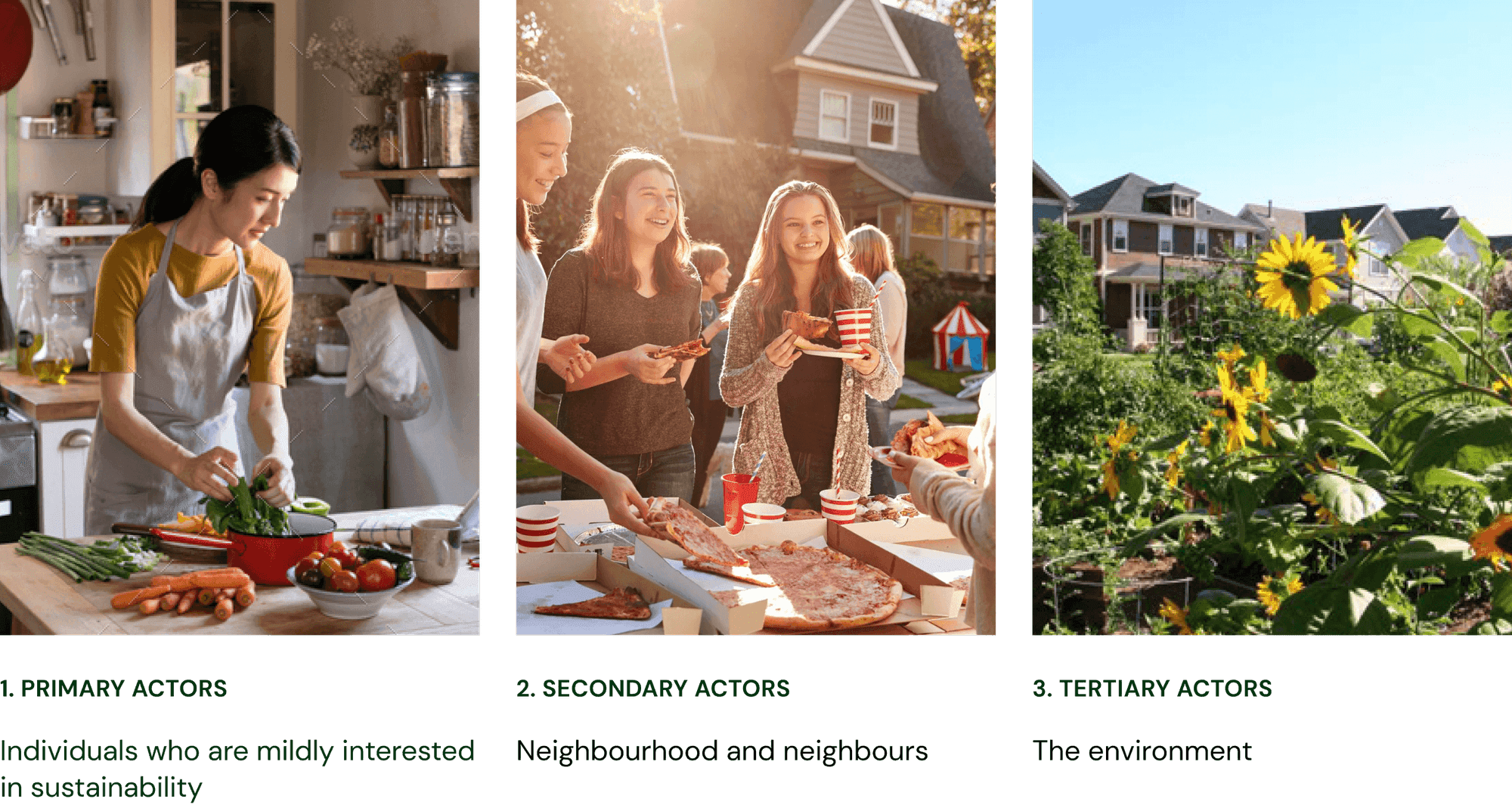
Our initial assumptions came from our own experiences composting in Seattle — buildings lack infrastructure and space to facilitate composting. We created a stakeholder map to better understand who has a stake in our problem space.
Findings
Contextual Inquiry
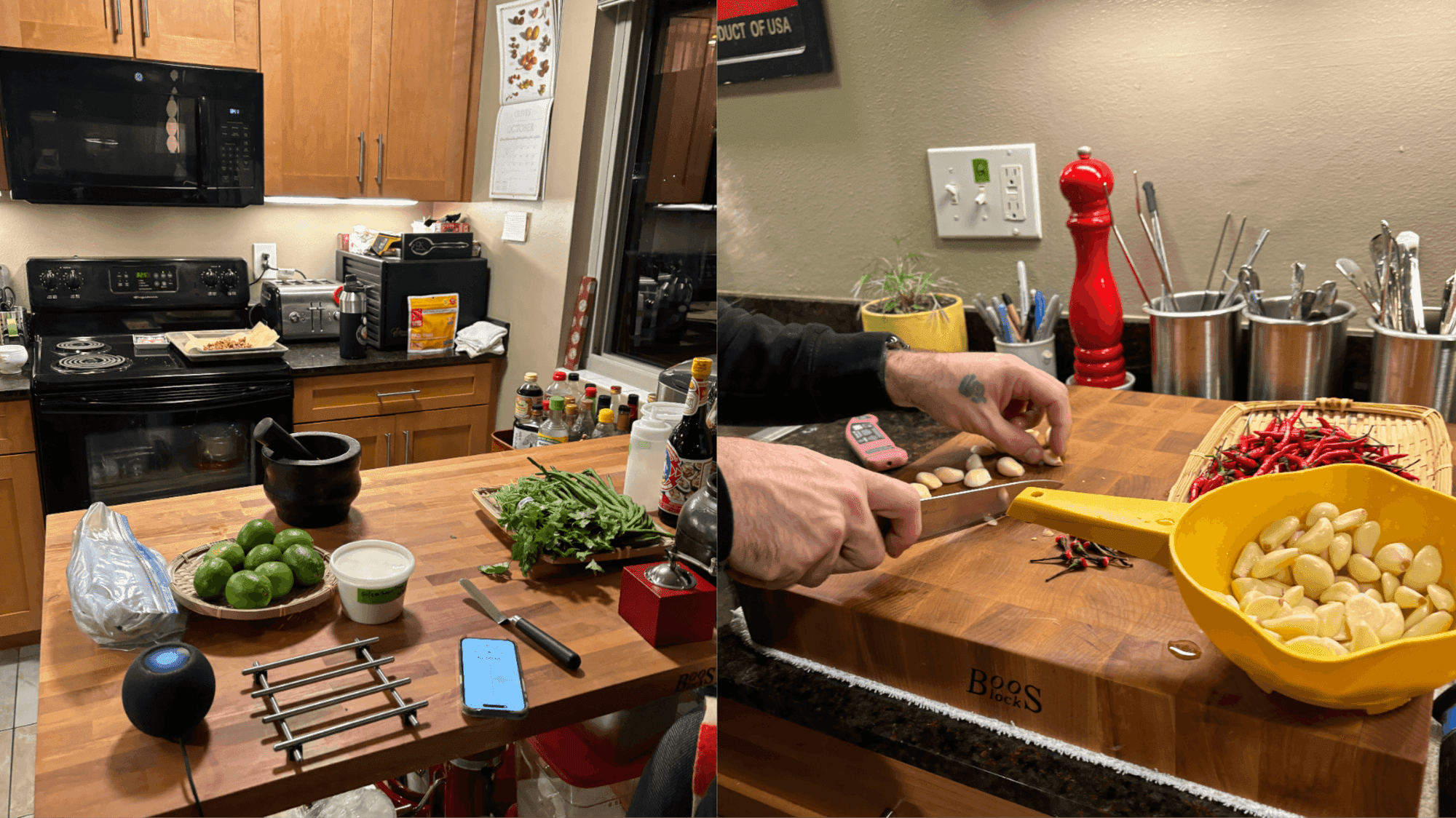
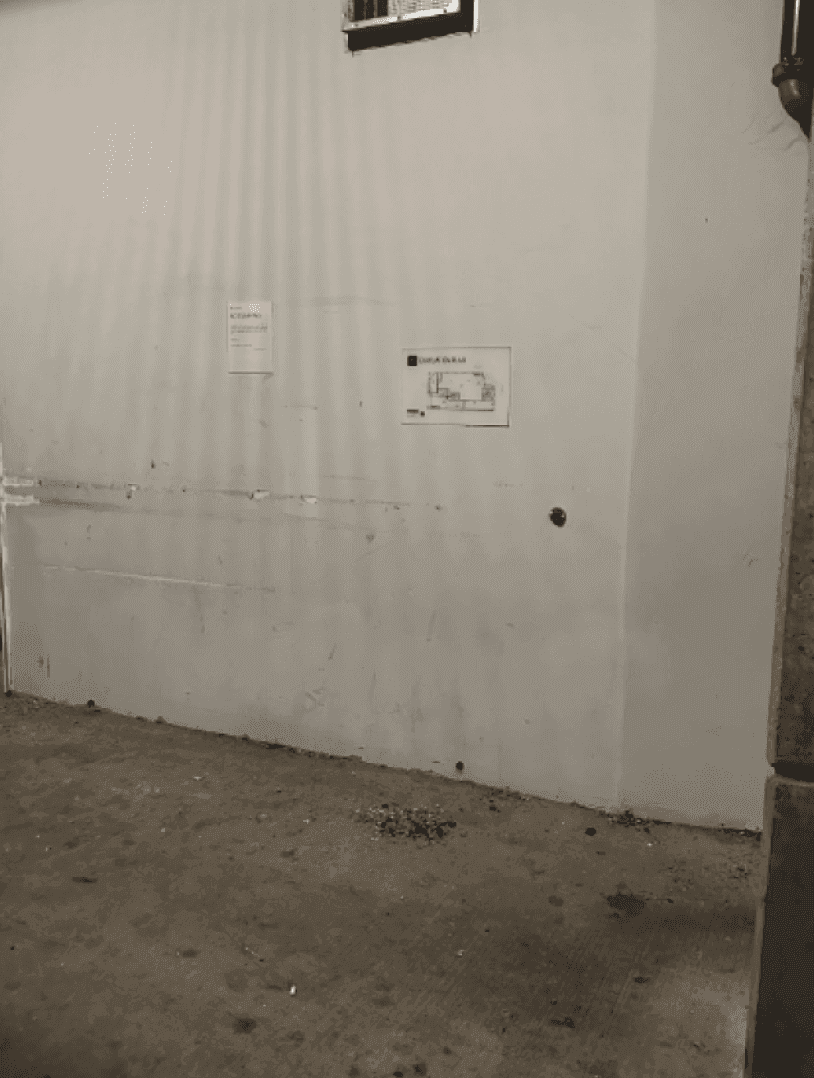
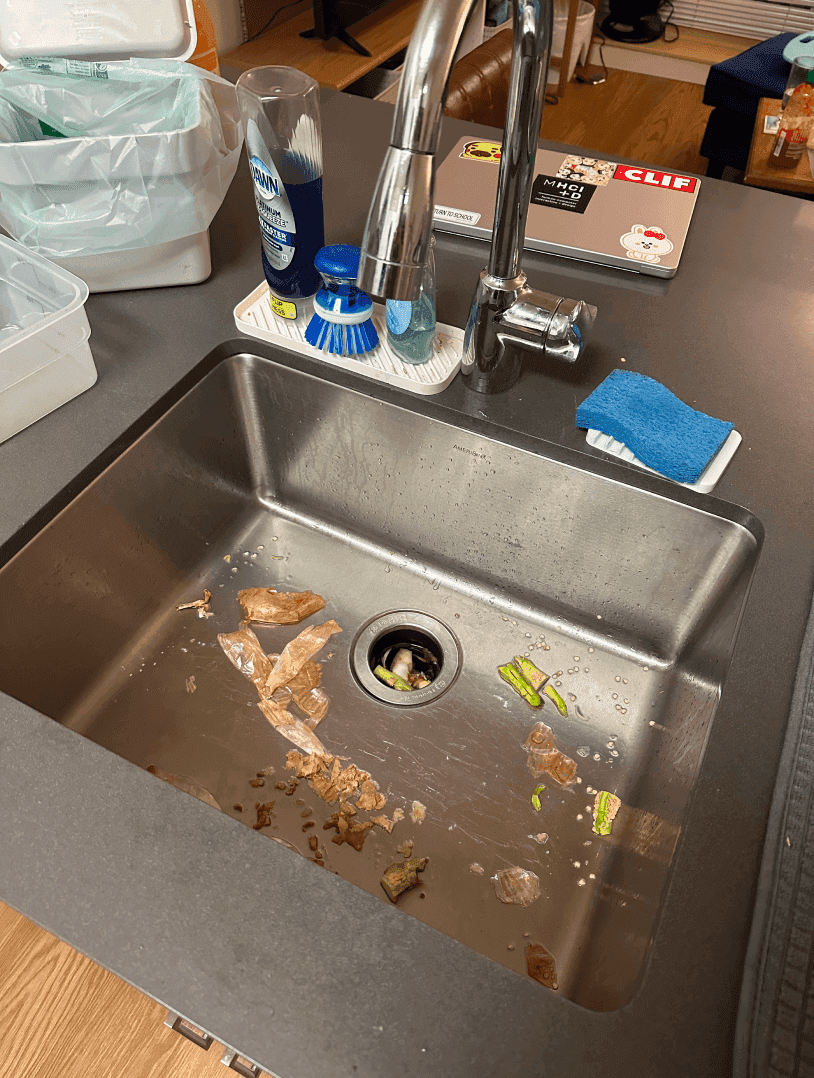
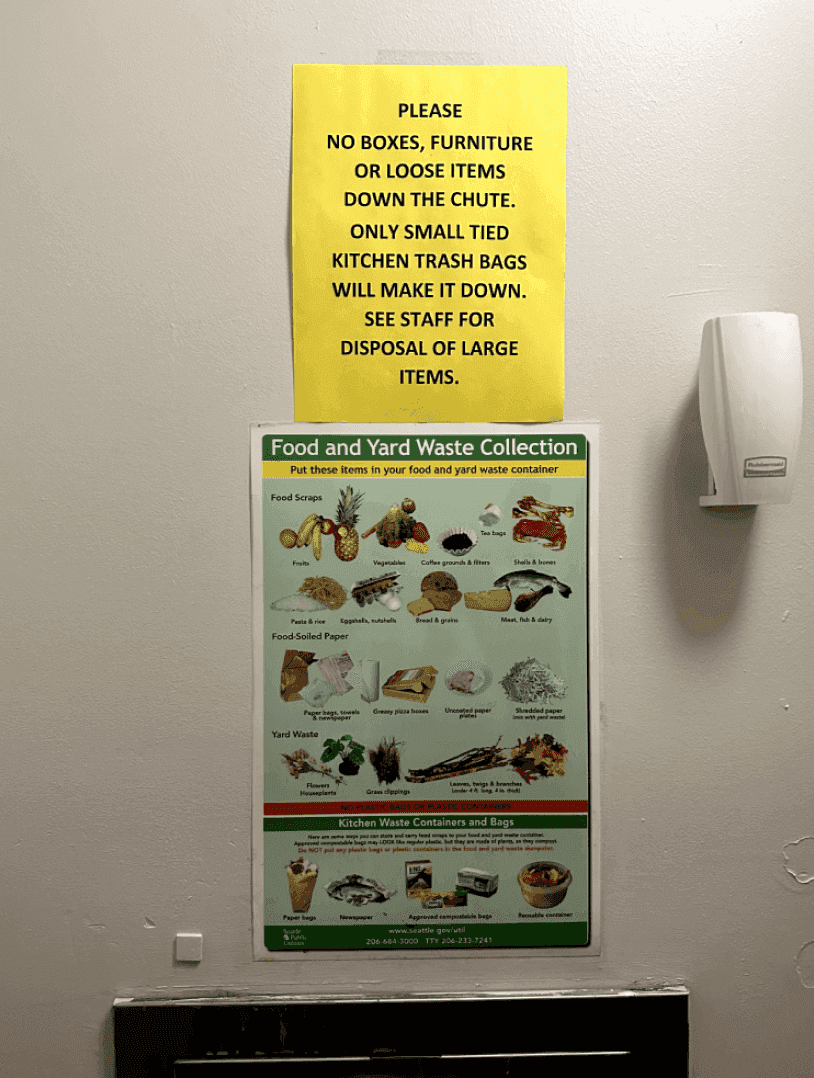
To help reveal unconscious data, observe behaviour at home and explore the physical environment in which people's everyday process toward creating and disposing of compostables takes place. We conducted contextual inquiry interviews with 4 participants who live in the greater Seattle area to understand how people manage food waste and what barriers exist for adopting sustainable practices.
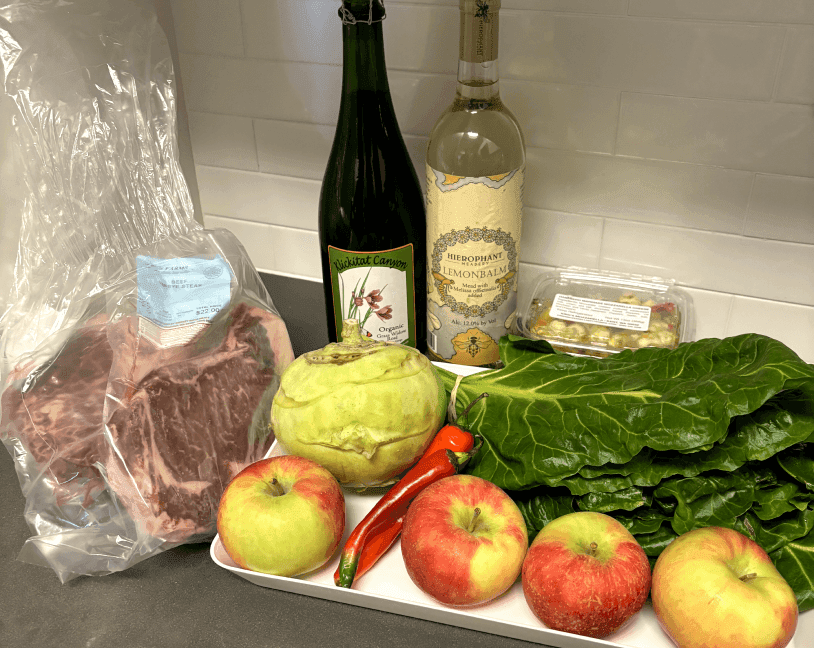 Ingredients prep
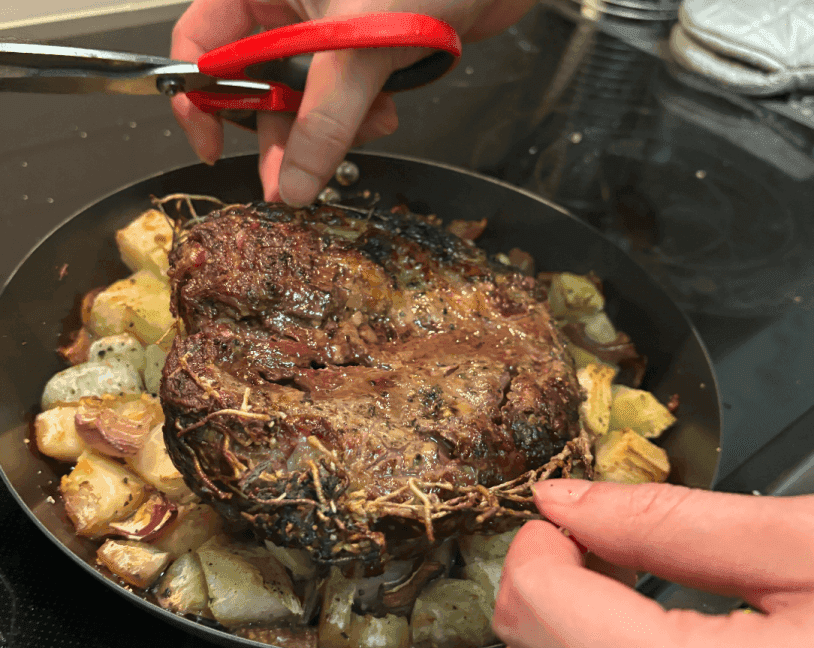 Cooking process
 Creation of food waste
 Lack of InfrastructureGap in Knowledge & SkillsOveremphasis on Individual Responsibility
Ideation
Brainstorming
Starting with our refined design challenge, each team member brainstormed 30 unique ideas — yielding 120 potential solutions across a wide spectrum. We organized these into themes, sorted through to identify those that best resonated with our design principles, and after discussion, dot voting and affinity mapping, narrowed down our choices.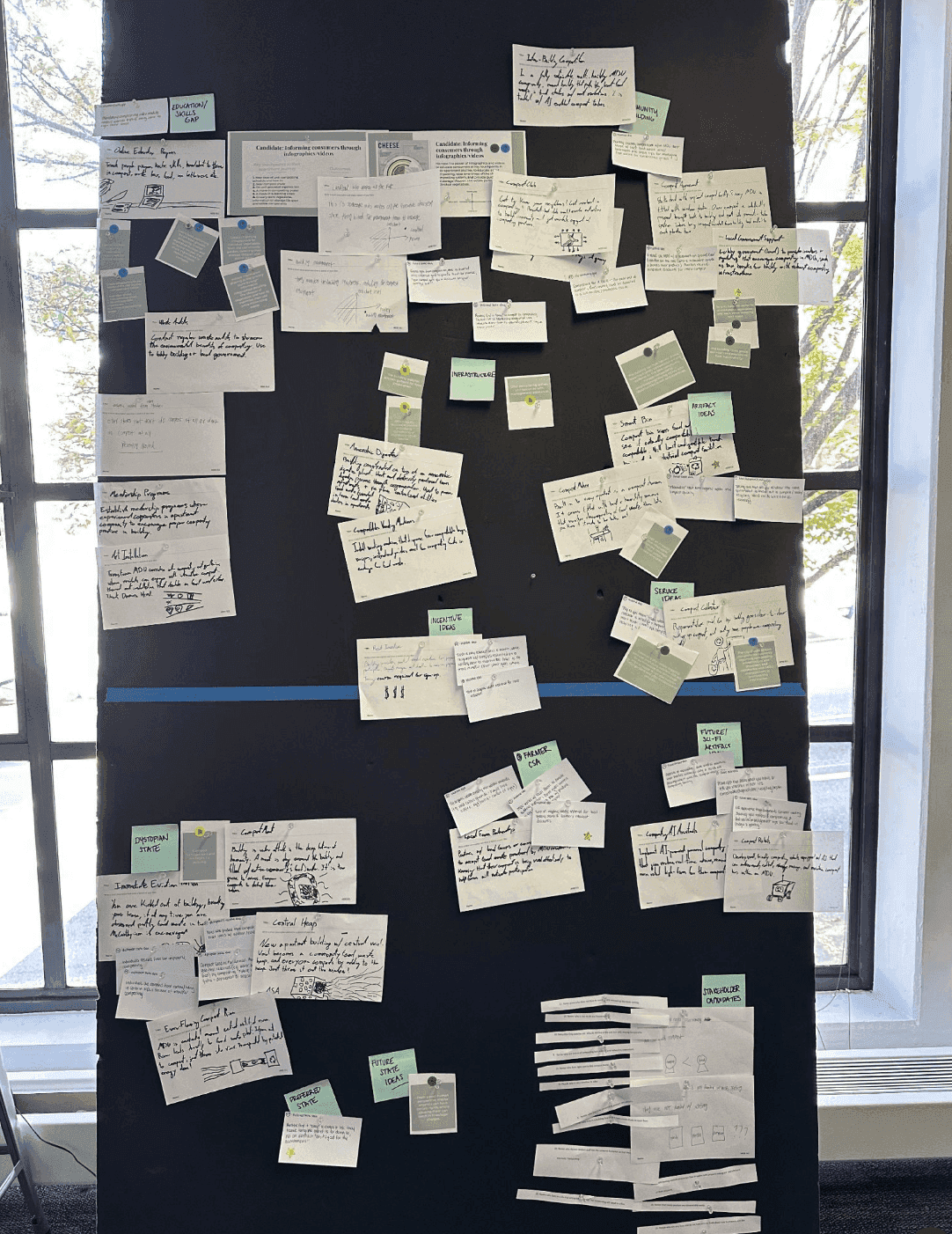
The Verdant
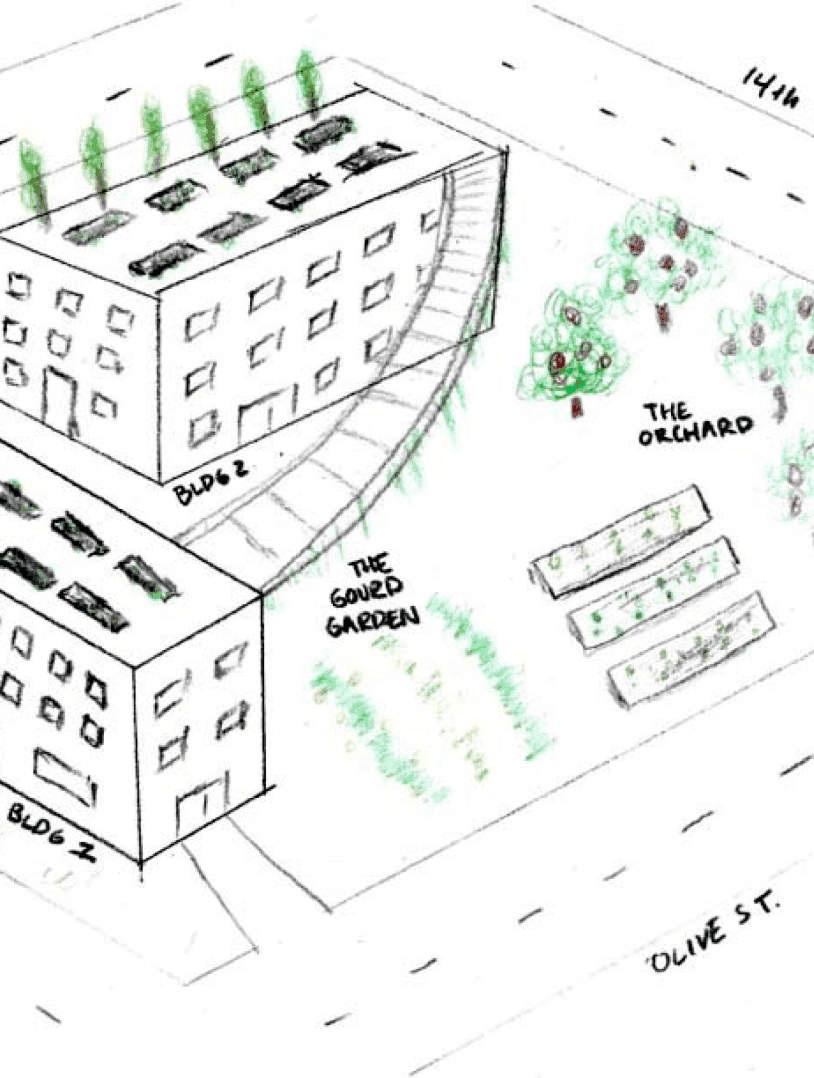
The year is 2043. The city is Seattle, Washington. Imagine a city block in Capitol Hill with two tall residential buildings, each with 100 apartment units. These buildings sit in an L-shape, with garden rooftops connected by a curved bridge lush with hanging greenery. The bridge overlooks a courtyard filled with more garden boxes and fruiting trees; all bursting with produce sustained by residents' compost.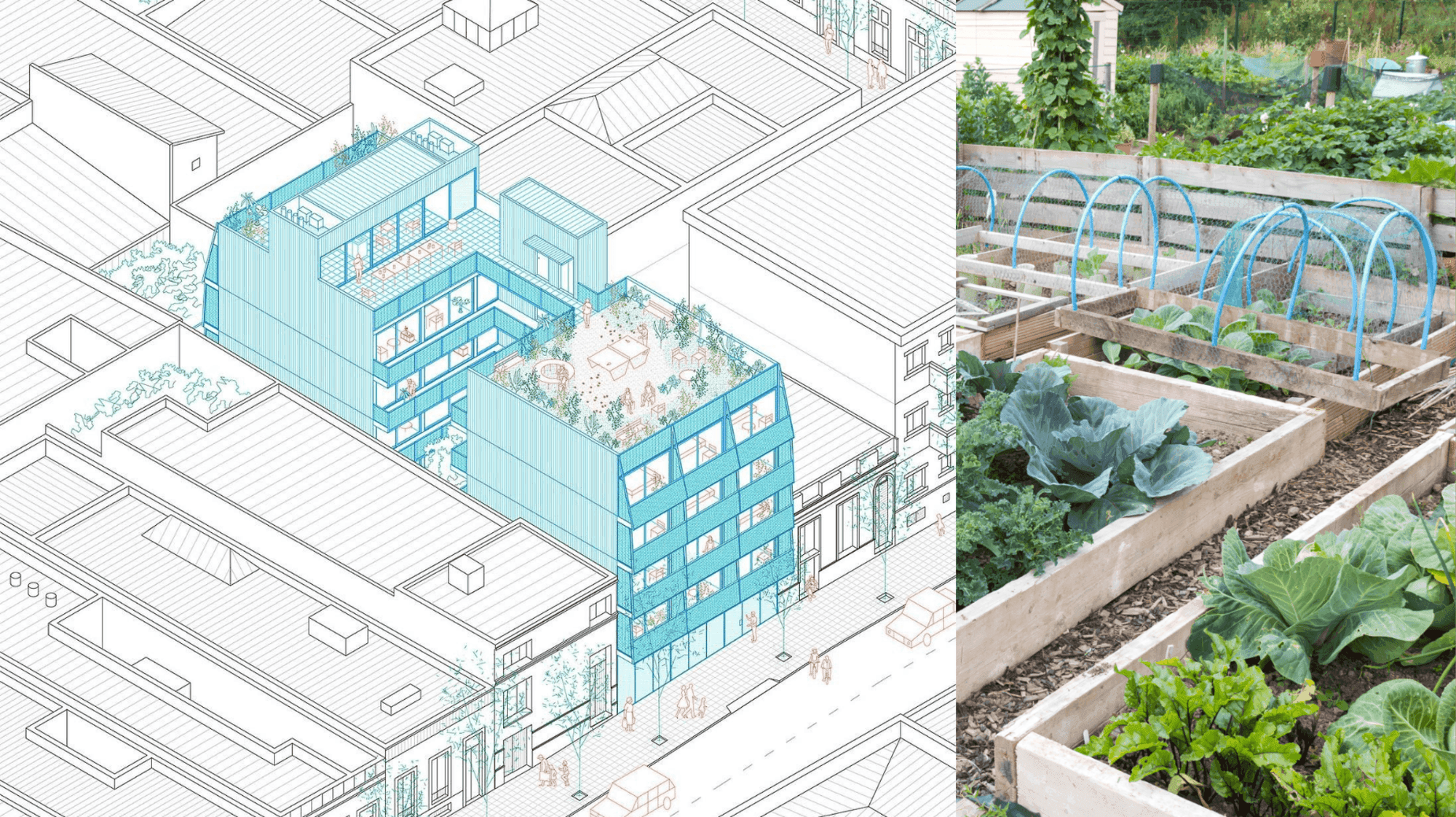
This is The Verdant. This MDU building was conceived in 2023 to be one of the first community-based, compost-centric residential buildings to further Seattle's Zero Waste vision.
Downselection
By situating ideas across short- and long-term horizons and individual versus community impact, we evaluated each concept through the lenses of feasibility, effort, and systemic value. This approach enabled us to narrow our focus to solutions that could deliver near-term impact while laying the groundwork for future change.
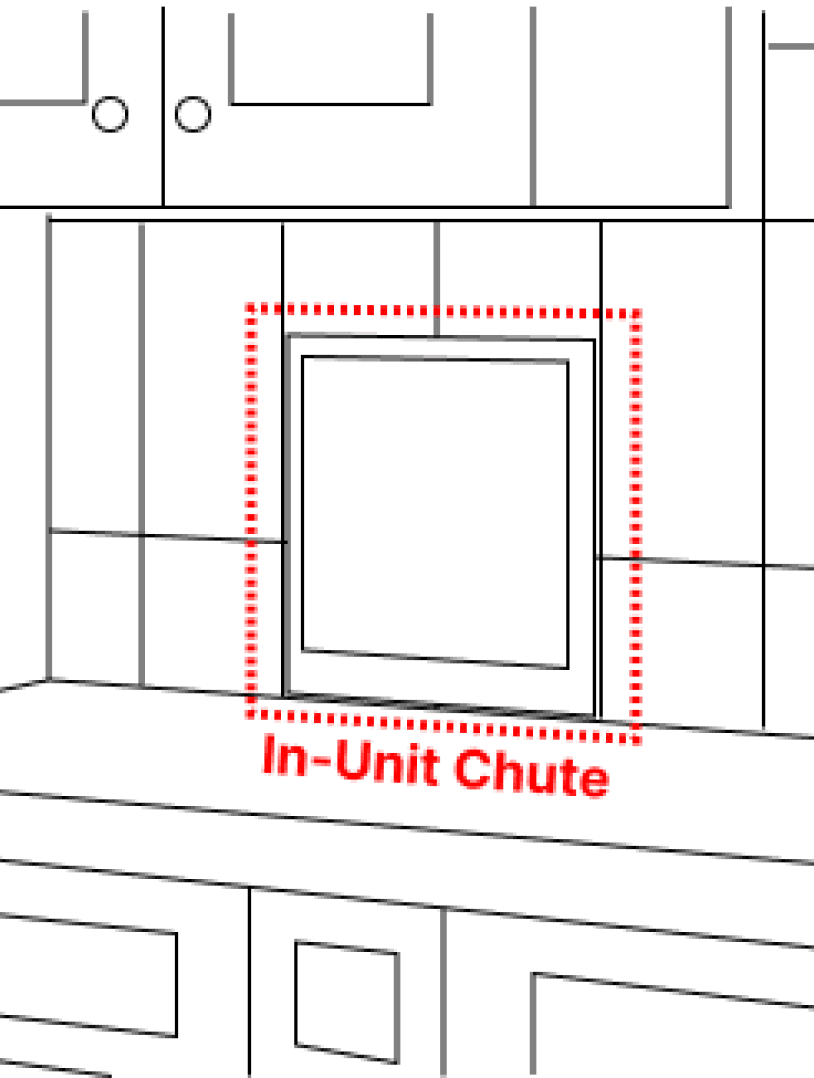 1. Chute in each unit — Achieved consensus among stakeholders on final design iterations.
 2. Community garden — Conducted extensive testing to validate the effectiveness of energy-saving features.
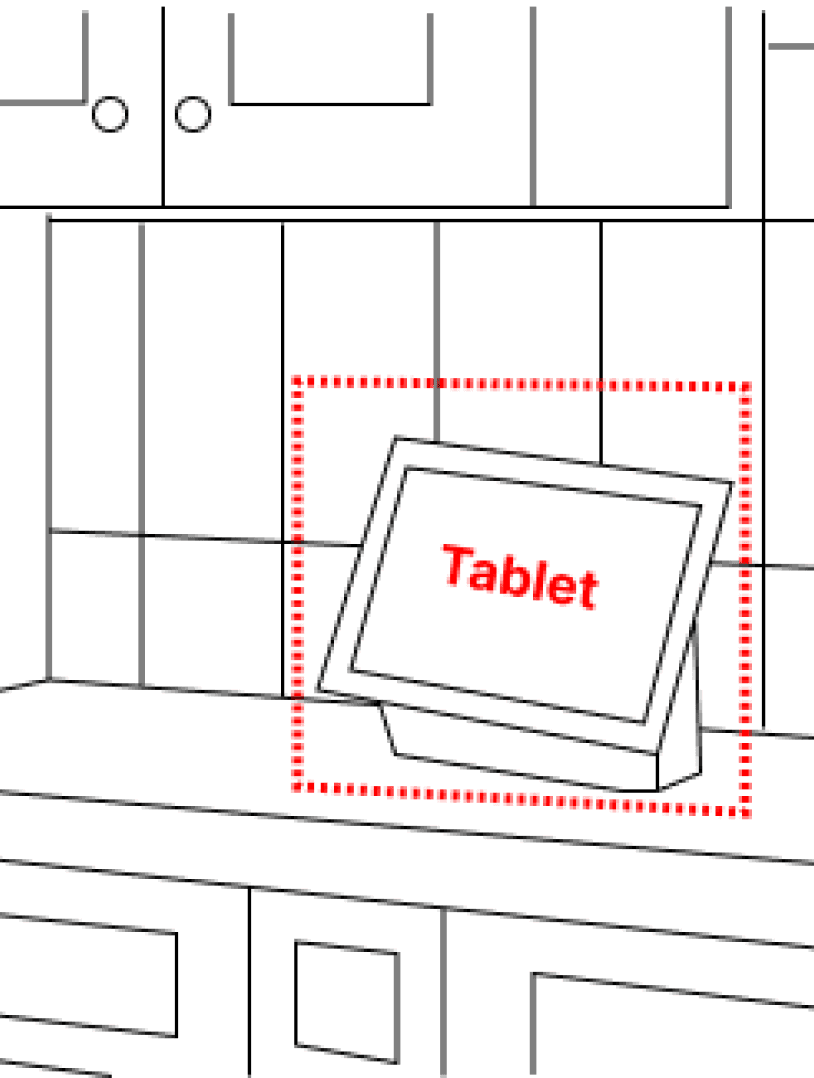 3. Smart home tablet — Finalized logistics and distribution channels to ensure seamless product rollout.
Scenario
The multi-dwelling unit provides a community garden that incorporates a rooftop greenhouse and raised beds, providing tenants with free, freshly harvested vegetables. The building manages residents' organic waste through in-condo facilities, including organic chutes and worm bins. It produces nutrient-rich soil for the garden and educates tenants about harvests, storage, and edible components. Composting tools — bins and refills — are supplied to support waste management. Excess compostables are given to partnering facilities for processing.
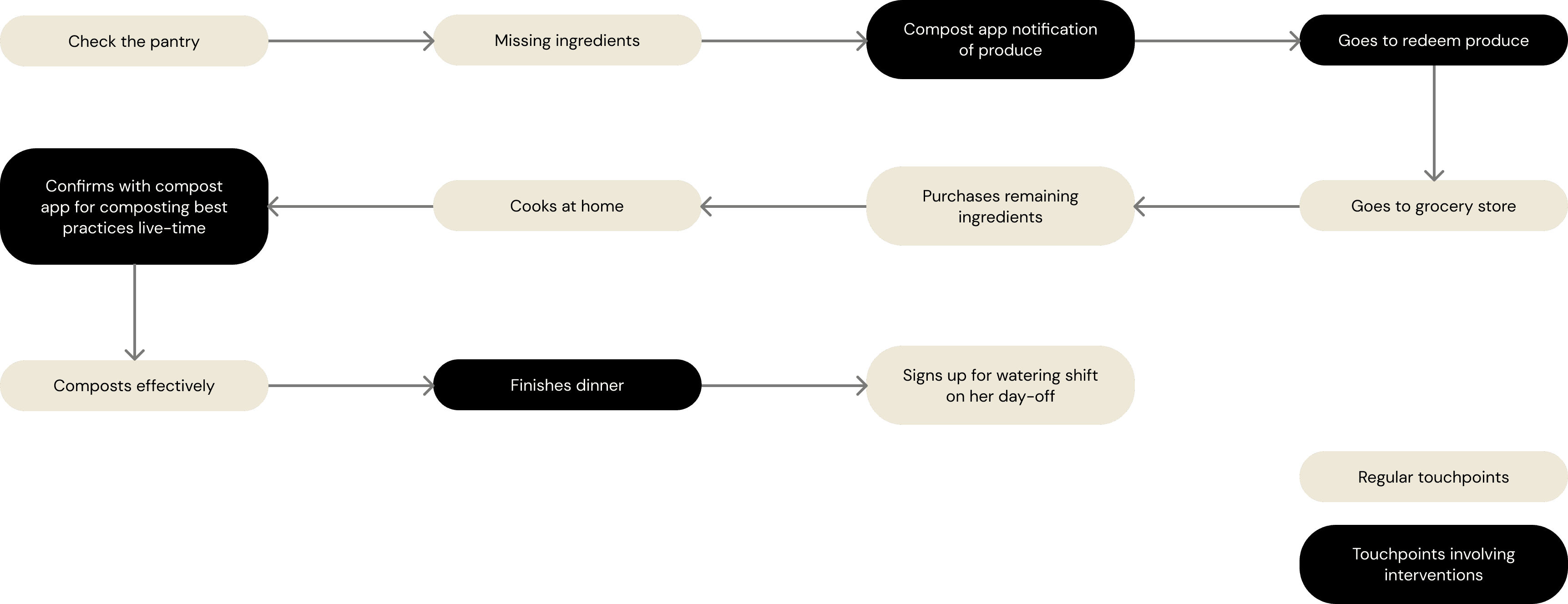
Service Blueprint
Mapping using sticky notes, step by step what a renter is going through when they compost. A good depiction of where the interactions encounter our Rotwell tablet.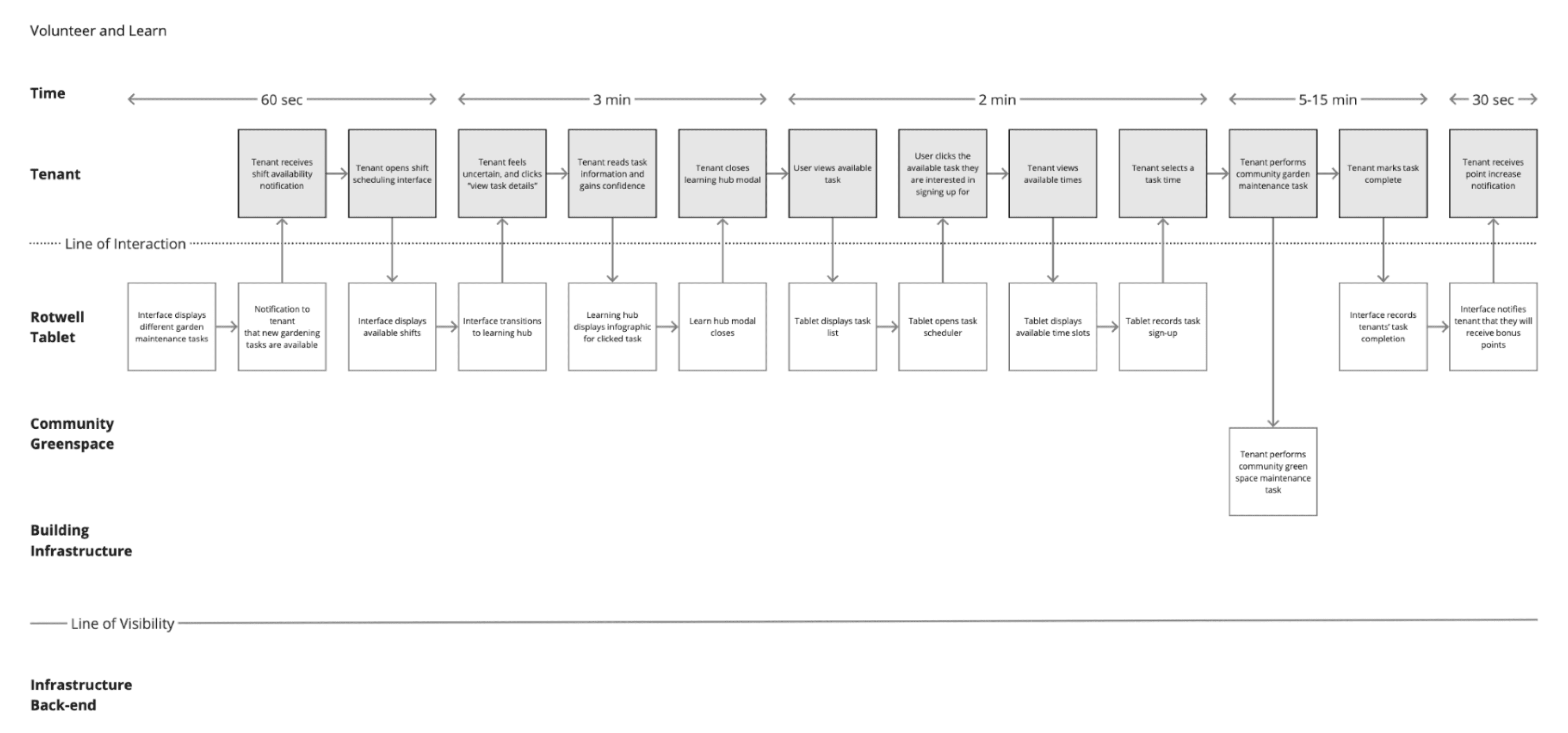
Rapid Iterative Testing and Evaluation
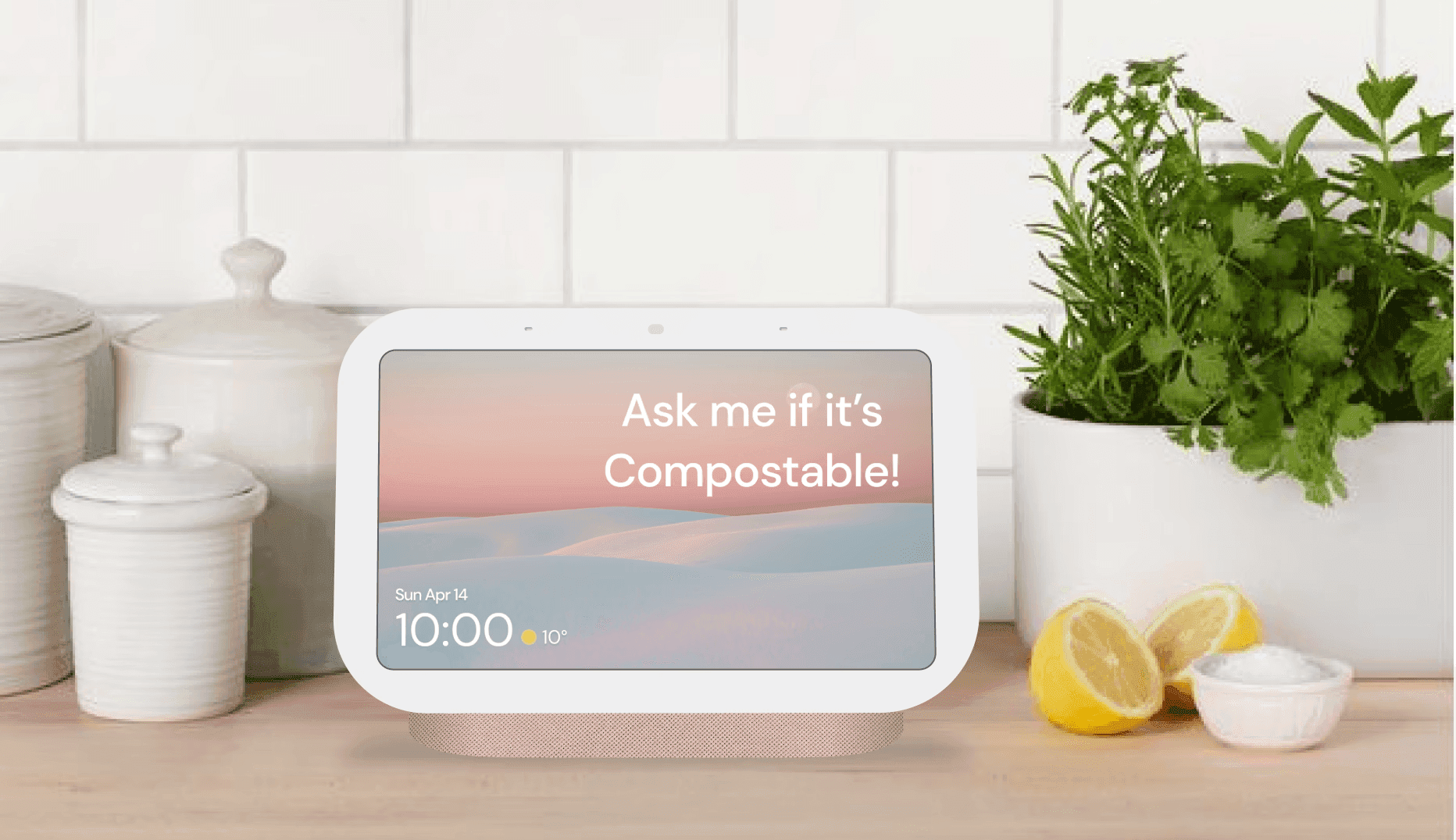
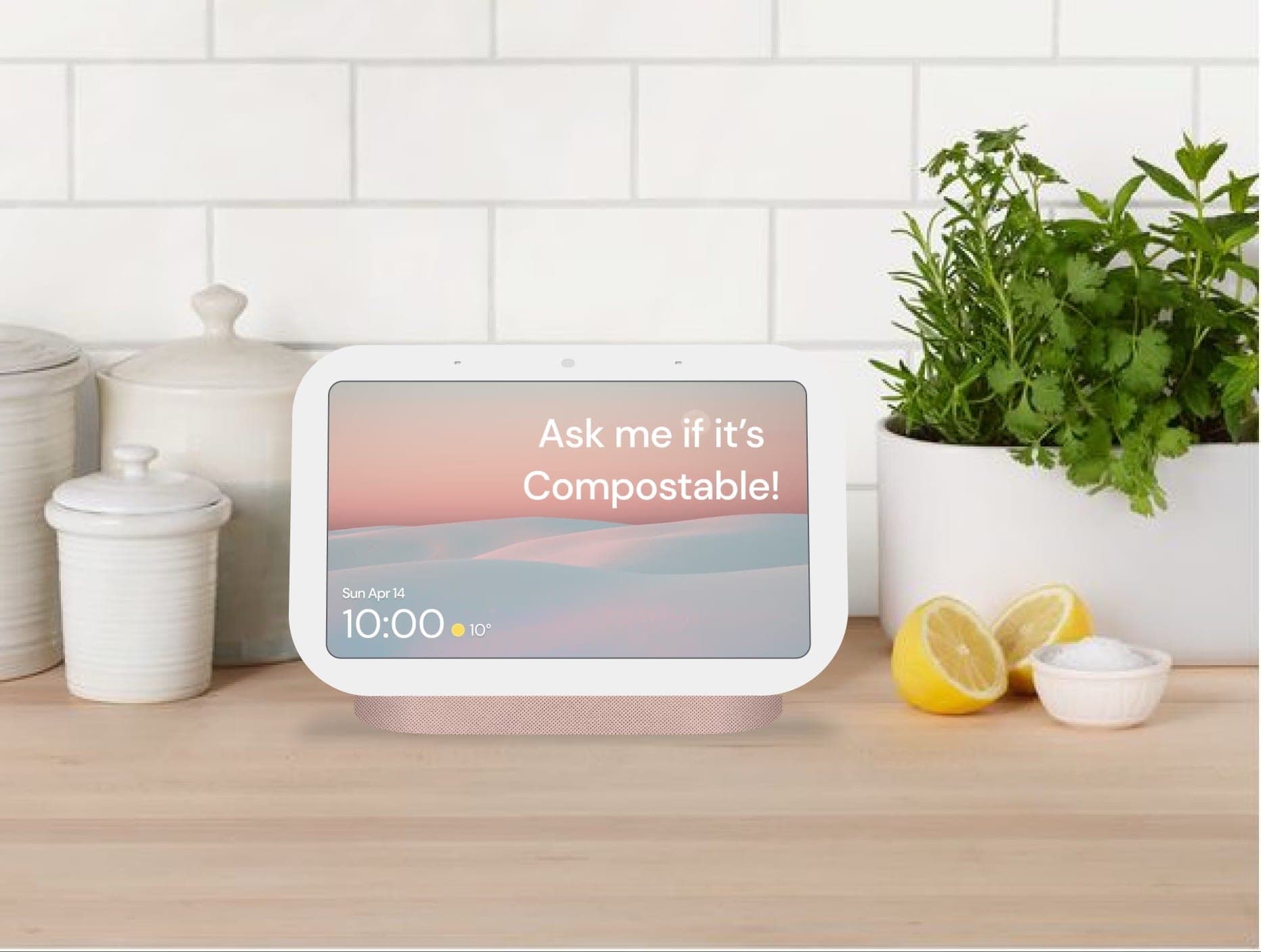
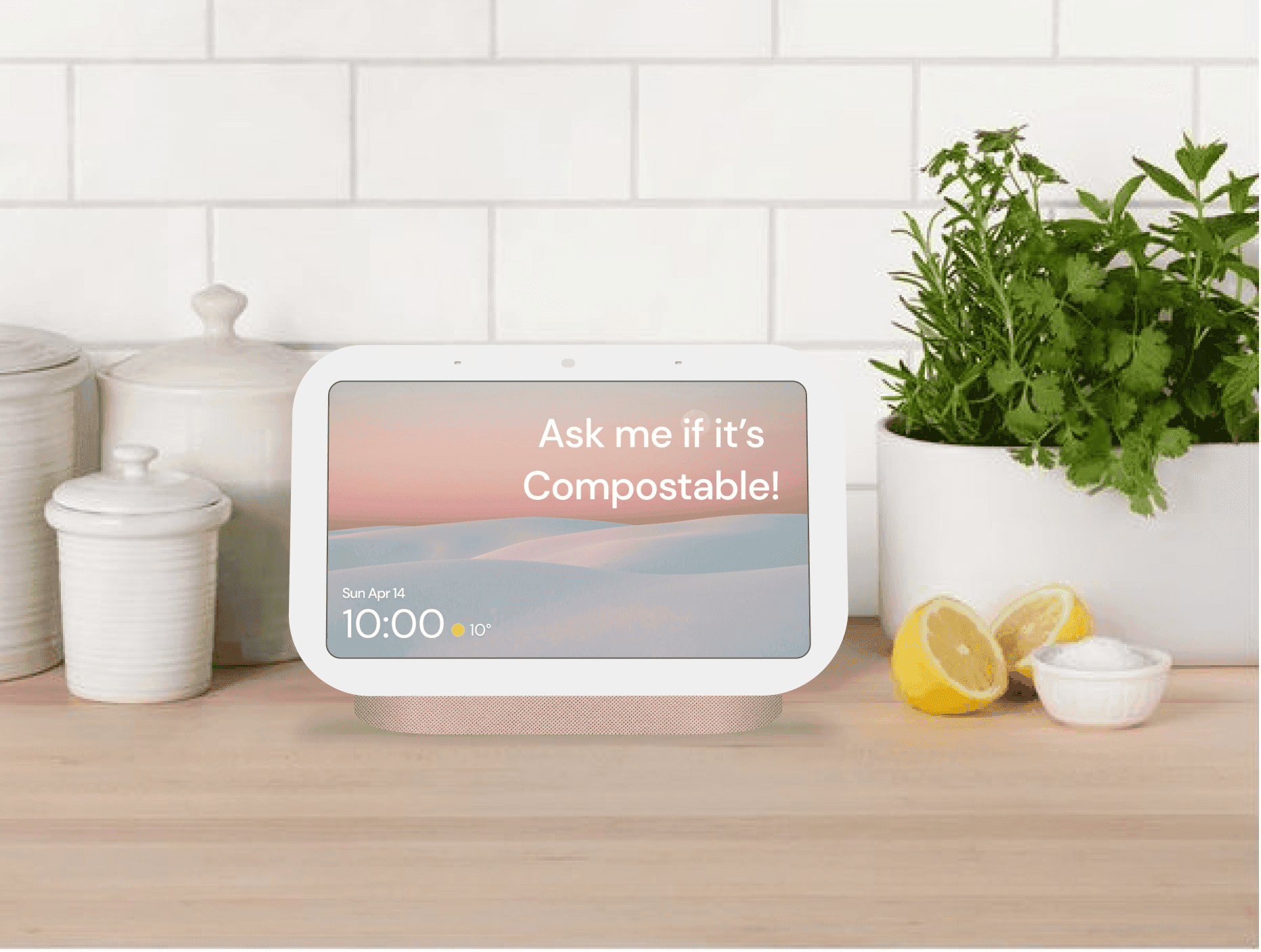
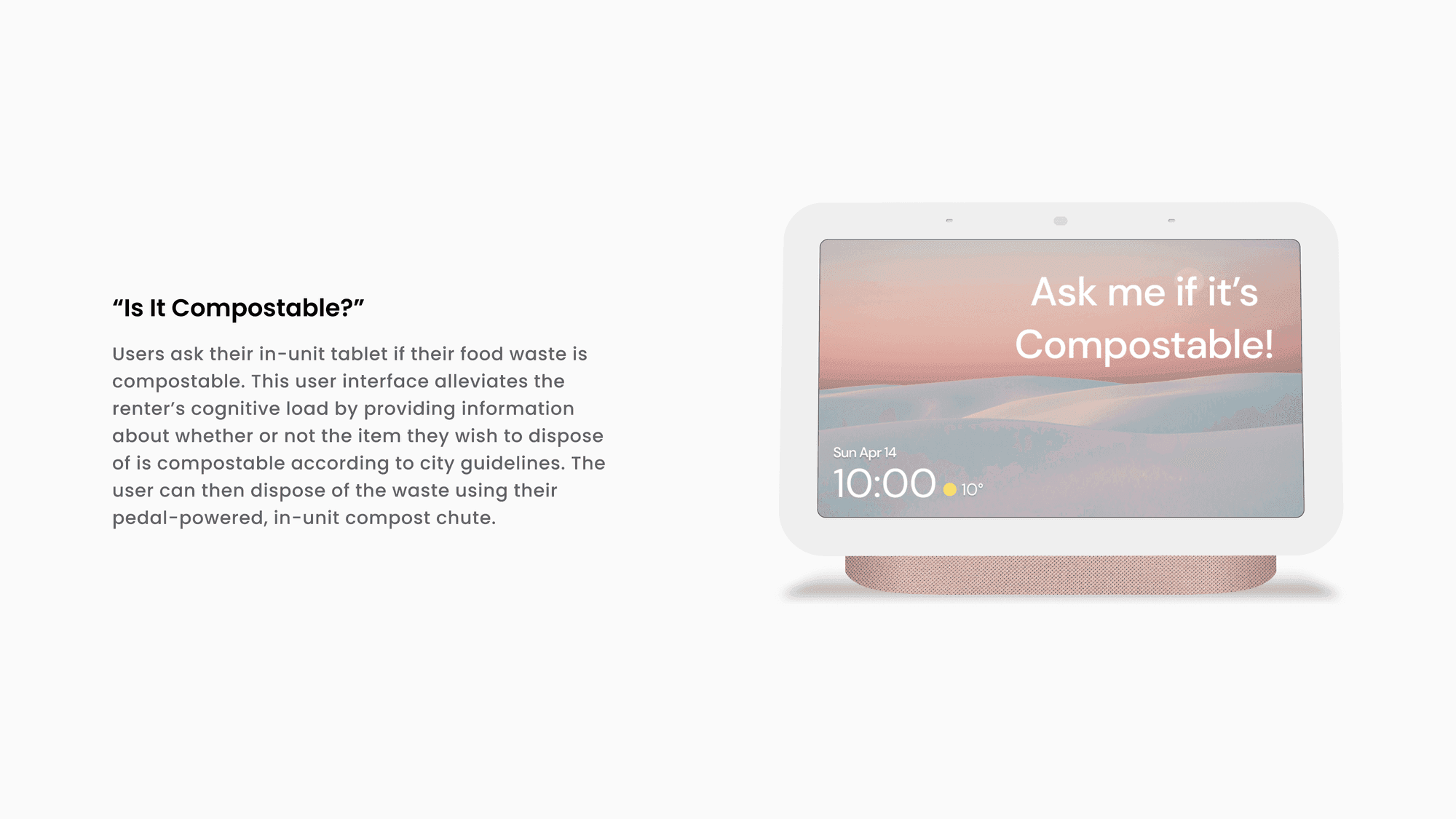
We identified the key pathways necessary to showcase what Rotwell can do:- Ask Rotwell — is it compostable?
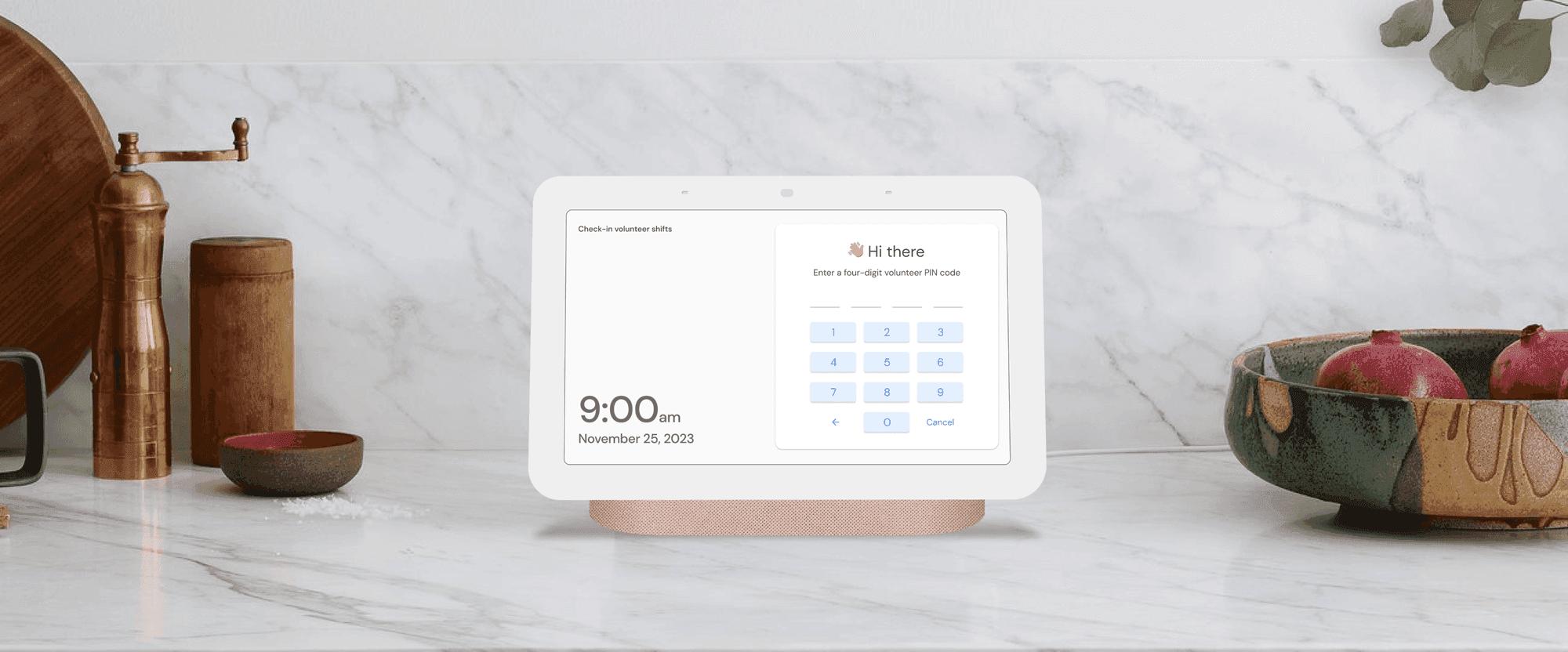
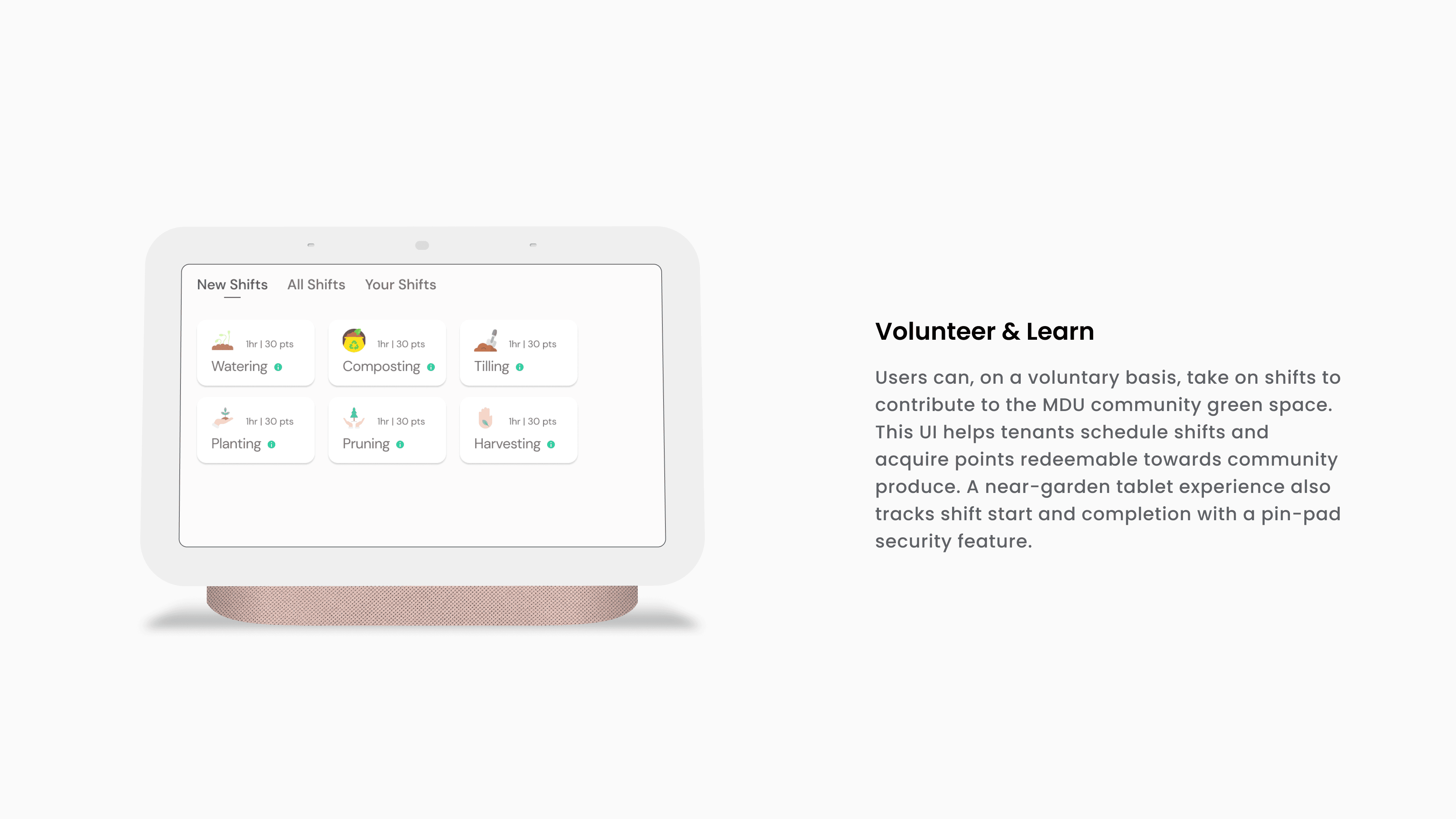
- Shift sign-up
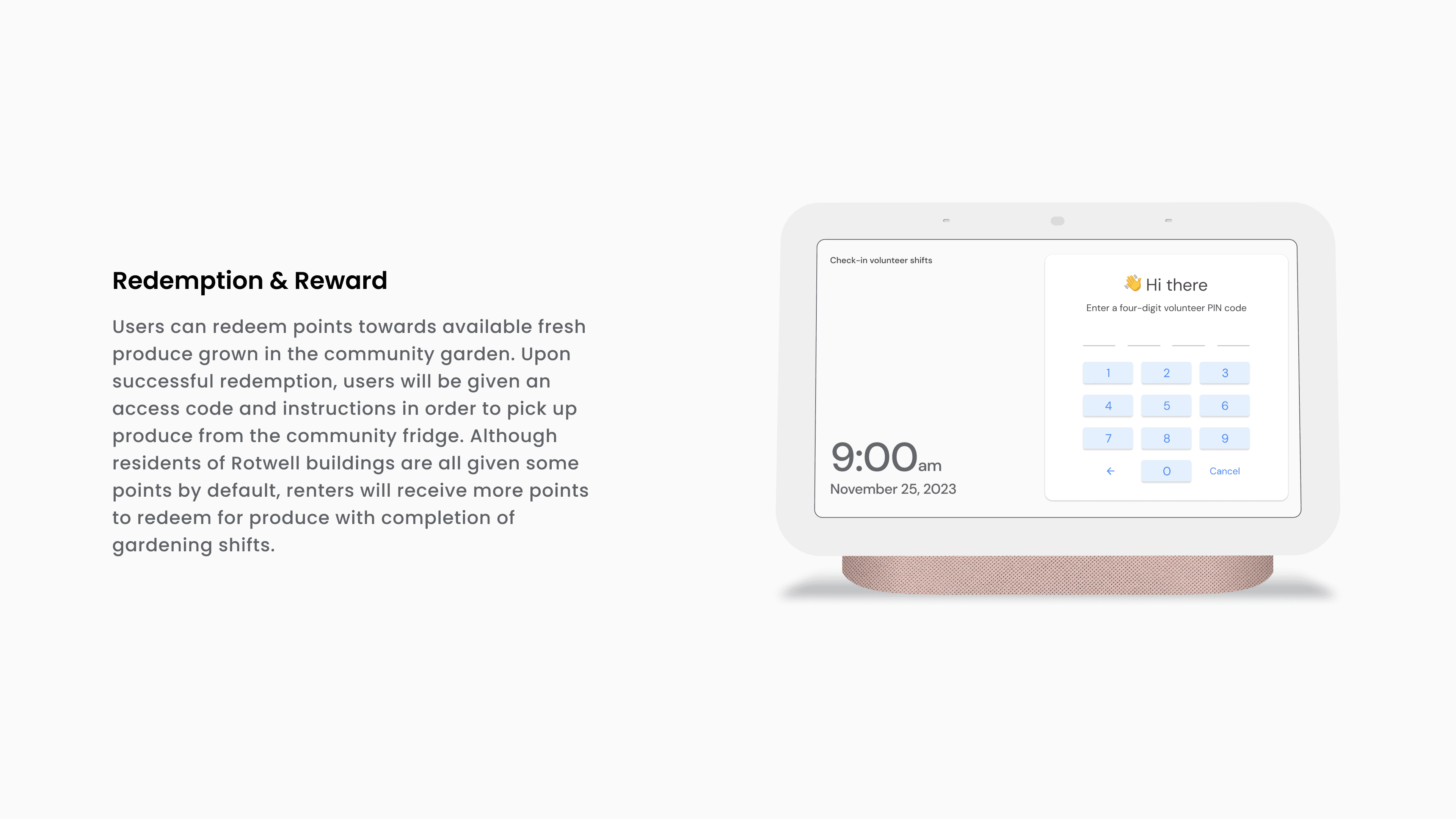
- Redeem produce
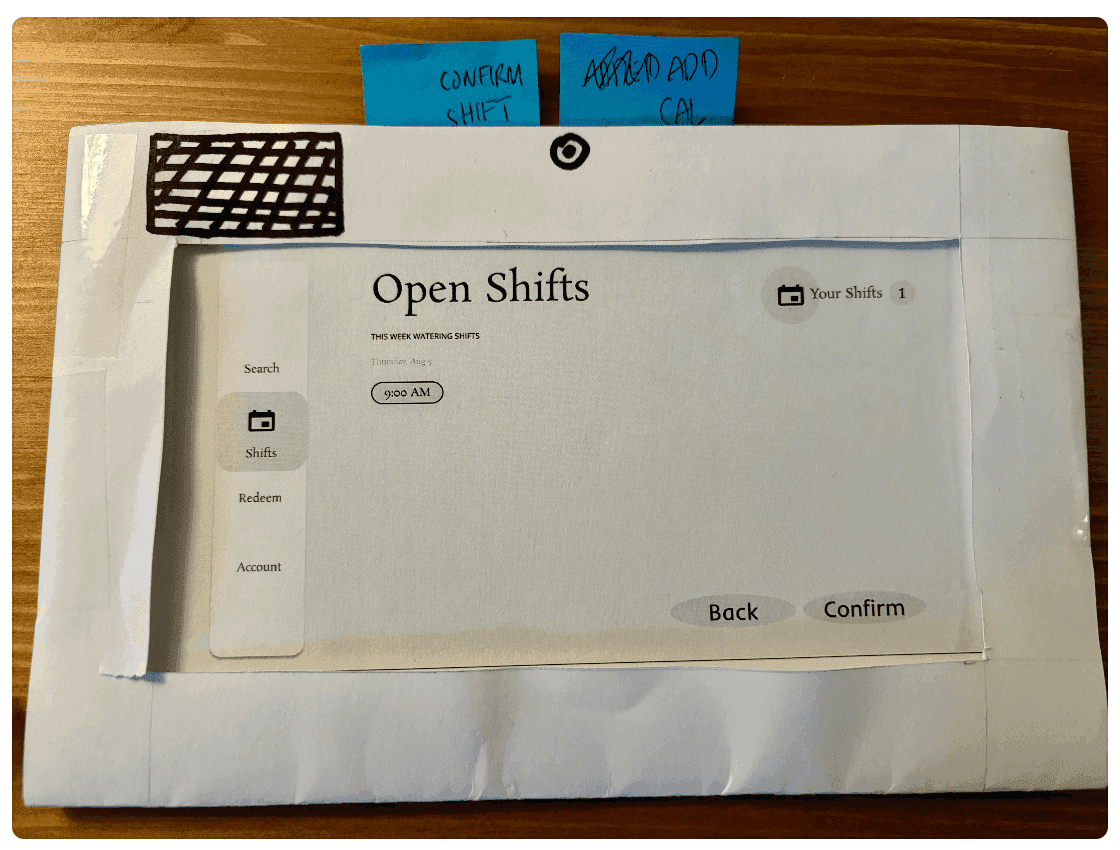 Feedback 1 — User wants the ability to click on the shift to find out more information about what the shift entails.
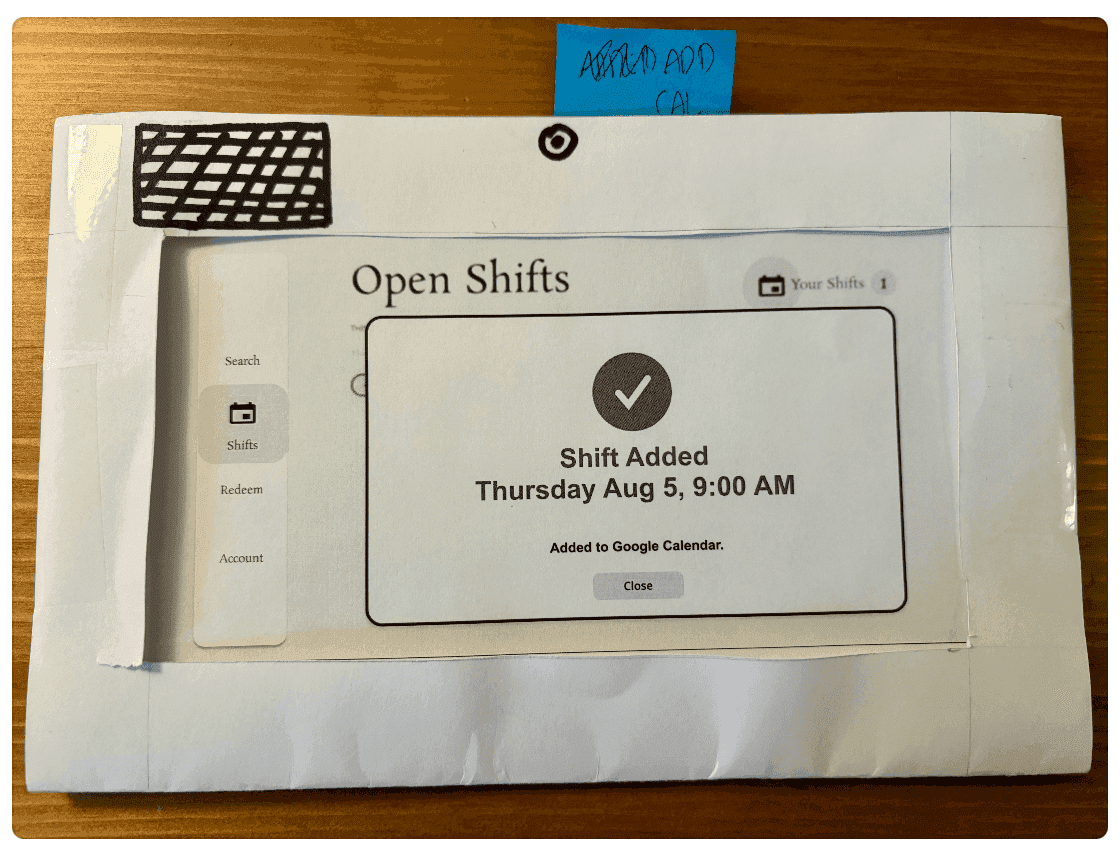 Feedback 2 — During shift sign-up, user wants to see the time and activity, with automatic linking to their calendar.Feedback 3 — User wants to mark their shift as started and get a recap of responsibilities.Feedback 4 — User wants to mark their shift as completed and have a confirmation that says thank you.
Our Solution
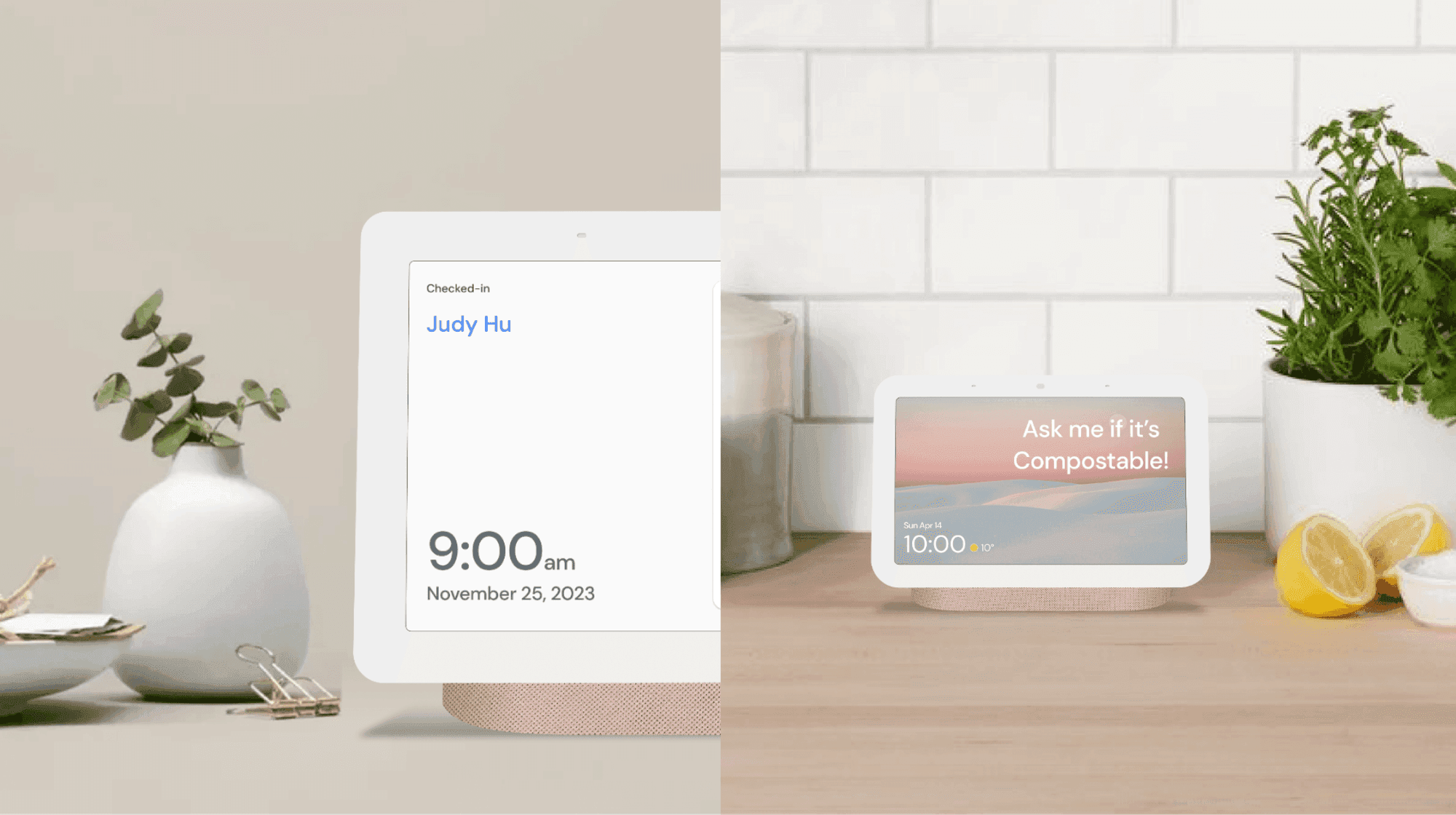
Urban composting service that partners with property developers to provide easy and rewarding compost solutions for MDUs. It installs and maintains infrastructure, from compost chutes, community green spaces and produce pantries, to in-unit tablets that enable renters to compost effectively and engage with their community. Composting within the context of a home.
Interface Design
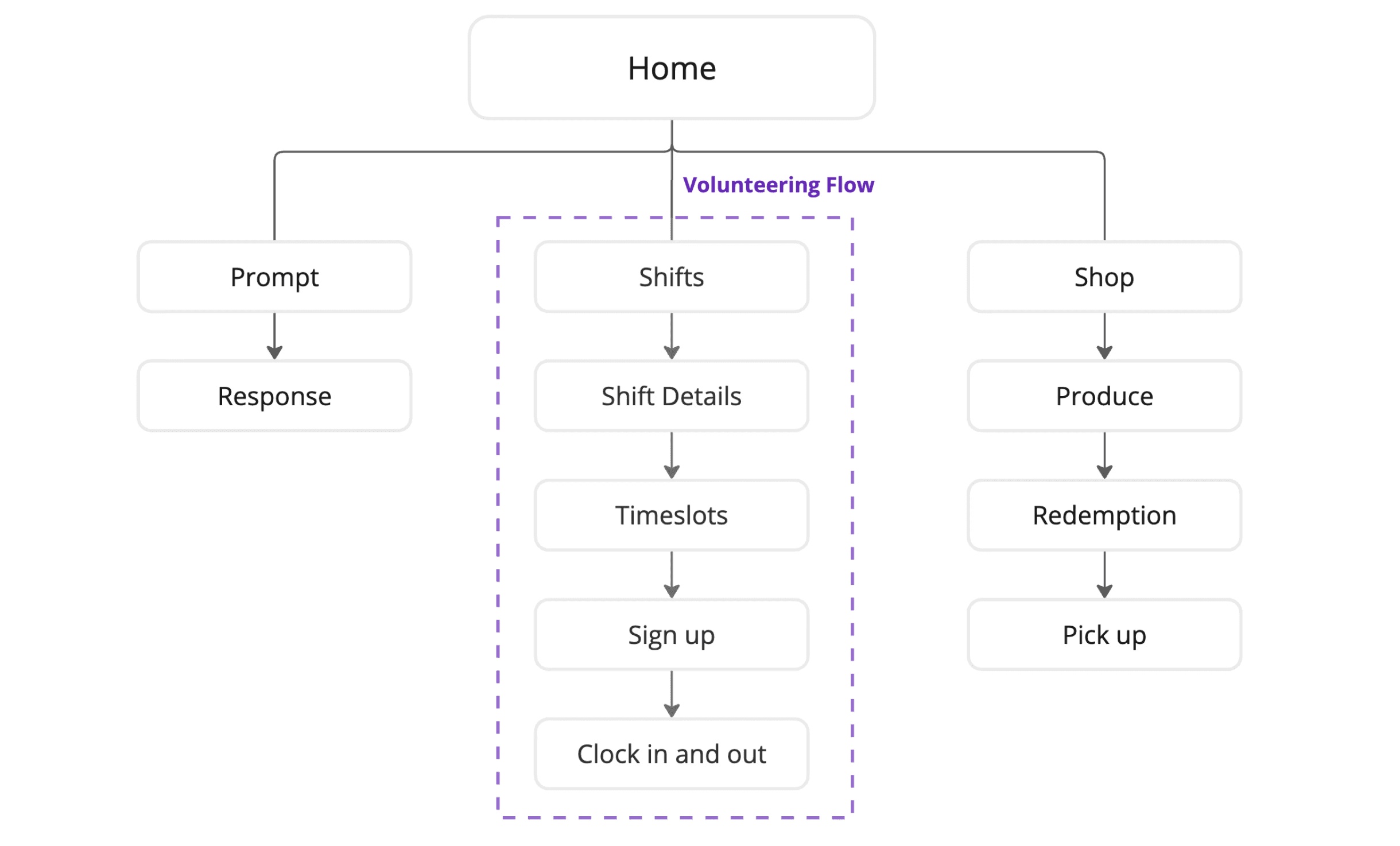
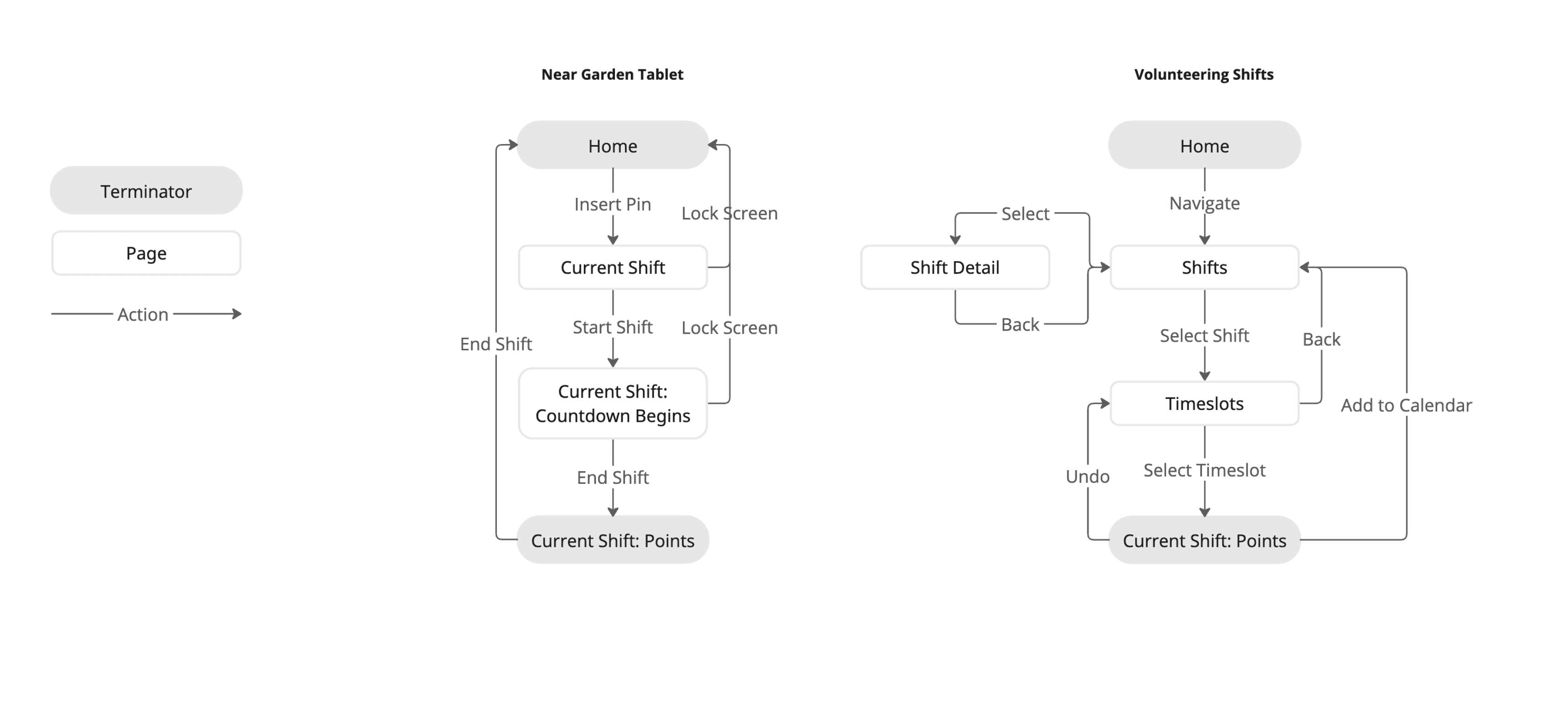
User Flows and Information Architecture
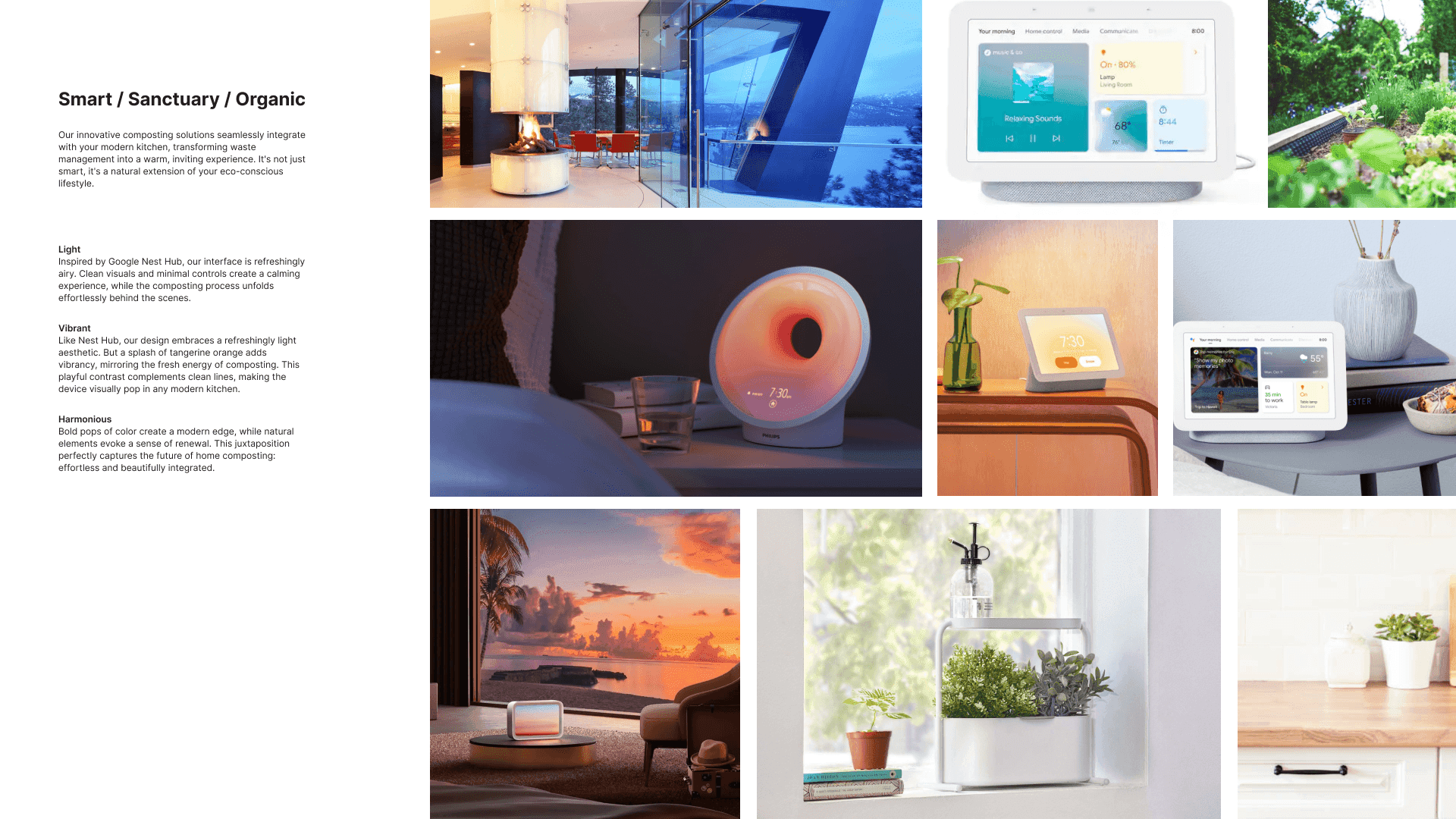
Mood Board
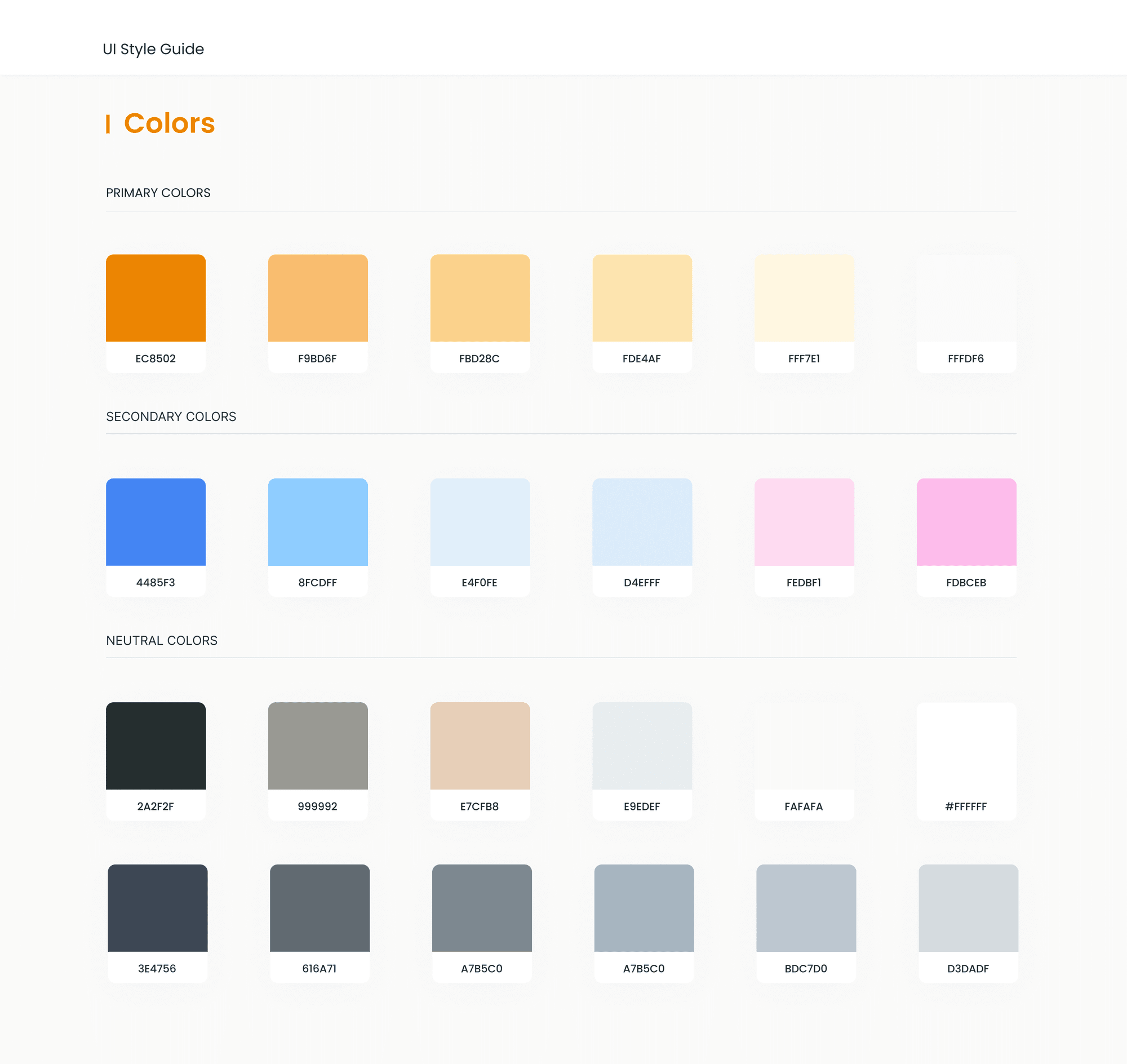
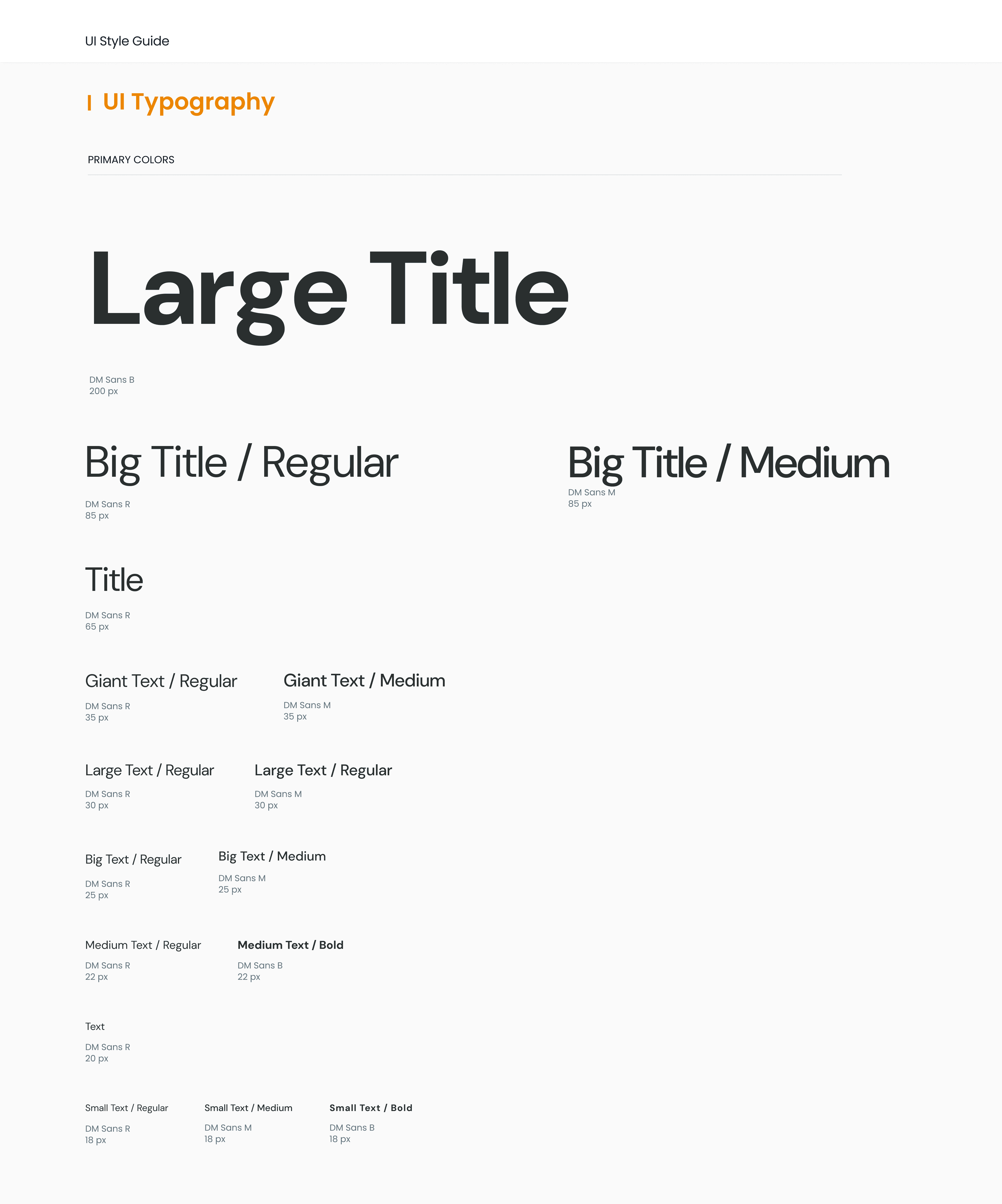
Style Guide
All Screens
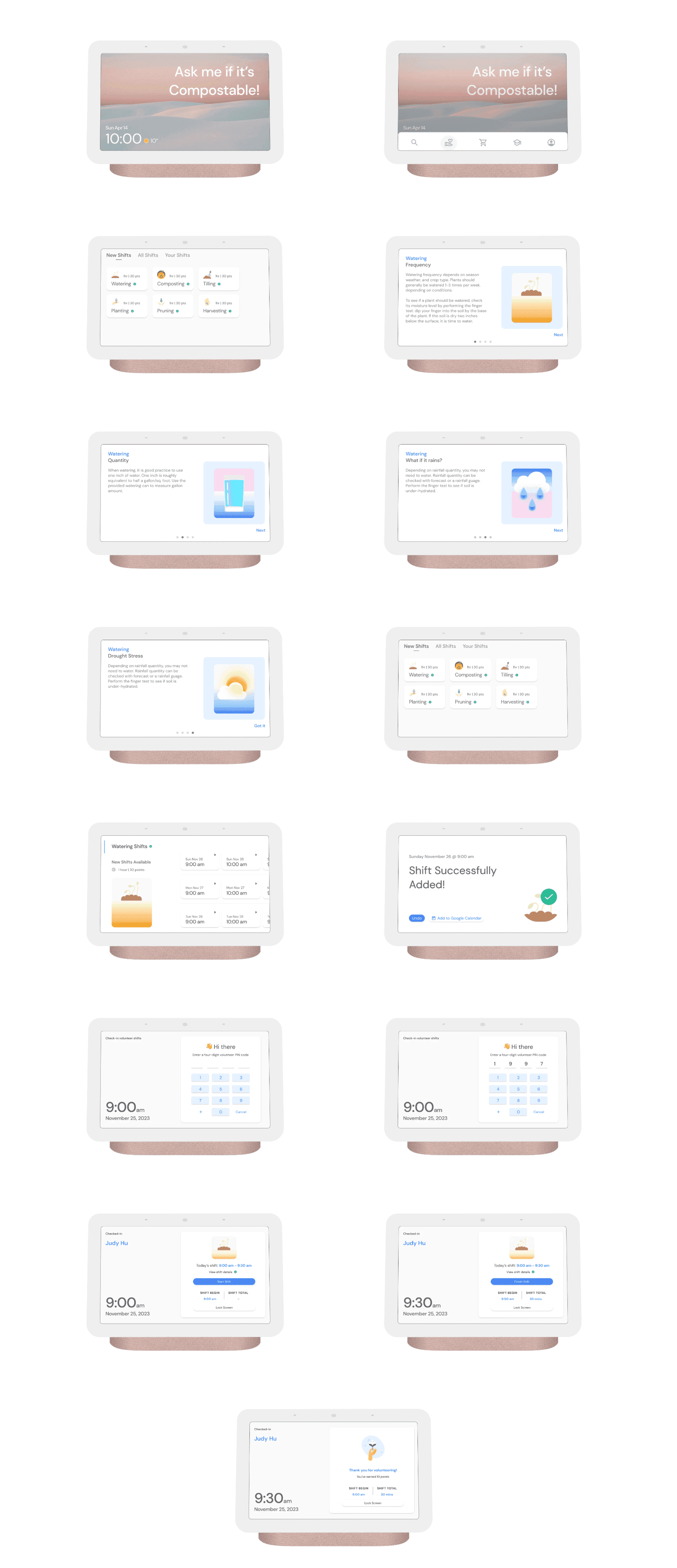
We implemented feedback from the paper prototype tests, and added additional functionality by providing a learning experience and refining our voice assistant, volunteering shift, and point-redemption functionality.
Interactive Prototype
What did I learn?
One big takeaway for me was the power of teamwork. Working closely with my team, I saw how pooling our ideas and perspectives led to better solutions. We also learned about the iterative design process — it's not about getting it perfect on the first try, but about refining through multiple iterations. Lastly, I learned the importance of being ready to let go of ideas that aren't working out. Sometimes, it's better to abandon them early and focus on what's more promising and feedback-driven.
Next Steps
🧪Further iteration — perform evaluative testing with our high-fidelity prototype.🎁Rewards — build out a rewards platform and point system to increase renter motivation for participating in composting.🏗️Property incentives — develop incentives for property developers to choose Rotwell for their buildings, e.g. sustainability certifications akin to LEED.