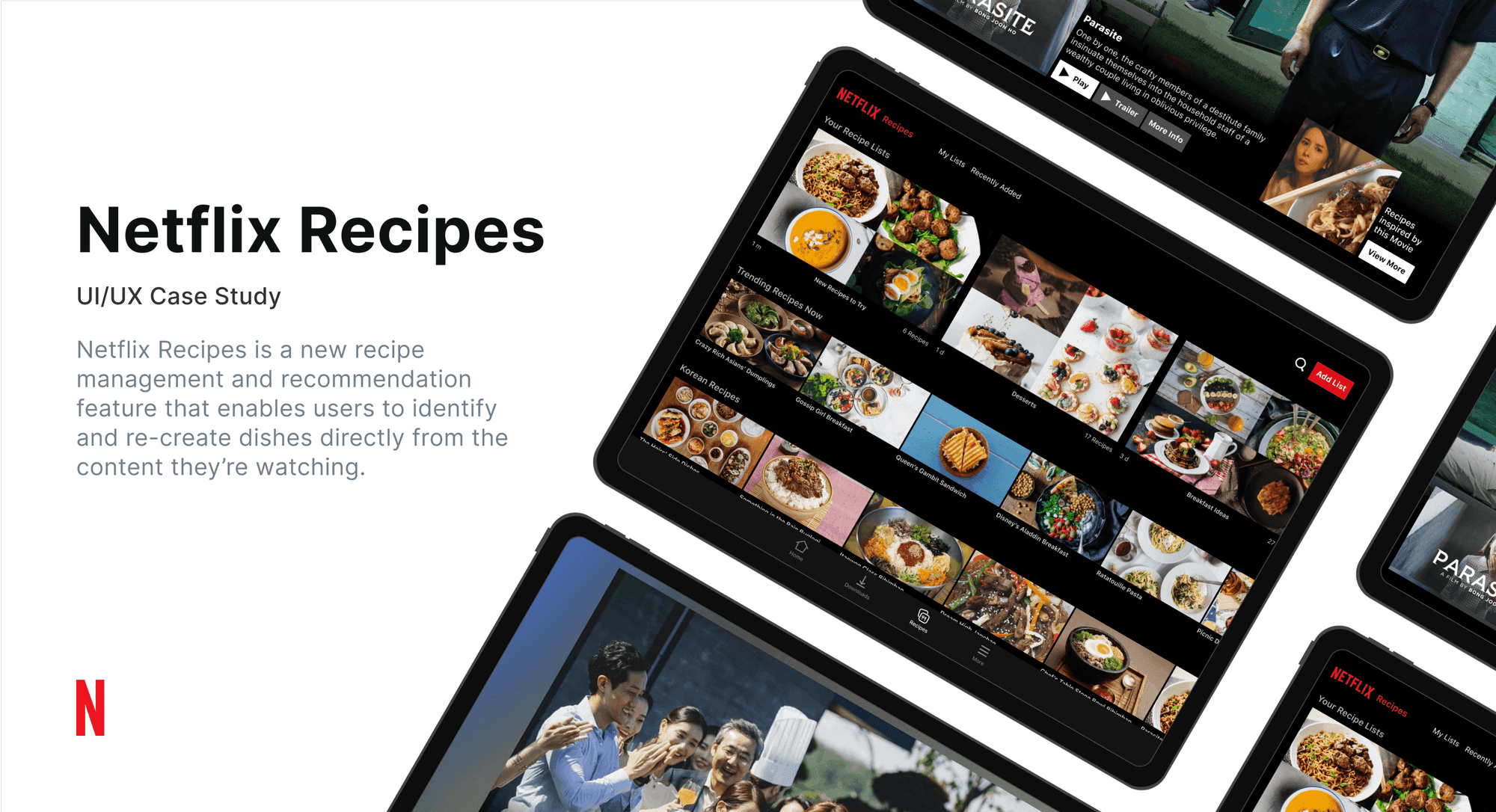
Case Study
Netflix Recipes
Individual project brief: To uncover and design for a digital intervention that facilitates and enhances out-of-home experiences during the pandemic.
- My Role
- User Research, Ideation, Prototyping, Inclusive Product Design, Accessibility Considerations
- Timeline
- 13 weeks, 09/2020–12/2020
- Tools
- Figma, Mural
Netflix Recipes Overview
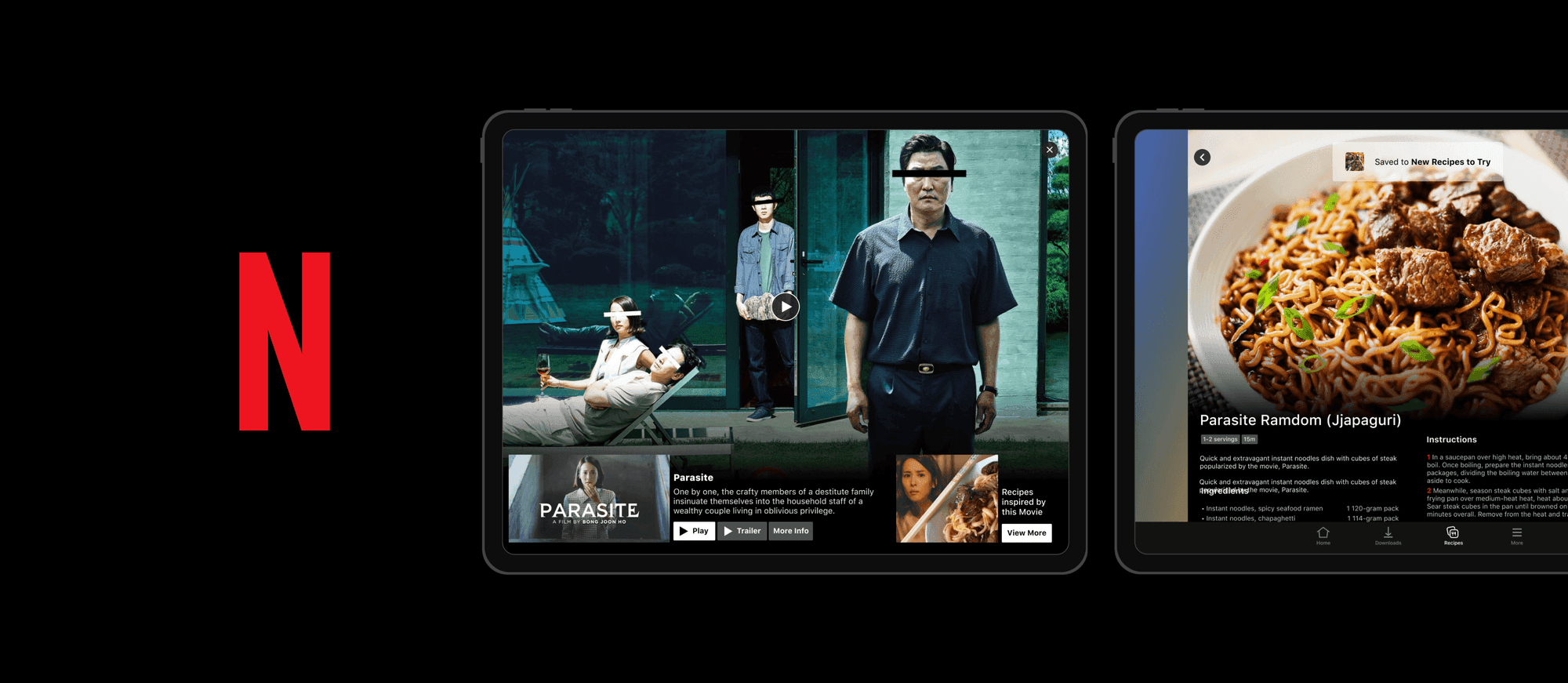
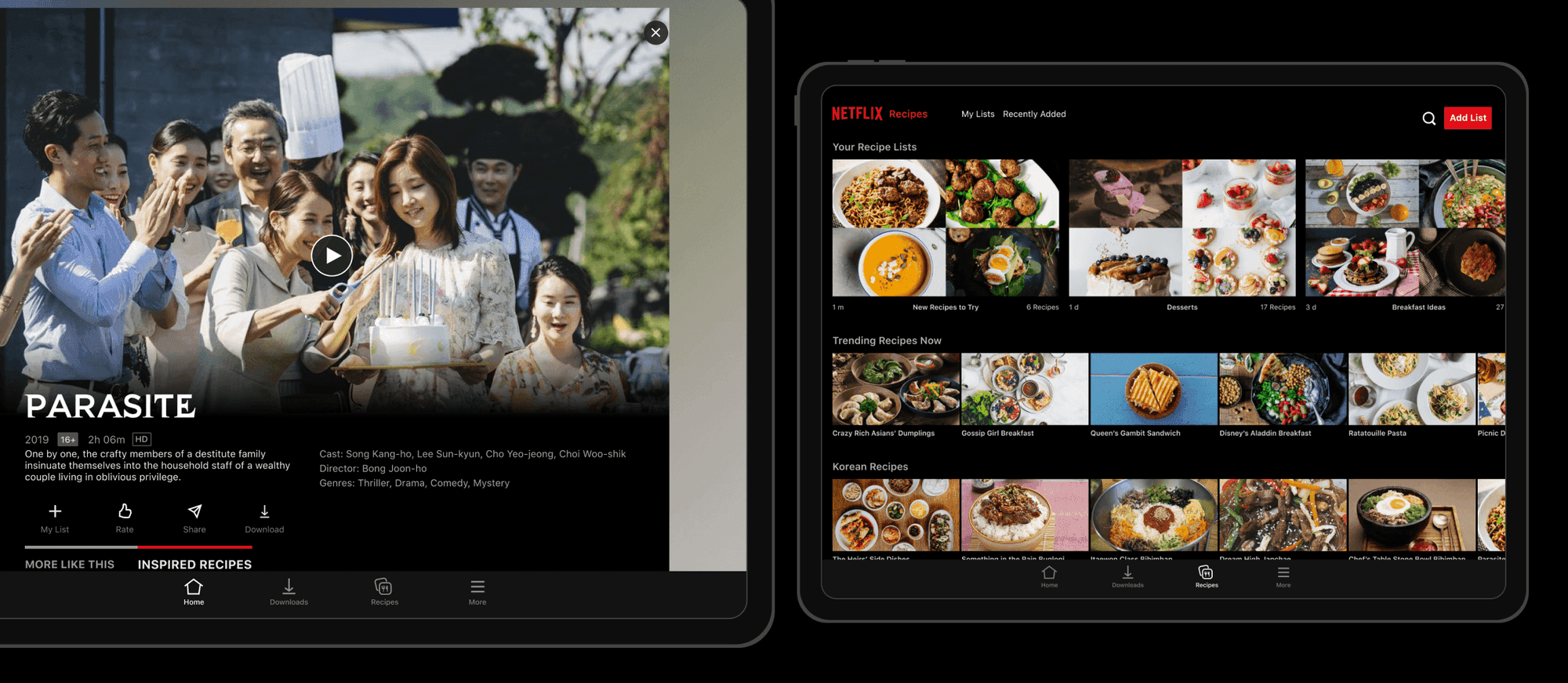
A new feature that serves as inspiration for users to make meals from their favourite shows by connecting them to the cuisine of Netflix content. Netflix Recipes offers its global audience an unlimited library of recipes from their favourite television shows and movies, right on the Netflix platform.
Process
With this individual course project, I was responsible for the end-to-end research and design process.
- Research Phase — User Interviews, Affinity Mapping, User Persona, Journey Map, Solution Ideation
- Scenarios Phase — Vision and Problem Statement, Empathy Maps, User Scenarios, Design Requirements
- Prototype Phase — Sketches, Wire-framing, Style Tile, Prototyping, Iterations, Accessibility Considerations
Define
Interview Insights
I interviewed users as the first step in a goal-directed design process, to uncover needs that participants aren't getting during their current pandemic experience.
Insight 01 — Daily RoutineUsers want to maintain healthy routines & lifestyles during the pandemic, but they experience social isolation, a lack of motivation, and limited entertainment activities during the lockdown.Insight 02 — Culinary ExplorationGiven the climate at this moment, people are unable to visit restaurants, but they still wish to try new cuisine. Interviewees reported more opportunities to cook at home, but have trouble with deciding what to cook.Empathize
Empathy Maps
After synthesizing interview findings, I used empathy maps to inform the user goals, needs, behaviour, and pain points for my two personas.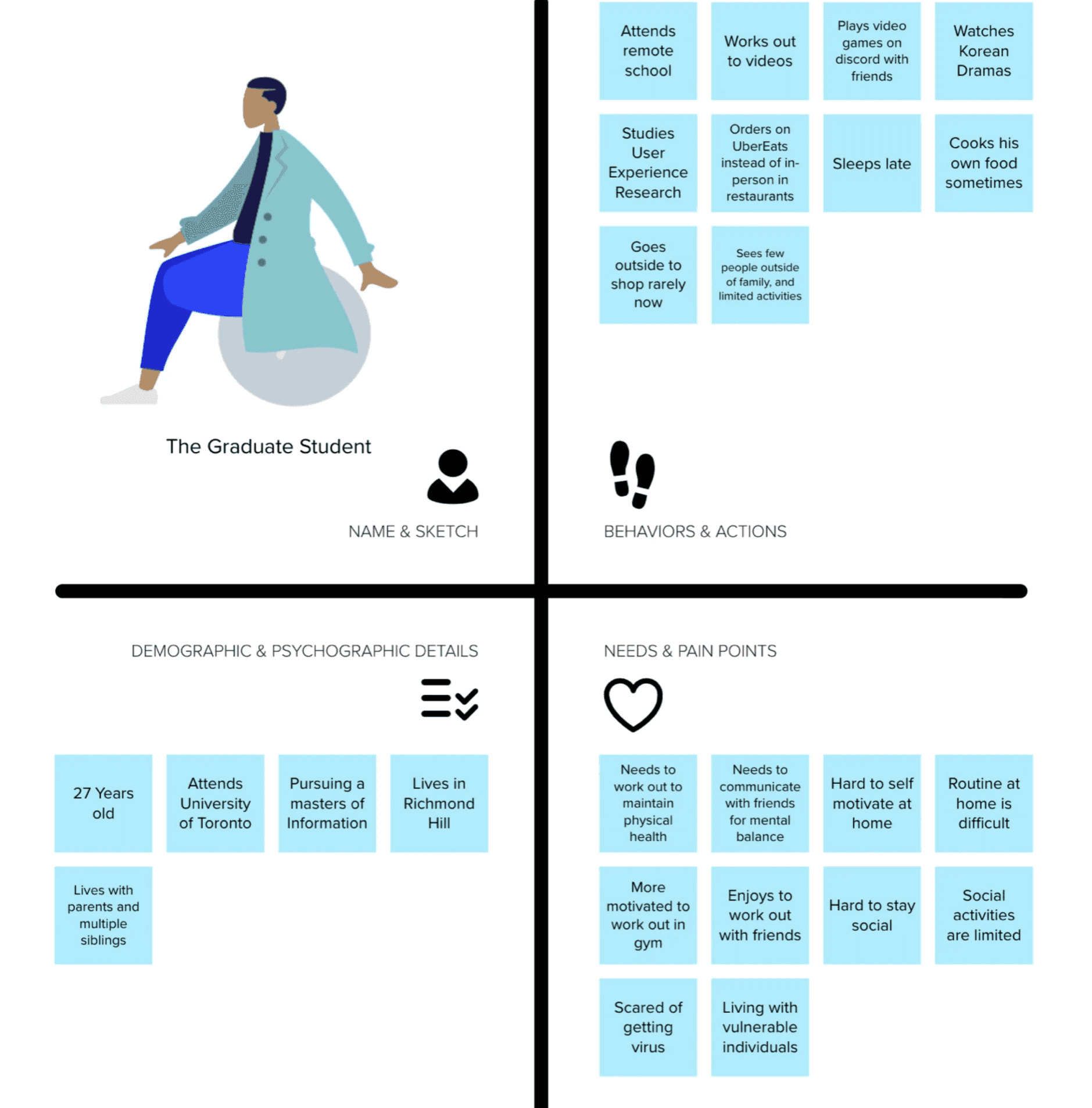
Primary Persona: The Graduate Student
Using data from the user research, I was able to compile a model of my users in the form of my primary and secondary personas. Across all interviews, I found the most distinction between participants of different occupations so that was the basis for defining my two personas. The user personas focused on a user archetype based on the behaviour uncovered with the user data — outlining their goals, needs, pain points, behaviour, demographic data, and a behavioural map.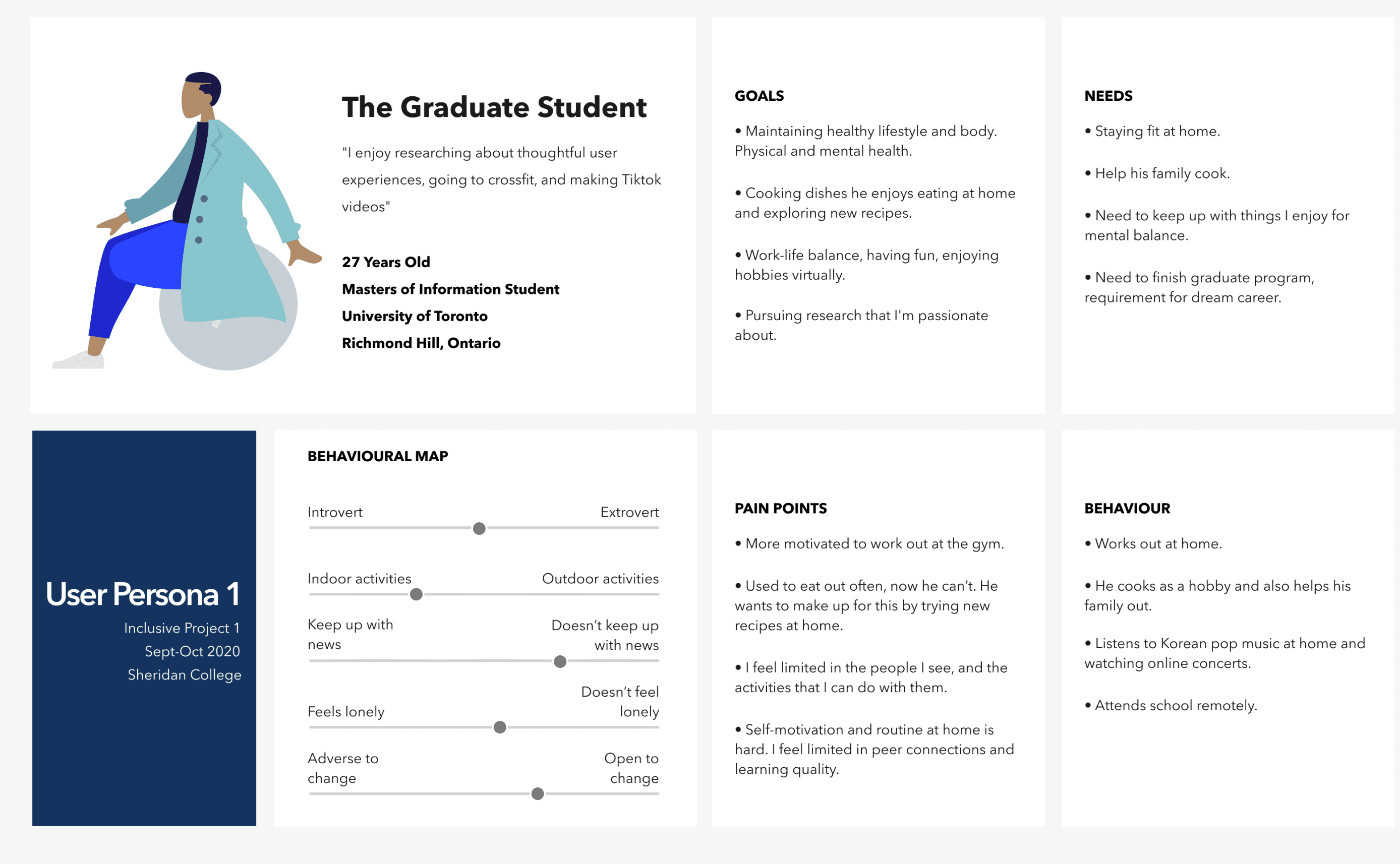
Journey Map
Rather than identifying user personas with a name and stock image (which can be based on biases and assumptions), I identified my two personas with an illustration and their user archetype. Empathizing with users helped me think about their user journey and uncover potential digital solutions.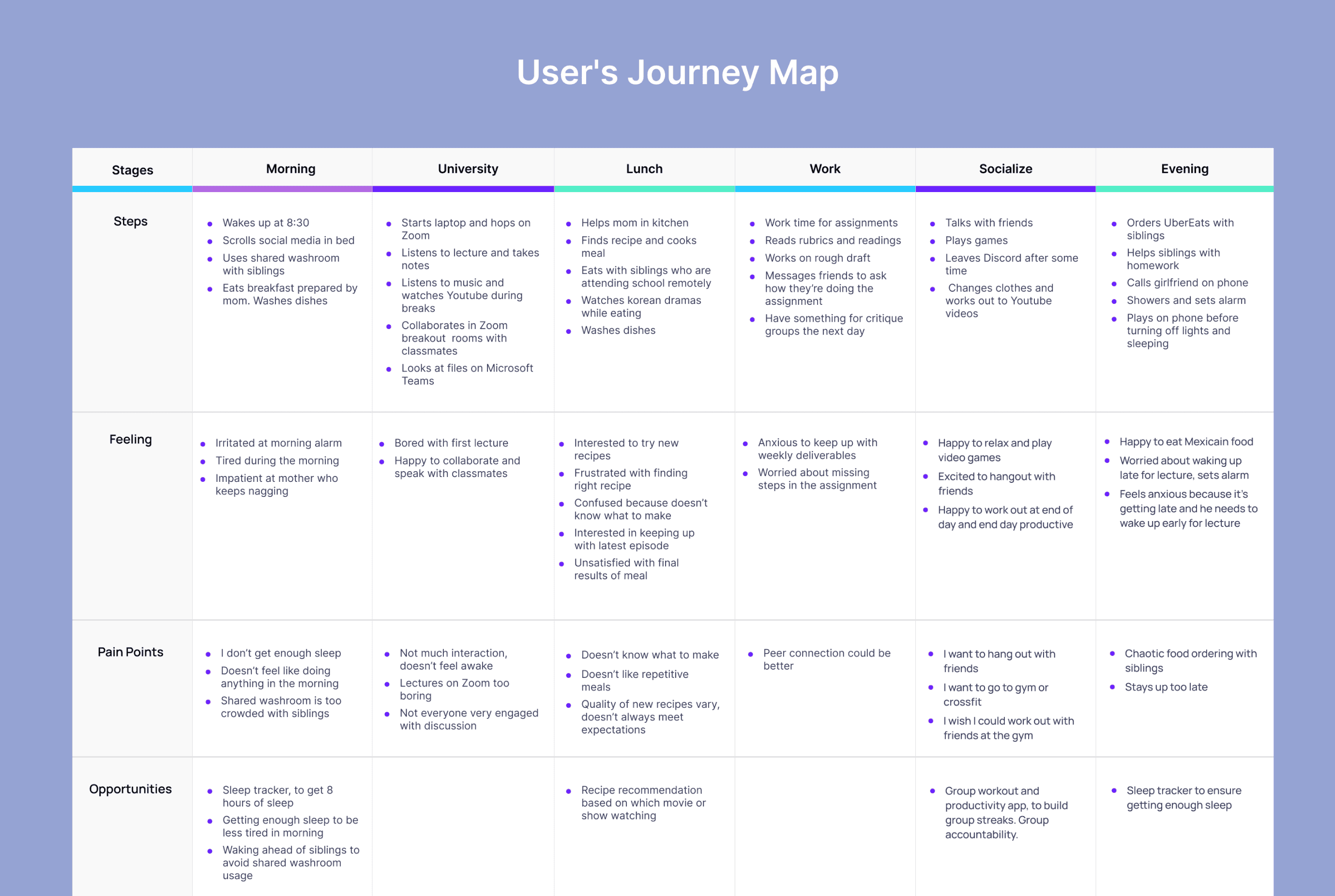
The Problem
The user persona and user journey map pain points suggests that users often don't know what to cook.
There are less options for trying new cuisines with restaurant closures and social distancing.Users are cooking more during the pandemic than before.Users are either interested in cooking as a hobby or cooking out of necessity.User Scenario
Empathy Maps
By investigating the unideal and ideal empathy maps for our primary persona, I was able to determine if the intervention would be able to balance the user pains.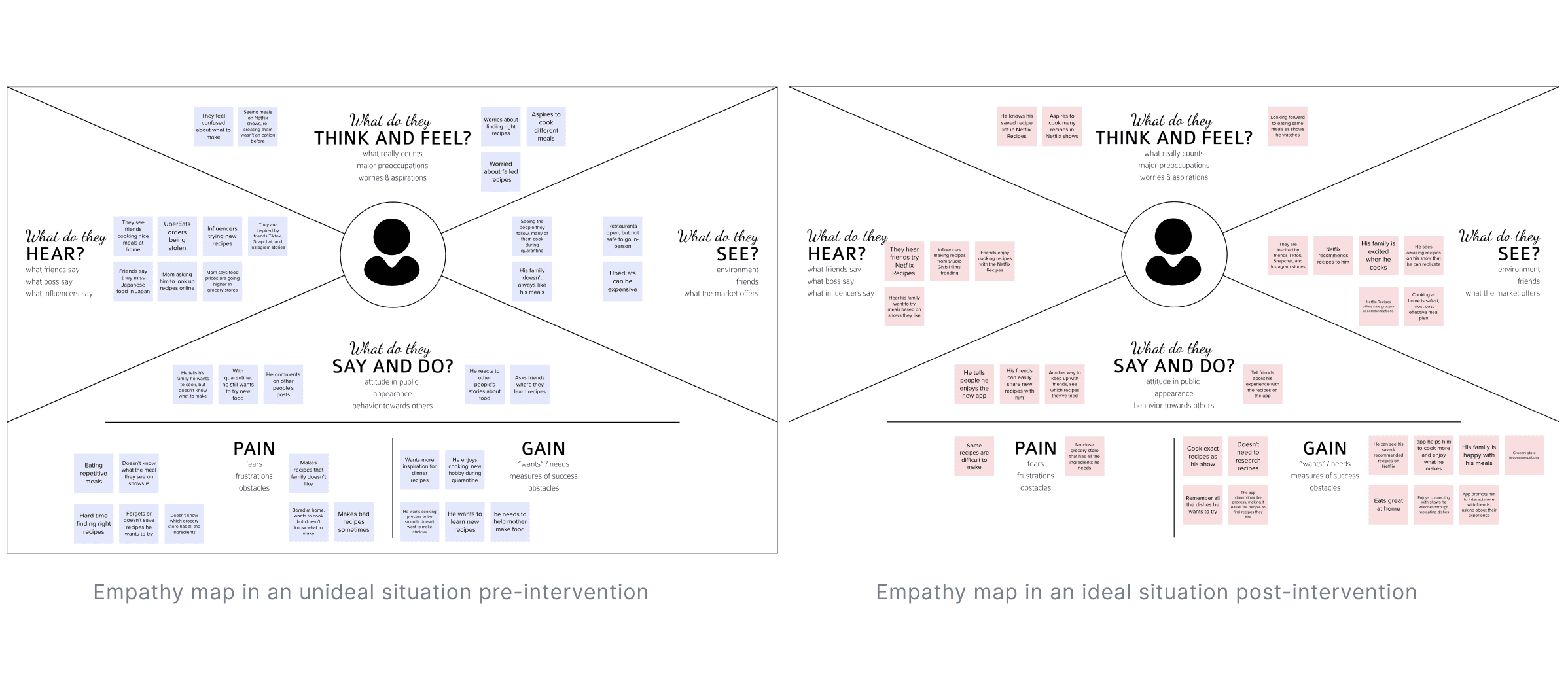
User Scenario Map
With the ideal user empathy map in mind, I was able to map out an initial user scenario of our Graduate Student using Netflix Recipes when deciding what to cook, going grocery shopping, and making the meal.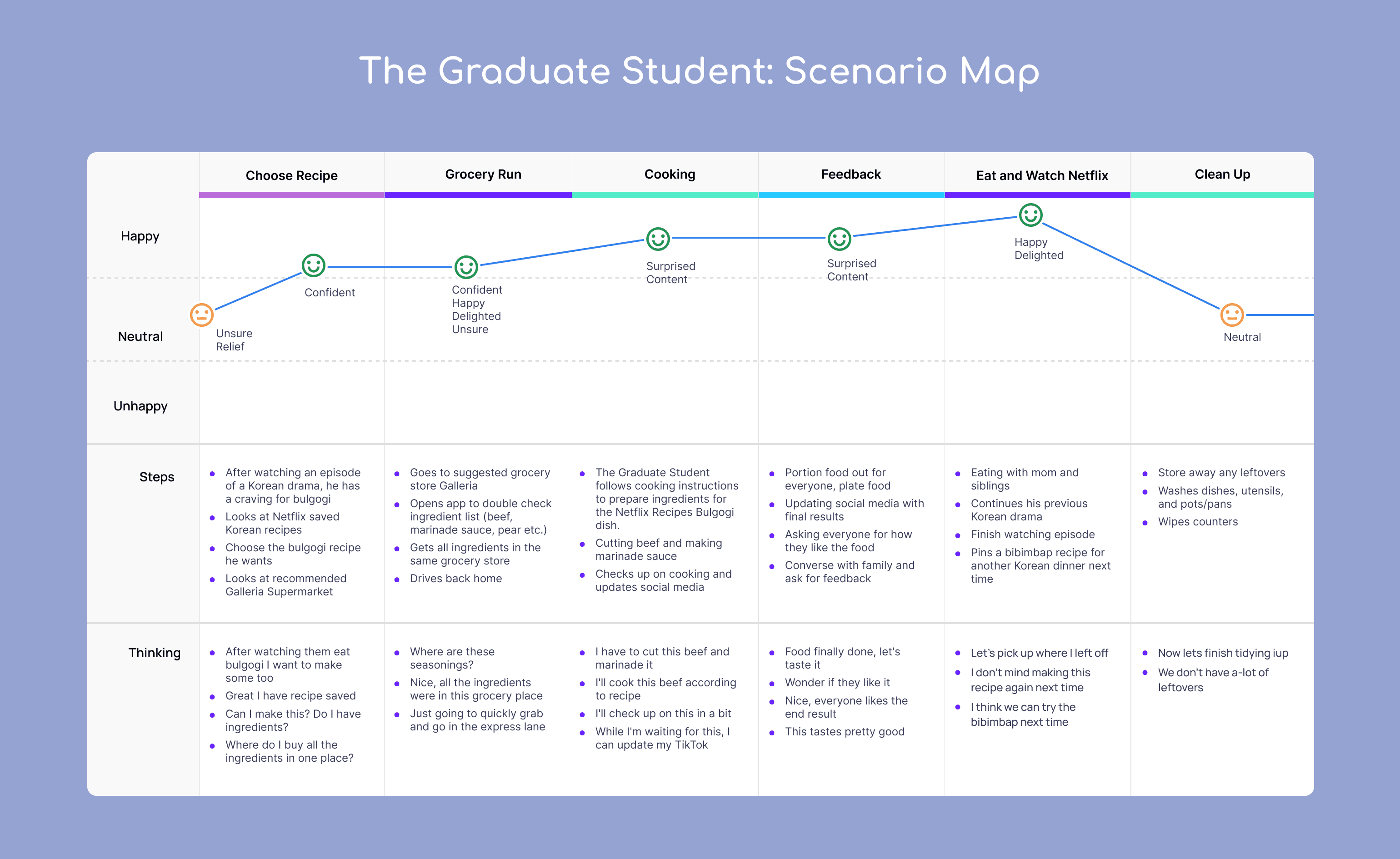
Netflix Recipes Vision Statement
Netflix Recipe will offer its global audience an unlimited library of recipes from their favourite television shows and movies, right on the Netflix platform. Users will gain all-inclusive access to the recipes, including ingredient lists and step-by-step instructions, to recreate the exact dishes from the shows they enjoy watching. Netflix Recipes also recommends grocery stores that include all the ingredients, saving time and making things more convenient while limiting outside exposure. Netflix Recipe helps to inspire users to make meals from their favourite shows by connecting them to the cuisine of Netflix content, right from the convenience of their home.
Interface Design
Wireframes
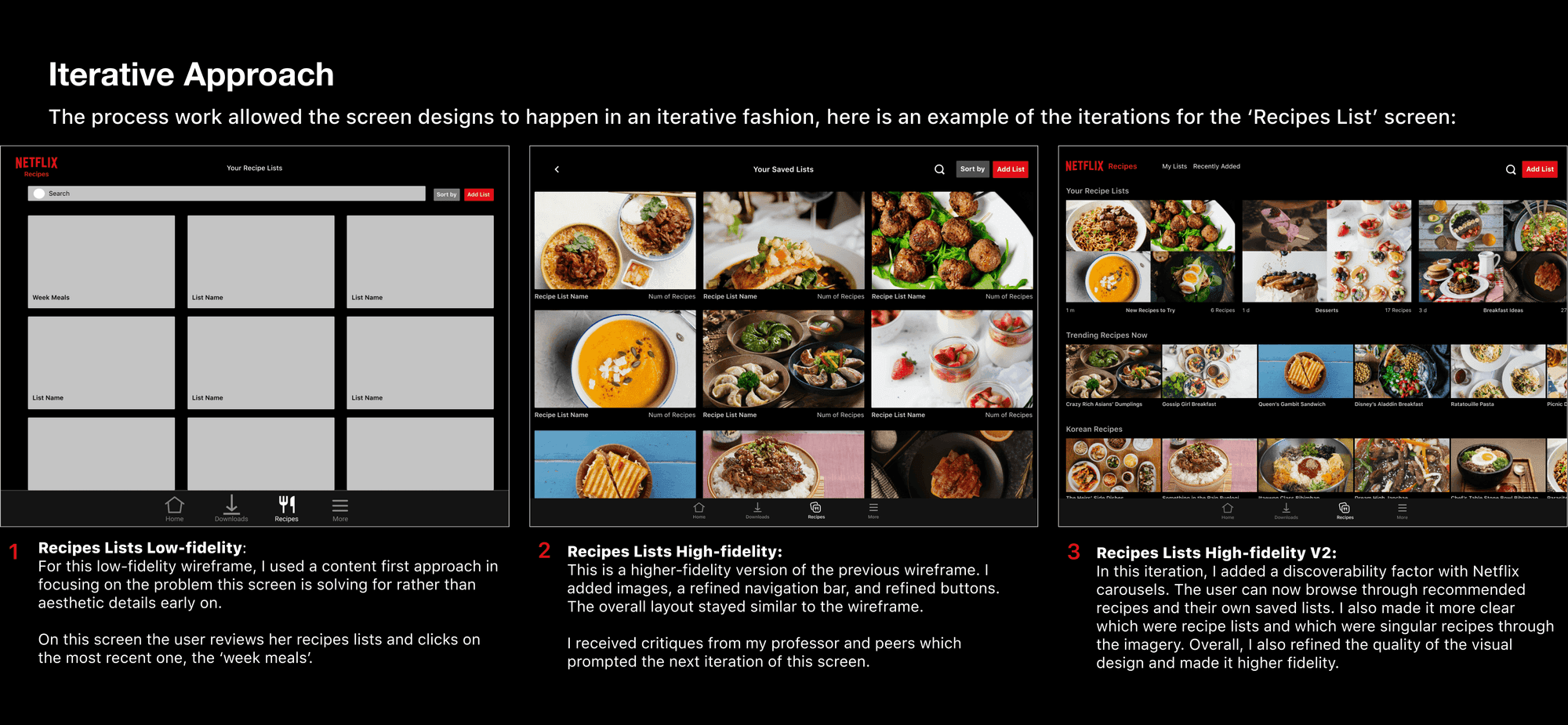
Through an iterative approach, I was able to refine the prototype screens week-by-week following feedback groups.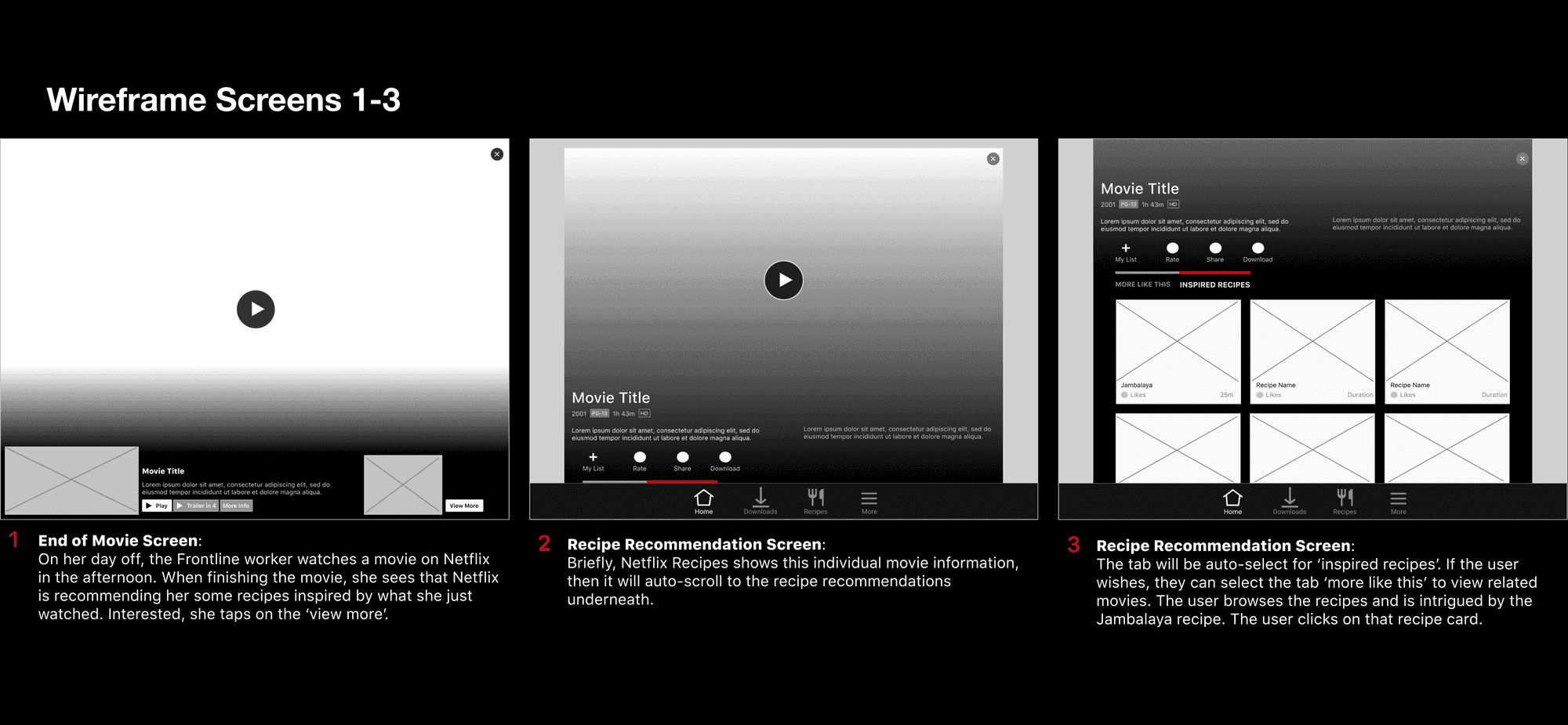
Accessibility
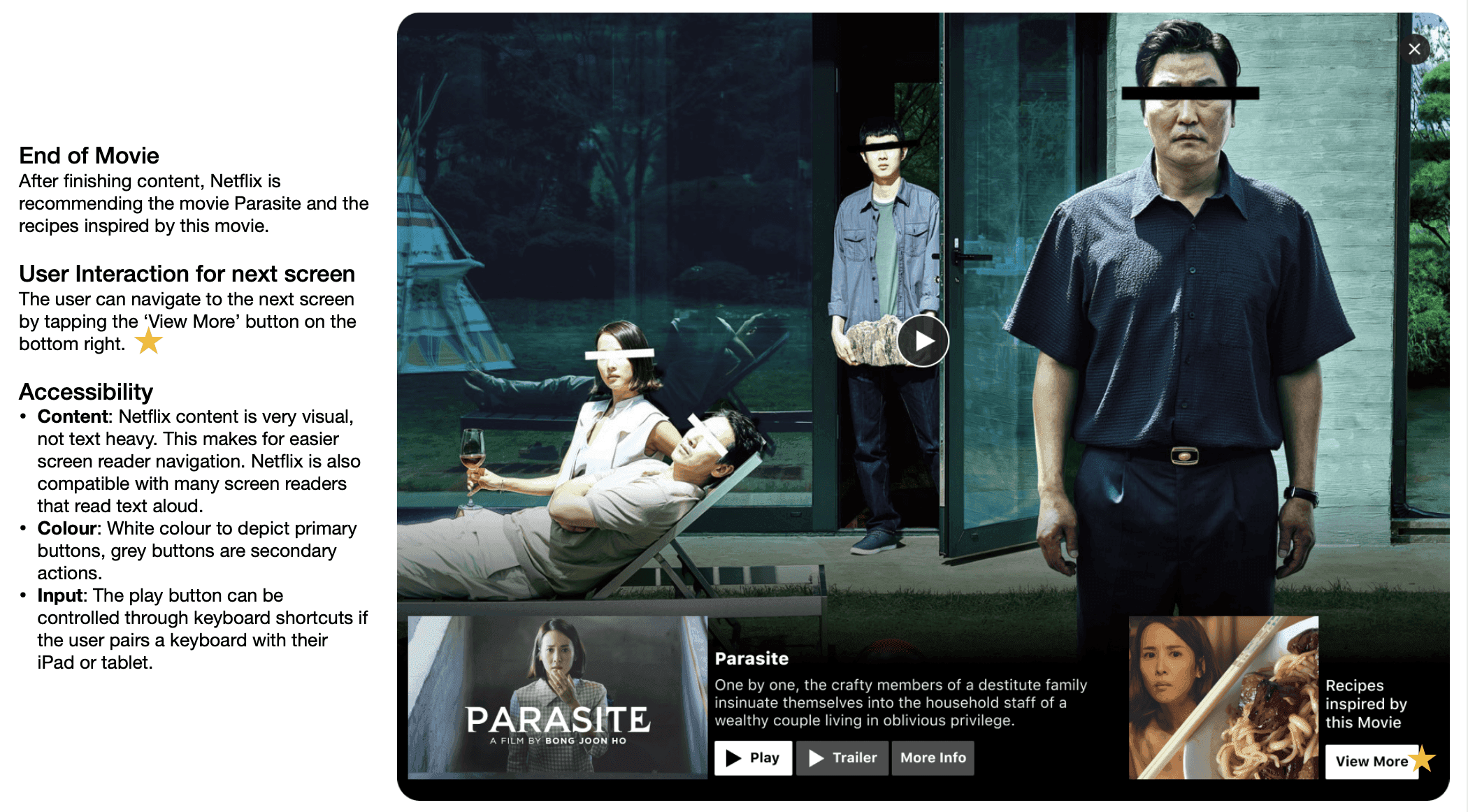
Accessibility was considered through clear visual hierarchy, sufficient color contrast, and consistent layouts to support readability and ease of use. Text sizes and spacing were designed for mobile accessibility, with large touch targets and clearly labeled actions to reduce cognitive load and improve navigation.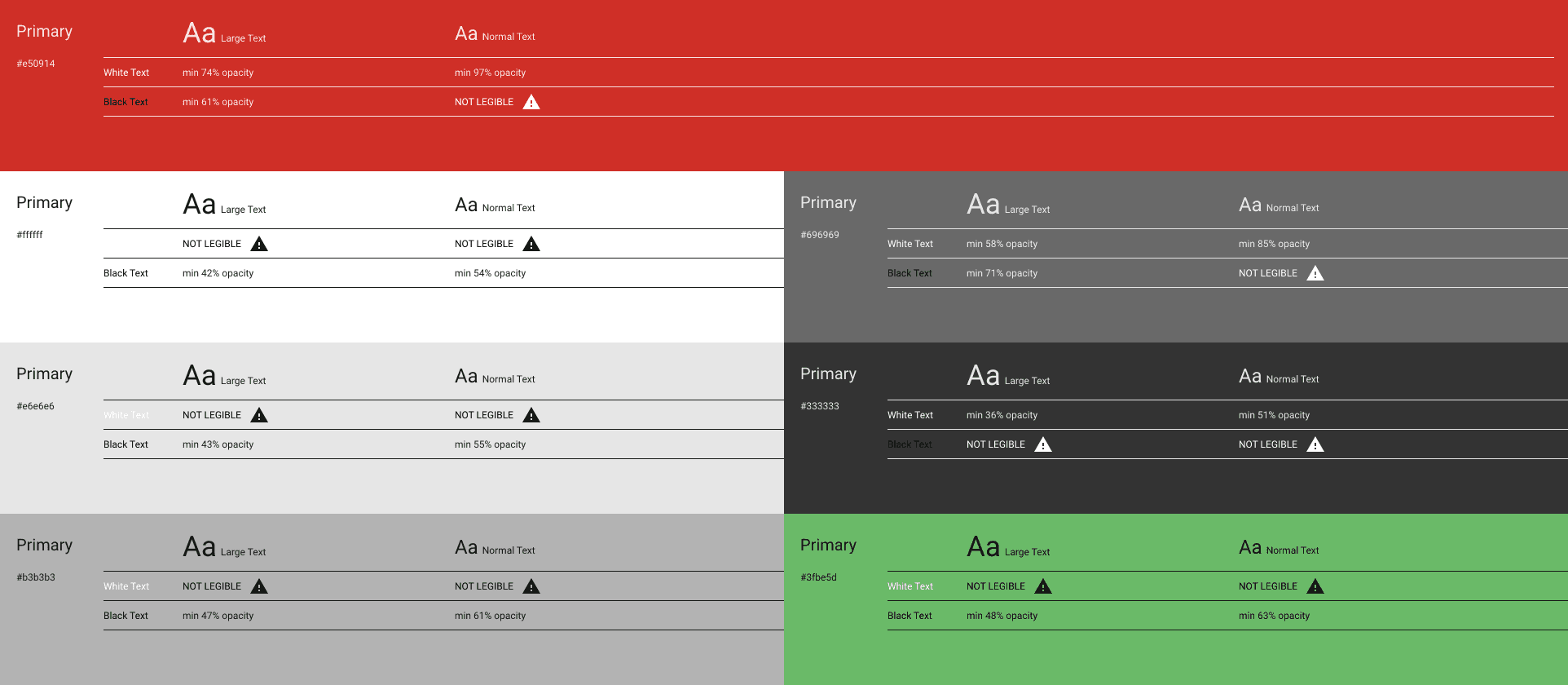
Style Tile
The design system mimicked Netflix's existing design system for their tablet view — including the colour palette, icon treatment, buttons, and navigation bar.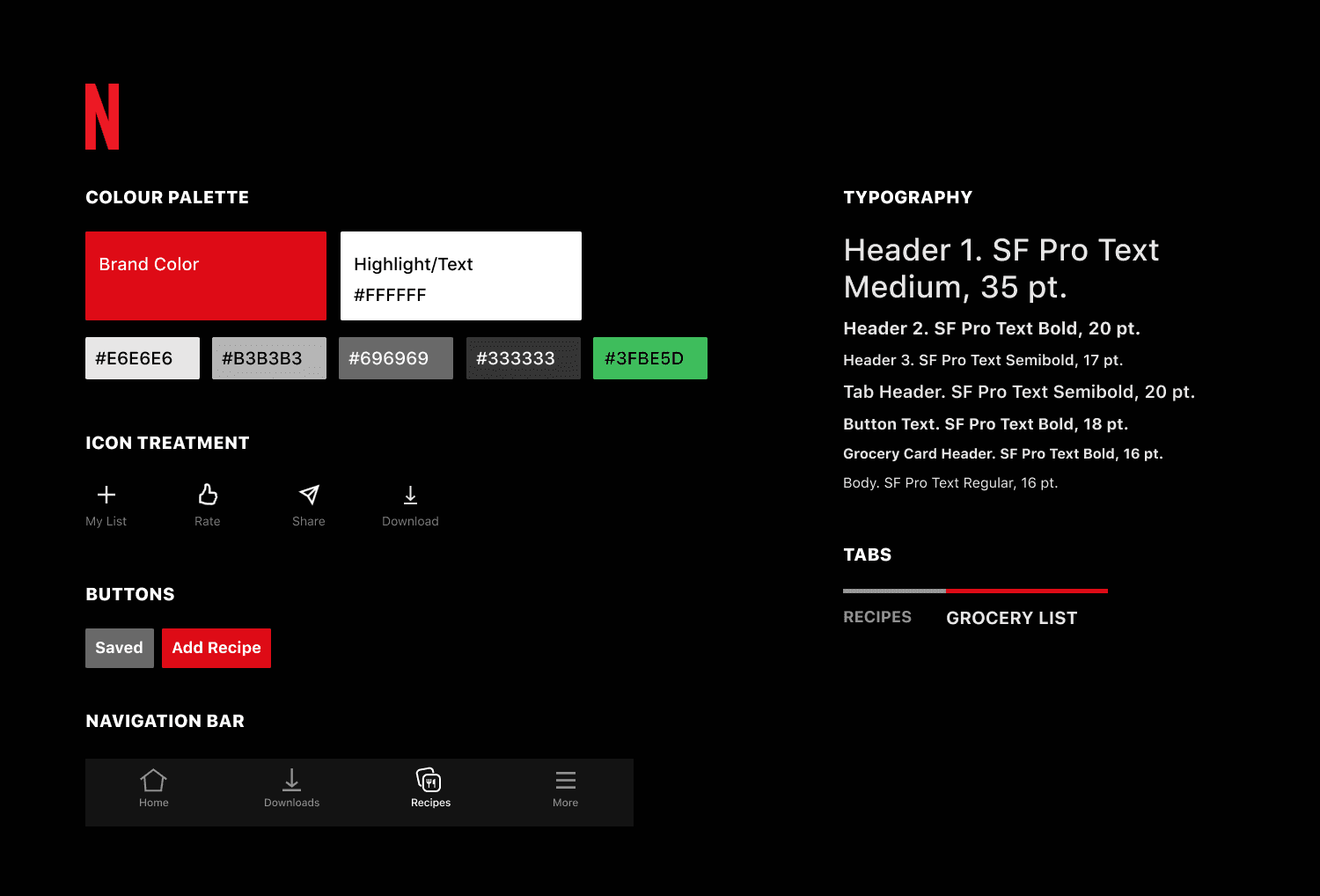
The Solution
The user flow for browsing and saving a recommended Netflix Recipe.
Reflection
01Key Takeaways- There were many themes and insights from the interview data. The most polarizing answers were between participants who were students and those who were working full-time non-remotely.
- All the process work was very helpful building up my project and iterations, and I had to learn to choose the most important ideas to focus on for the solution and the important process work to feature in this case study.
- This was my first attempt at replicating another brand's designs. It was really helpful to use UI kits for some components so I didn't have to design everything from scratch — Netflix's design system is really clean and I wanted to portray it well.
- Consider the feasibility of this app from a benefits vs engineering cost perspective.
- Consider the feasibility of this app from an engineering perspective.
- Explore how the look and feel of this would change if this was a third-party plugin and not implemented in an official capacity on Netflix's user interface.
- Conduct another round of user research in light of the solution, getting more in-depth insights on the user's specific experiences with Netflix and cooking during the pandemic.