
Case Study
The Spotify Model and Empowering Design Collaboration
The workflow that companies adopt have a huge impact on how design teams solve problems and collaborate. In this case study, I hope to explore how Spotify's Scaling Agile Model was able to help their design teams undertake the massive project of visual re-alignment following their Scrum design fragmentation.
- My Role
- Author
- Platform
- Medium
- Timeline
- June 2021
Background
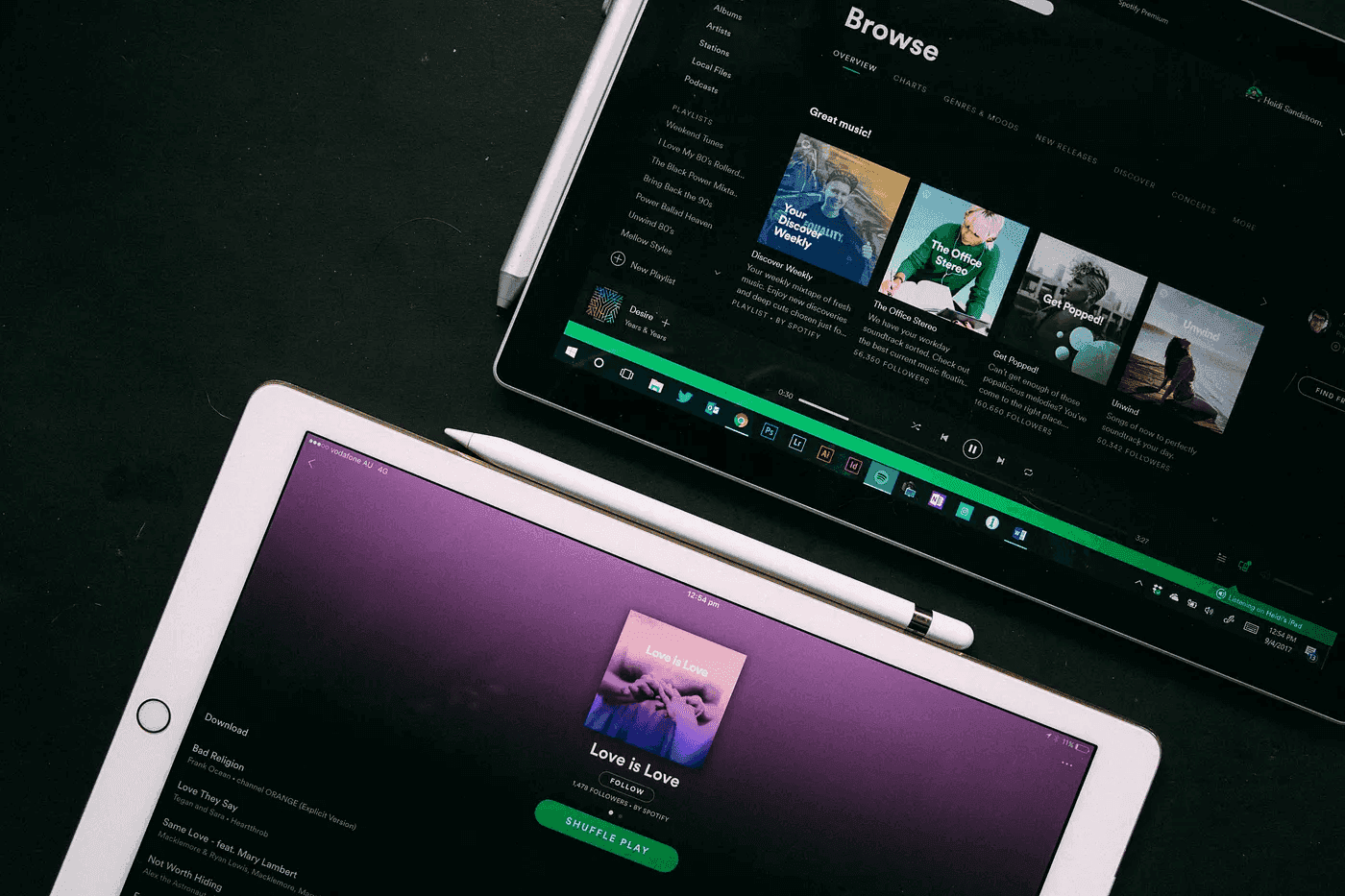
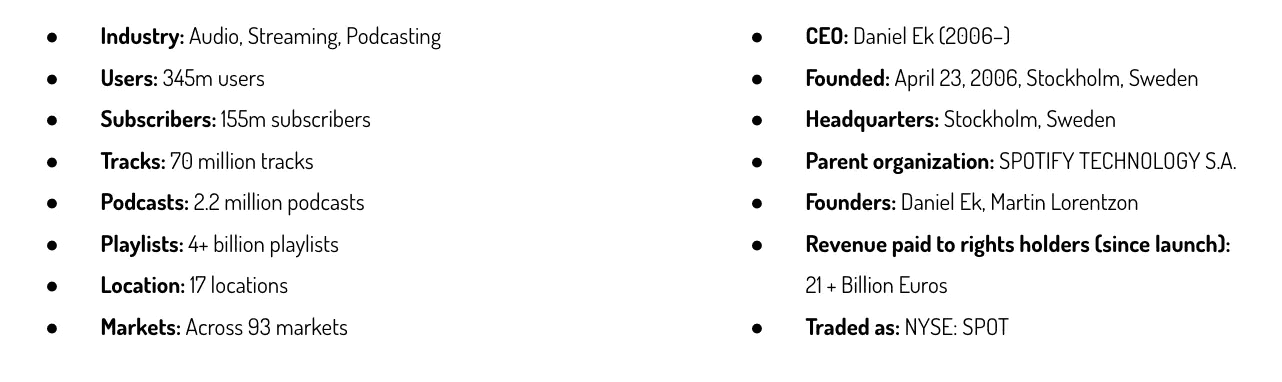
For some background, Spotify is a Swedish audio streaming and media services provider that launched in October 2008. It is currently the world's most popular audio streaming subscription service with 345m users.
Users can discover, manage, and share tracks and podcasts for free, or upgrade to Spotify Premium to access exclusive features including improved sound quality, offline access, and ad-free listening.
Spotify's mission statement:
…to unlock the potential of human creativity — by giving a million creative artists the opportunity to live off their art and billions of fans the opportunity to enjoy and be inspired by it. — Spotify NewsRoom
The Spotify Model
The workflow that Spotify adopts is Scaling Agile. Implementing Agile on an individual team is relatively easy compared to the challenge of extending it to an entire organization — and that's exactly where Scaling Agile comes in. Agile teams often report tension between the way teams operate and the way the rest of a company is run. In this way, Scaling Agile helps an entire organization become Agile. This can happen both horizontally and vertically, with teams working on product and or platform.
A Closer Look at Spotify's Workflow Shift
The challenge Spotify design teams were facing during their Scrum workflow was design fragmentation. Design Teams at Spotify used to be inconsistent and fragmented. Up-close, the treatment of type, colour, imagery, layout, IA, and interactions didn't align anywhere. There were also conflicting design directions across teams and individual designers.
This was not a scalable system, and they needed to improve to stay competitive and deliver on their mission statement.

Design Principles
After the shift in workflow, Spotify design teams were empowered with more autonomy to create guidelines to scale design — unifying designers with a shared point of view and standard. And they based design critiques on these guidelines, shaping a collective design voice across Spotify and laying the foundation for the visual re-alignment.
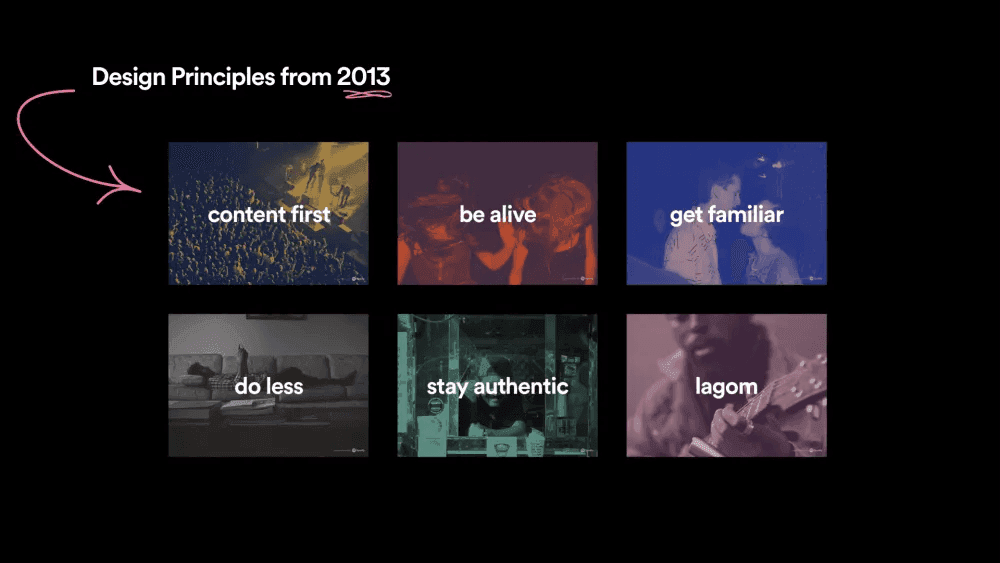
Why did these guidelines work?
Their guidelines worked because it tailored their domain (music) back to business goals. Designers collaborated with Marketing teams and also made a shared language between designers and developers. Labels for design elements were turned into specs and code.
This way of modularizing design revealed the relationships and dependencies. They also leveraged UI toolkits to make styles and components consistent, and helped with file sharing.
Maintaining Guidelines
It's one thing to create guidelines and toolkits, and another thing to maintain them — and this was a constant effort. Here's how Spotify Design was able to achieve this:

- GLUE: Dedicated team that supported design collaboration
- Design Guild: Every week, for 1 hour, two designers from each product mission and GLUE will share their work
- Design QA: Bugs to design for, cross-functional nature working with developers and QA, use tools like JIRA
- TUNE: Define quality and measure emotional experience and how it feels to use Spotify
- Tone — are we using the right tone for our brand?
- Usable — is it accessible to everyone?
- Necessary — is it functionally really needed?
- Emotive — Does it feel good to use? Feels like someone cares?
Overview of Spotify's Scaling Agile
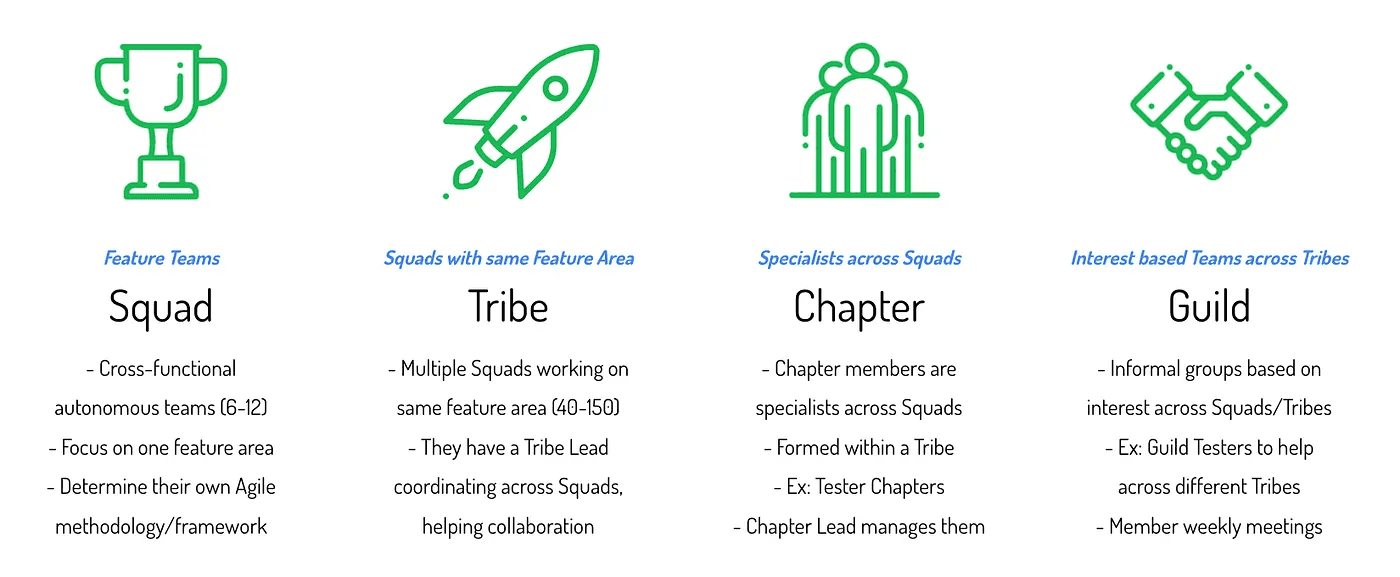
Spotify's workflow focuses on team autonomy and organizes around work. Unlike traditional scaling Agile, they do not follow rituals. Each squad can choose their own framework and collaboration tools. Squads can also organize into tribes and guides to cross-align and share knowledge.
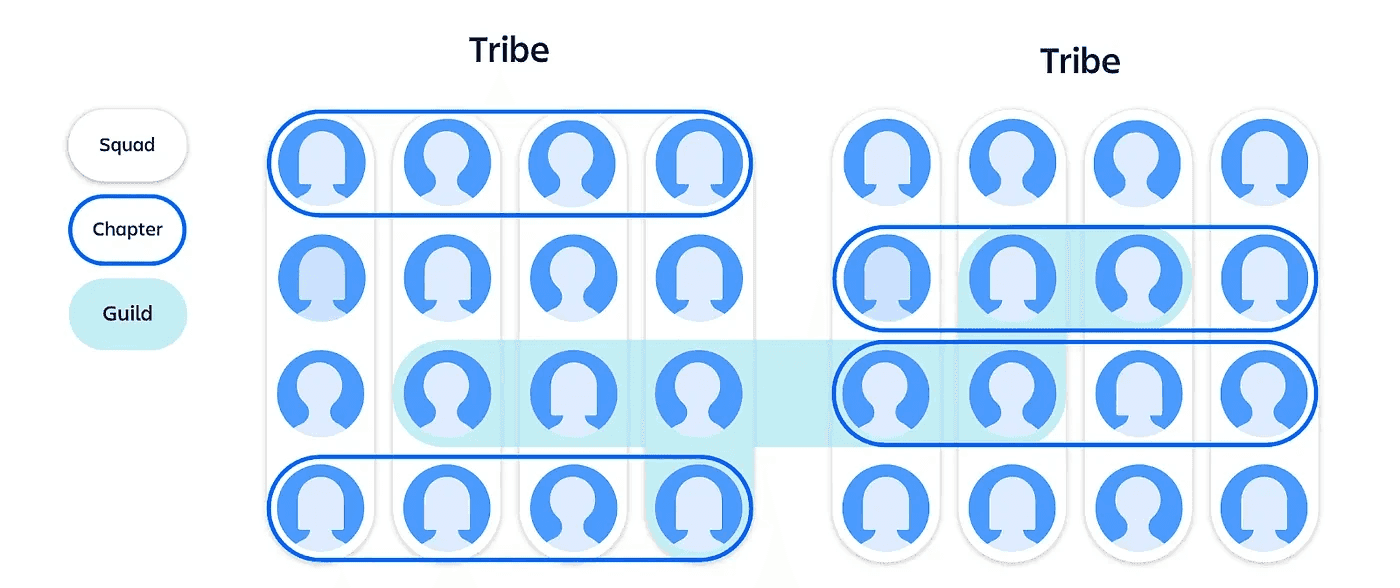
Spotify Model Elements
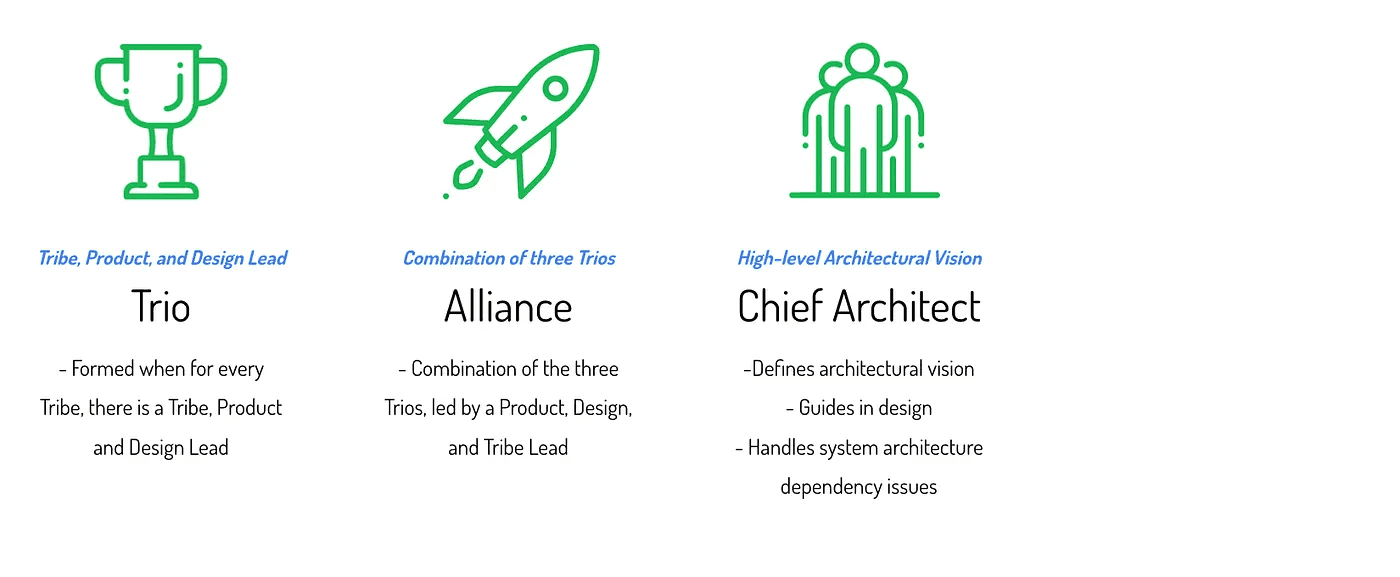
Spotify's Scaling Agile model famously has multiple elements that were designed to better organize collaboration from individual feature teams (squads) to higher levels of management.
Benefits from the Spotify Model
- Less formal process and ceremony
- More self-management and autonomy
- Decentralizing decision making
- More transparency and experimentation
- Solving problems in high-trust environment
Not the End of the Story
Spotify has since reinvented their design collaboration throughout the years, including a very public migration to Figma. Although their workflow was optimized for autonomy, designers can still end up working in isolation, have inconsistencies, and problems with file-sharing when using Sketch.
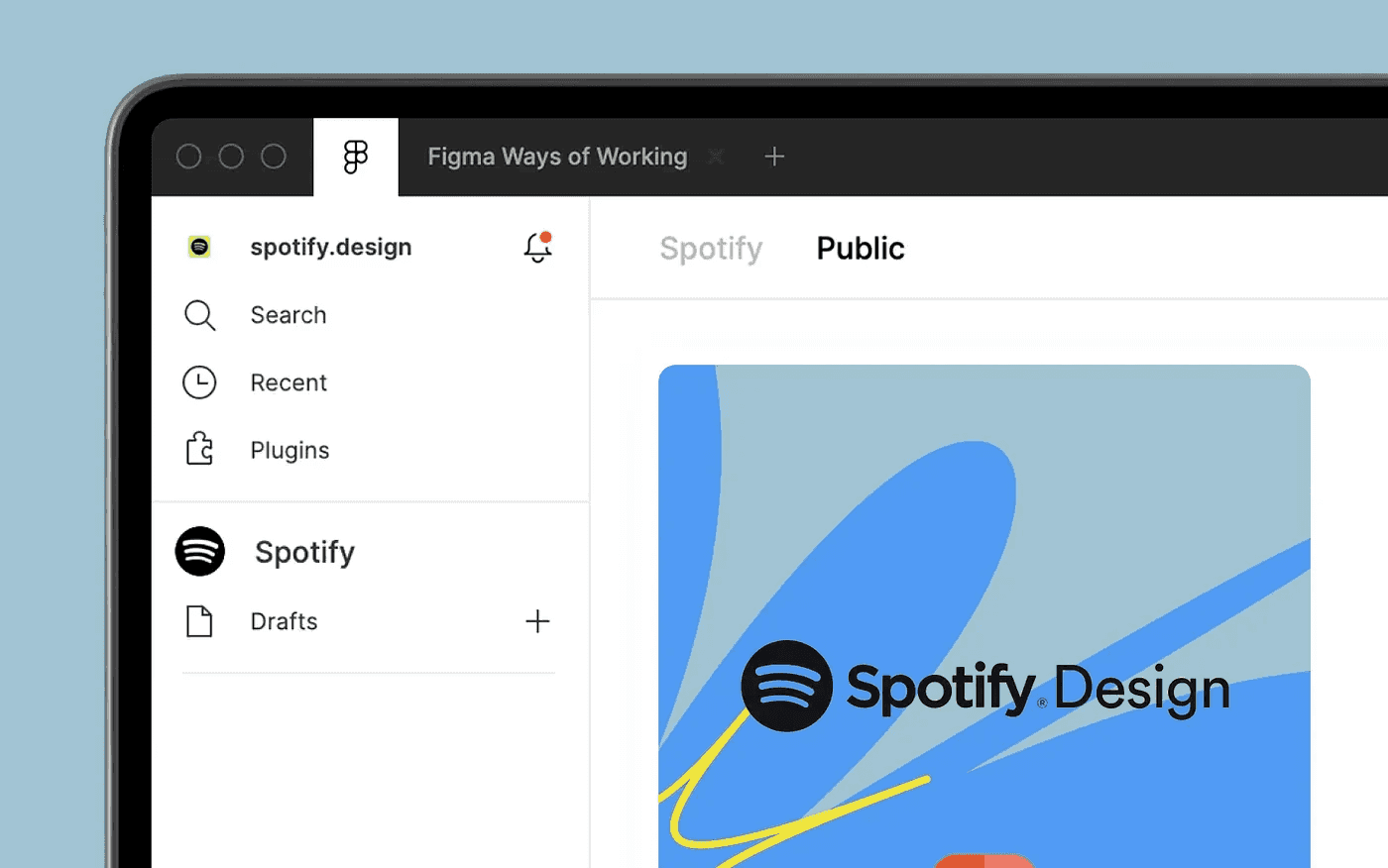
How Figma helped their design workflow:
- Multiplayer mode for collaboration
- Single source of truth — live files, one platform for all designs and prototypes
- Powerful pattern library — easy integration with their encore system to find components they need easily
It comes to show that Spotify will adapt their workflow to address the most pressing needs. Many companies switched from Scrum to Agile because they would like to release their products fast and they keep the software development curve in mind.
In Spotify's case, they gave as much autonomy as possible towards its people, allowing teams to pick their development and workflow tools. The result was that their teams were able to pivot and adapt quickly, release early and often. With a compatible behaviour and culture in place, Spotify gave its teams the best opportunity to succeed.
Sources
- Atlassian. (n.d.). The Spotify model: Atlassian. https://www.atlassian.com/agile/agile-at-scale/spotify
- Denning, S. (2018, August 06). What Does It Mean To Scale Agile? https://www.forbes.com/sites/stevedenning/2016/04/15/what-does-it-mean-to-scale-agile/
- How Spotify Organises Work in Figma to Improve Collaboration. https://spotify.design/article/how-spotify-organises-work-in-figma-to-improve-collaboration
- On Spotify's strengths and challenges. https://exde601e.blogspot.com/2014/12/on-spotifys-strengths-and-challenges.html
- Spotify. (2021, February 17). https://en.wikipedia.org/wiki/Spotify
- Spotify Newsroom. (2021, February 08). https://newsroom.spotify.com/company-info/
- What I Learned Scaling Design at Spotify. (2016, December 12). https://marvelapp.com/blog/scaling-design-at-spotify/
Note: This research was conducted by Judy Hu and this project guide was created by her professor, Jayson Jay.