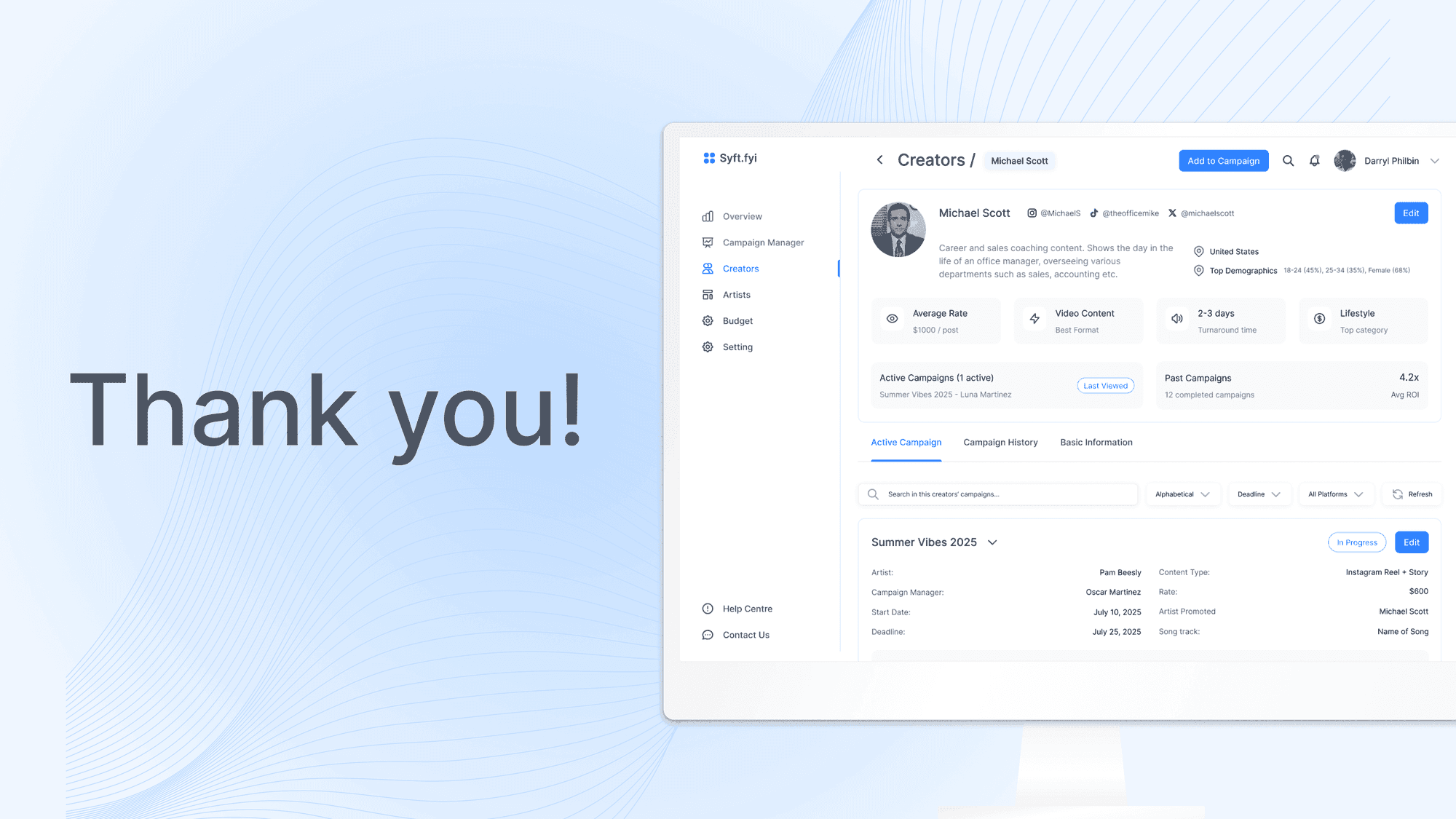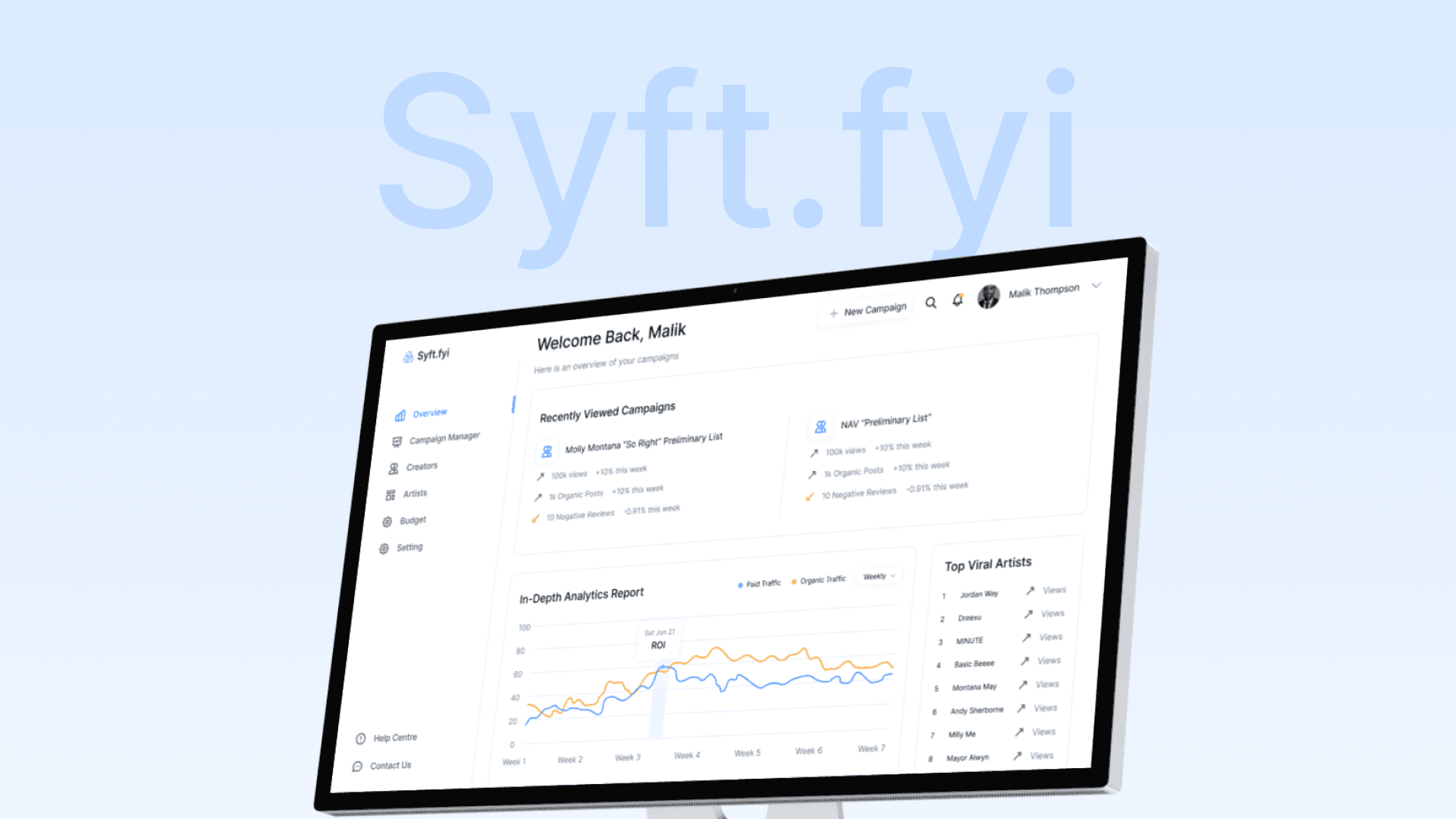
Case Study
GDUSA UI/UX Design AwardSyft, Campaign Tracking & Creator Management Platform
Syft brings order to the chaos of music marketing by replacing scattered spreadsheets and DMs with a centralized platform for campaign tracking, creator payments, and performance insights.
- My Role
- First Design Hire (Sole Designer)
- Timeline
- June – October 2025 (5 Months)
- Focus
- Dashboard experience, design systems, AI-assisted analytics, branding
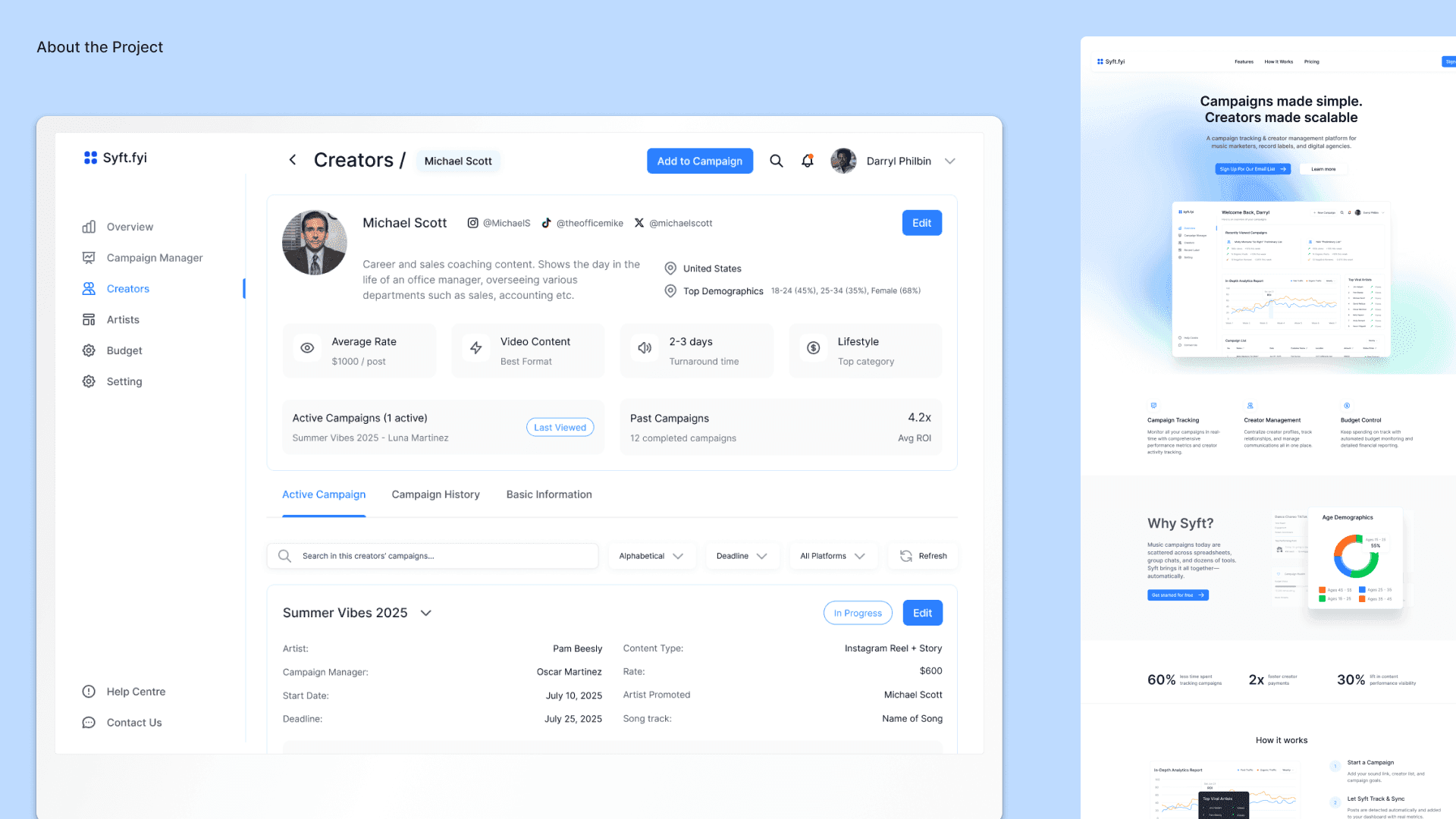
The Challenge
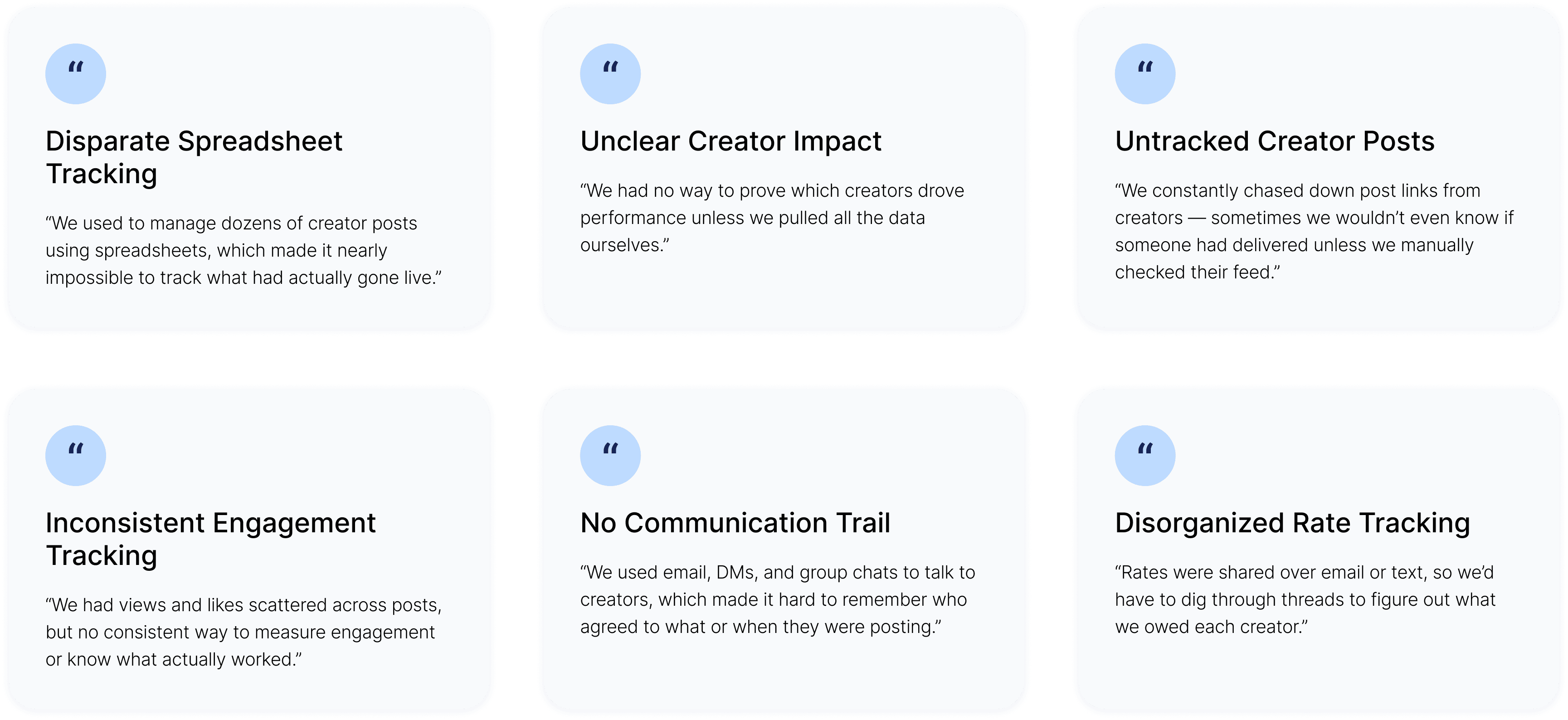
Music marketing teams manage campaigns across dozens of creators, platforms, and payment cycles — mostly through spreadsheets, email threads, and DMs. There's no single source of truth. Deliverables get missed, ROI is unclear, and paying creators on time becomes a manual scramble.
Problem
Music marketing teams rely on scattered spreadsheets and DMs to manage campaigns, leading to missed deliverables, fragmented data, unclear ROI, and disorganized creator payments.
Solution
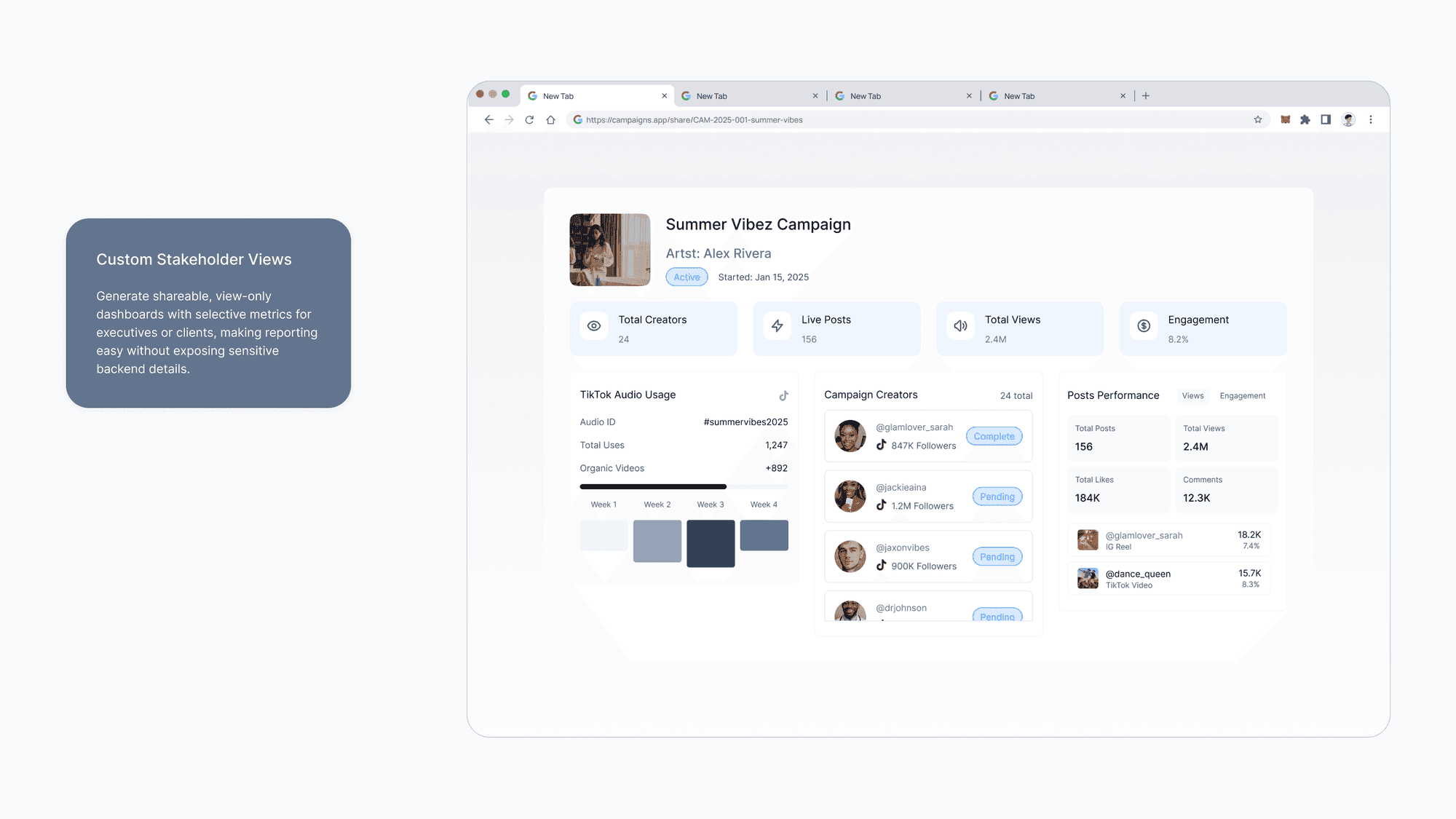
Syft offers a centralized platform to streamline campaign tracking, automate post syncing, manage creator payments, and surface performance insights — replacing manual chaos with clarity and control.
Work I Owned
Product Design (E2E). As the first and sole designer, I led the end-to-end design of Syft's MVP — from initial requirements through product strategy, UX flows, UI design, and QA-ready Figma prototypes.
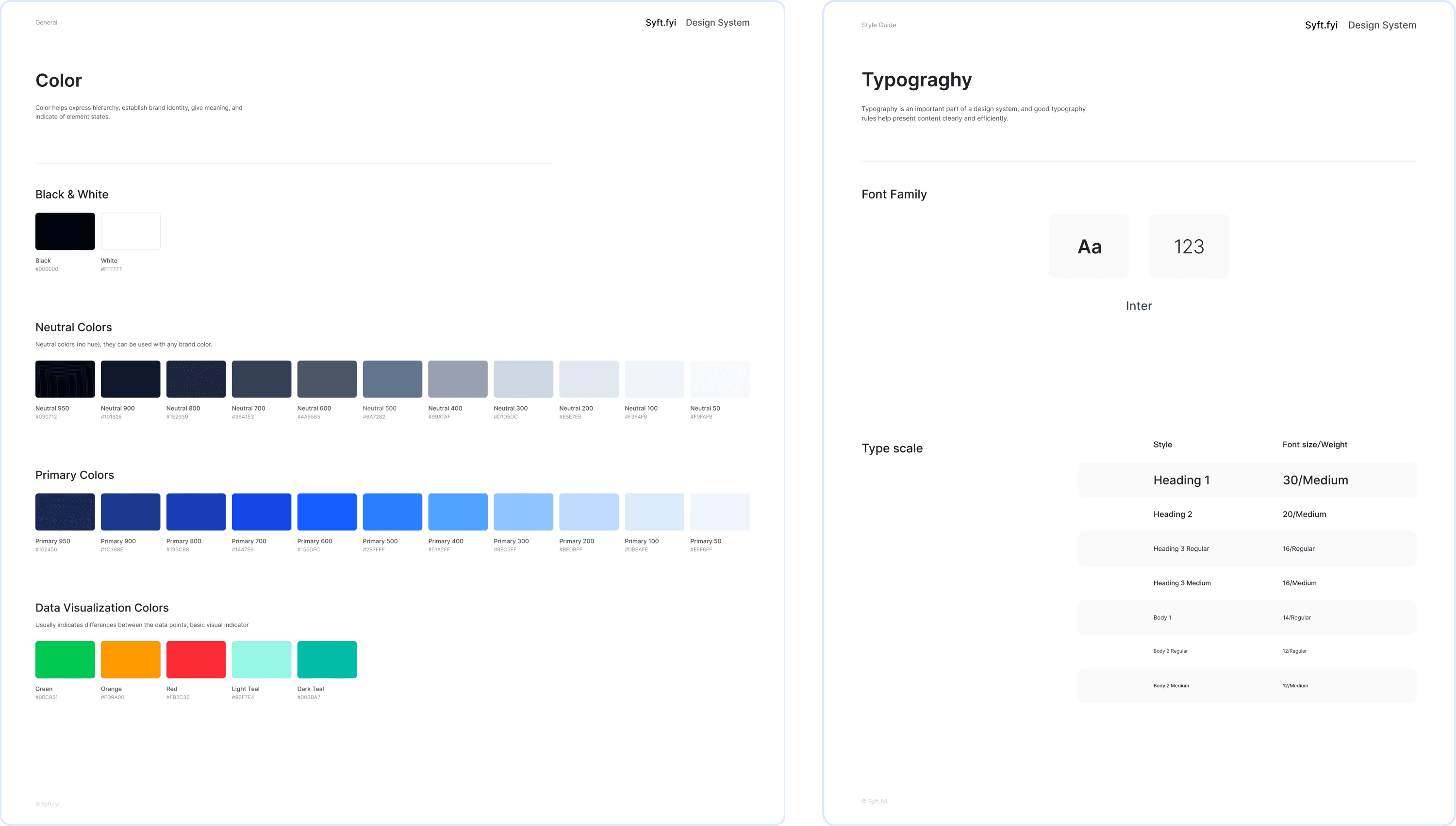
Design Systems. I built Syft's first scalable UI system in Figma to support rapid iteration at an early-stage startup. This included creating reusable components and establishing design tokens and visual style direction.
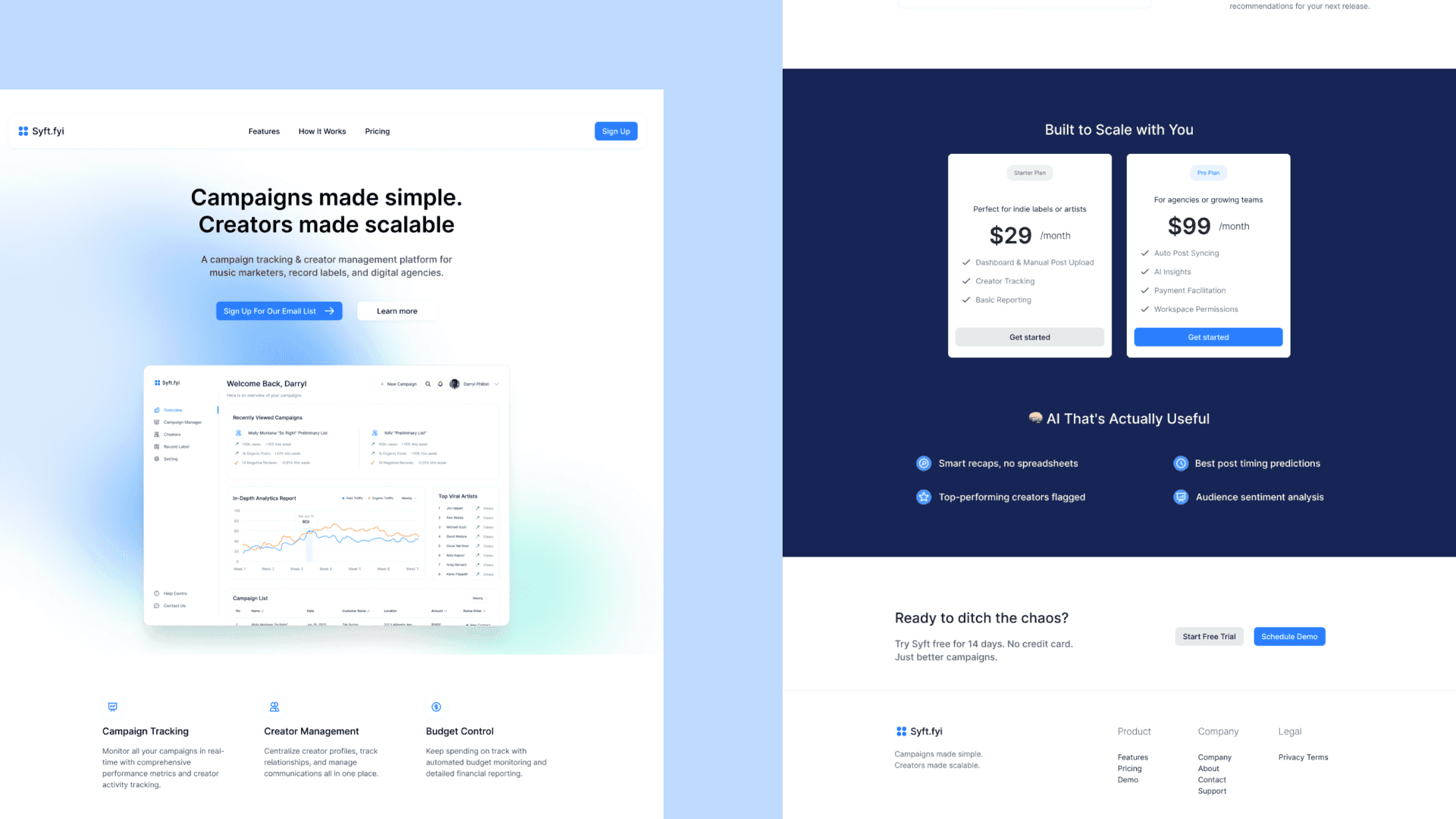
Brand and Marketing. Alongside product work, I created Syft's first landing page, pitch deck assets, as well as marketing and ad content.
Design Thinking
I took a user-centered design approach, beginning with insights from subject matter experts to understand real-world campaign challenges. I worked closely with the product manager and engineers, using the product requirements document to stay aligned on priorities and technical constraints. From there, I mapped workflows, explored solutions, built prototypes, and prepared the designs for upcoming usability testing.

Subject Matter Expert Insights
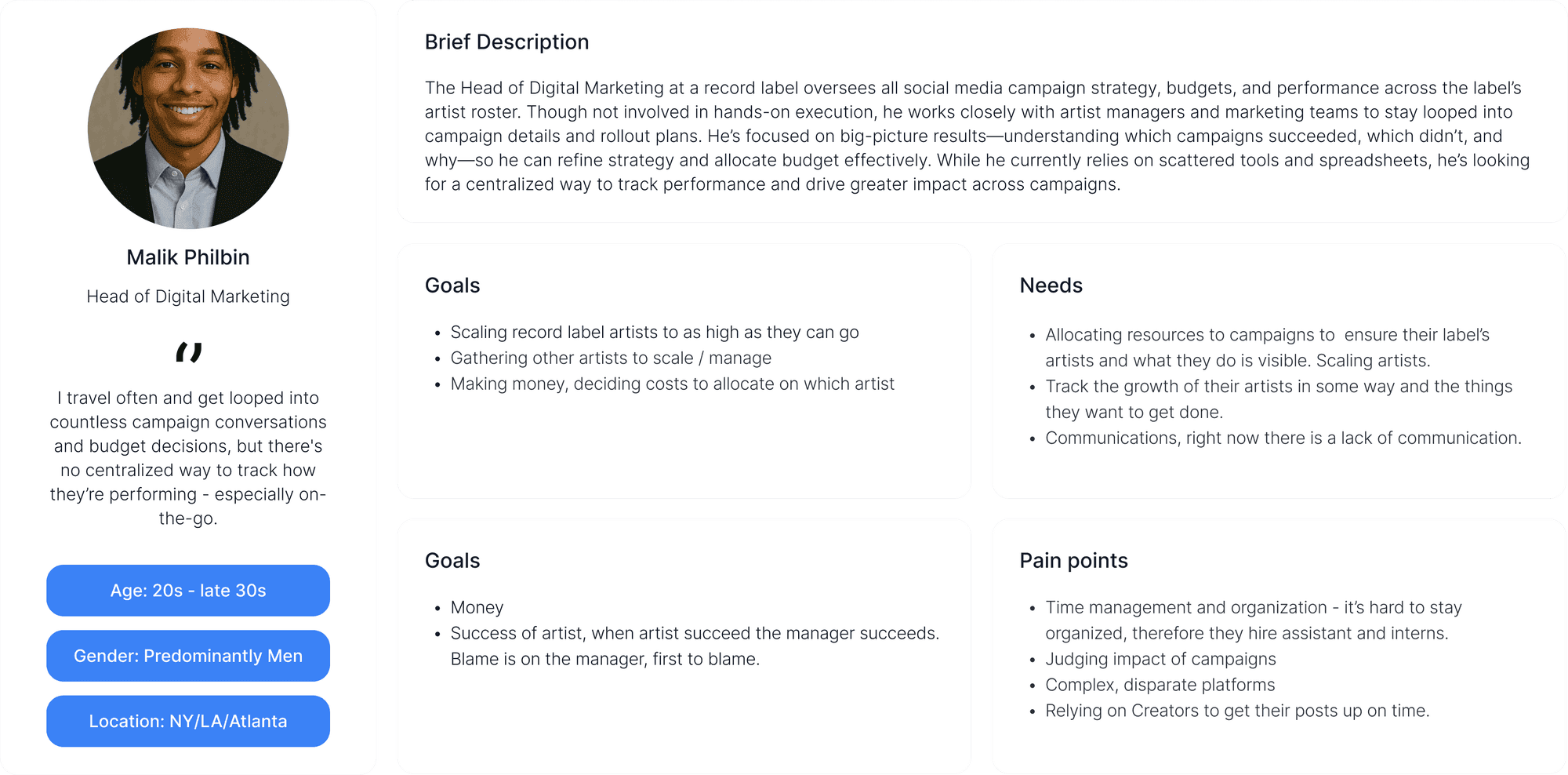
User Persona: Head of Digital Marketing, Record Label
Process & Key Decisions
Scoping the MVP
Early on, we had an ambitious feature set: real-time analytics, automated creator discovery, advanced reporting, and more. Through user research, it became clear that users needed the fundamentals first: reliable campaign tracking, a clear creator overview, and streamlined payment management. We deprioritized the "nice-to-haves" to focus on the workflows that were causing the most day-to-day pain.
This was a deliberate product decision, not a compromise. Solving the core problem well mattered more than shipping a feature-rich product that half-worked.
Designing the Dashboard
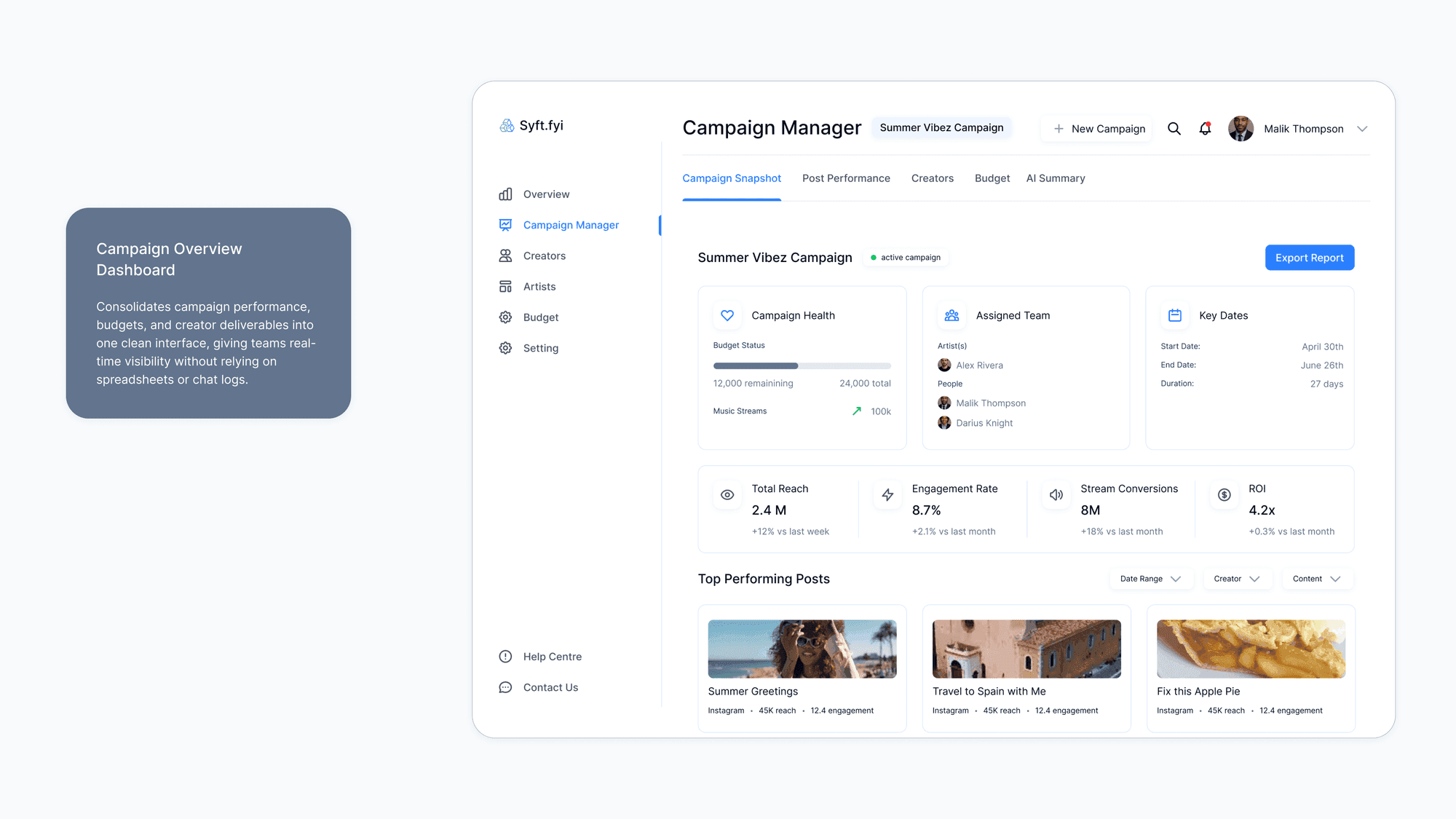
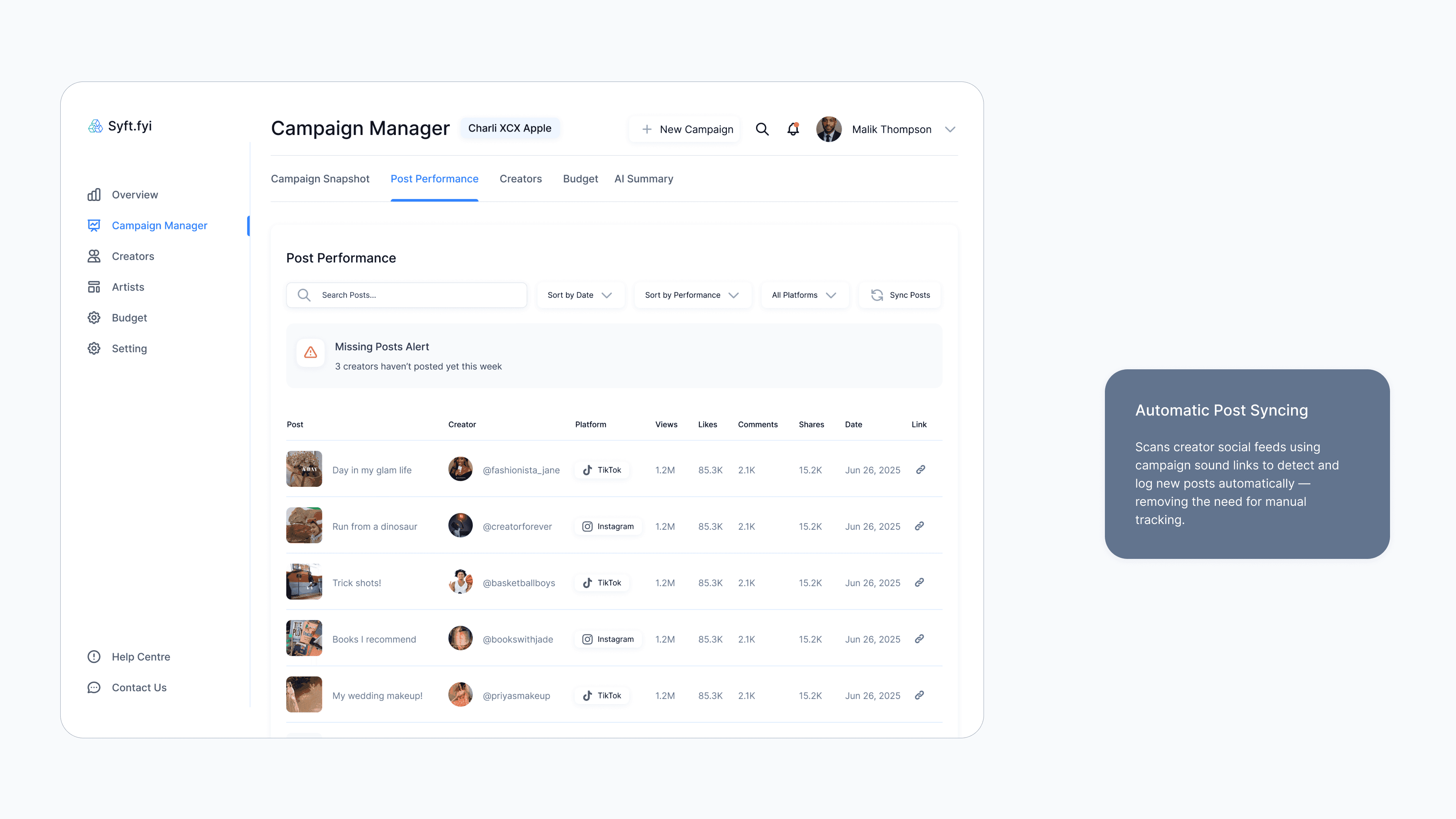
The central challenge was information density. Campaign managers need to see a lot of data, but showing everything at once creates the same overwhelm they were already experiencing in spreadsheets. I designed a progressive disclosure model: key metrics surface immediately, with the ability to drill down into creator-level and post-level detail on demand.
Logo
The Syft logo represents interconnected building blocks, reflecting the platform's goal of bringing together scattered pieces of campaign data, creator collaboration, and performance tracking into one cohesive system. Its geometric, modular form echoes our product vision: clarity, structure, and scalability in a chaotic industry.
Brand Direction
For the visual direction, I anchored on four principles:
- Modern & Clean. Crisp typography, generous whitespace, no visual clutter.
- Energetic & Professional. Vibrant blues that feel alive but still credible to label executives.
- Data-Driven, Not Overwhelming. Dense information surfaces that stay legible through hierarchy and progressive disclosure.
- Mobile-First Mentality. Every flow designed to work on the go, since campaigns don't wait for desktop.
Core Features
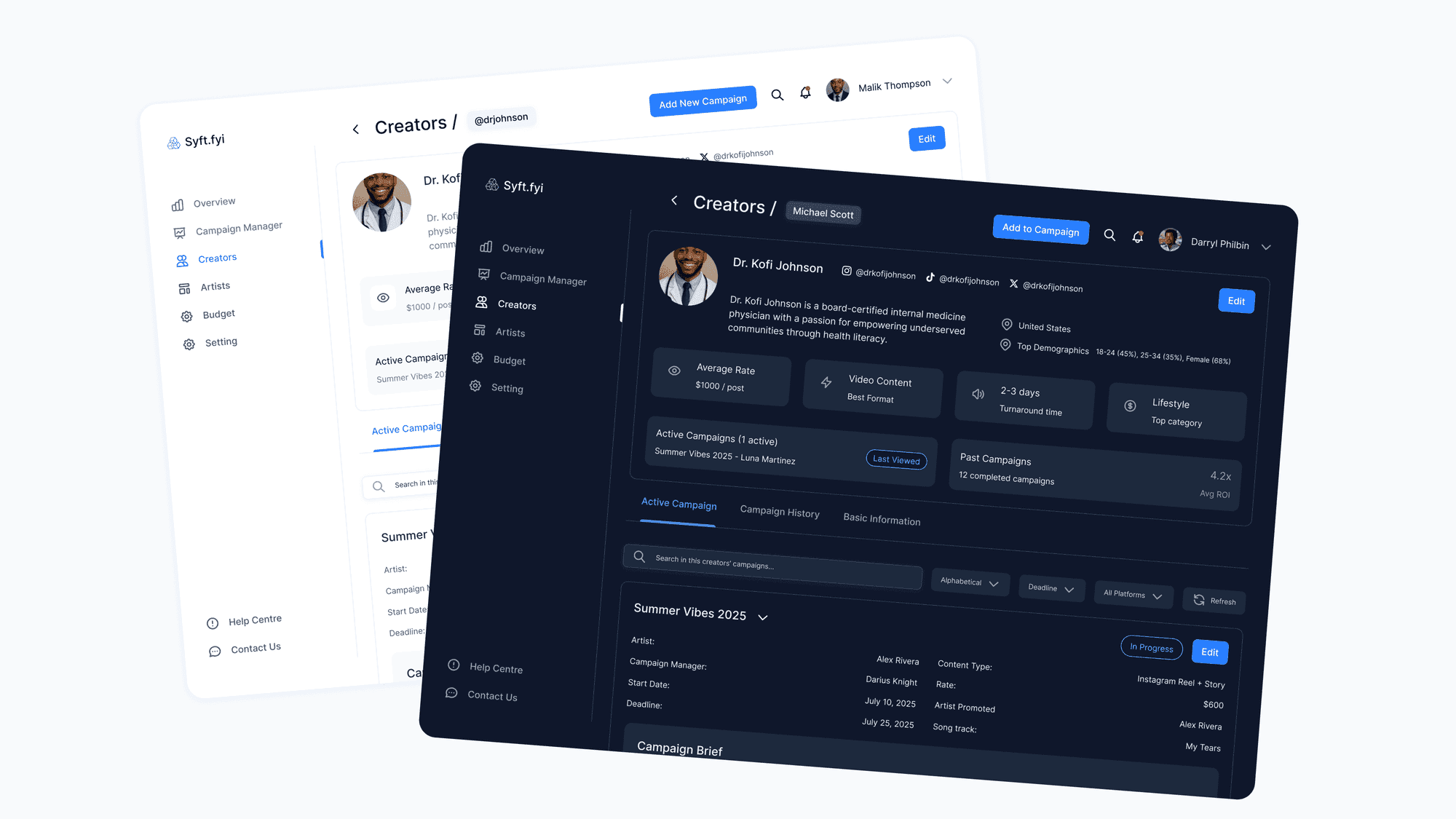
- Campaign Manager: create, track, and close out campaigns in one place
- Creator Database: searchable roster with rates, past performance, and contact history
- In-Depth Analytics: weekly ROI, paid vs. organic traffic, top-performing artists
- Payment Tracking: status at a glance, from contracted through paid
Design System
A complete UI system (color, typography, spacing, and components) built in Figma to support rapid iteration as the team scaled.
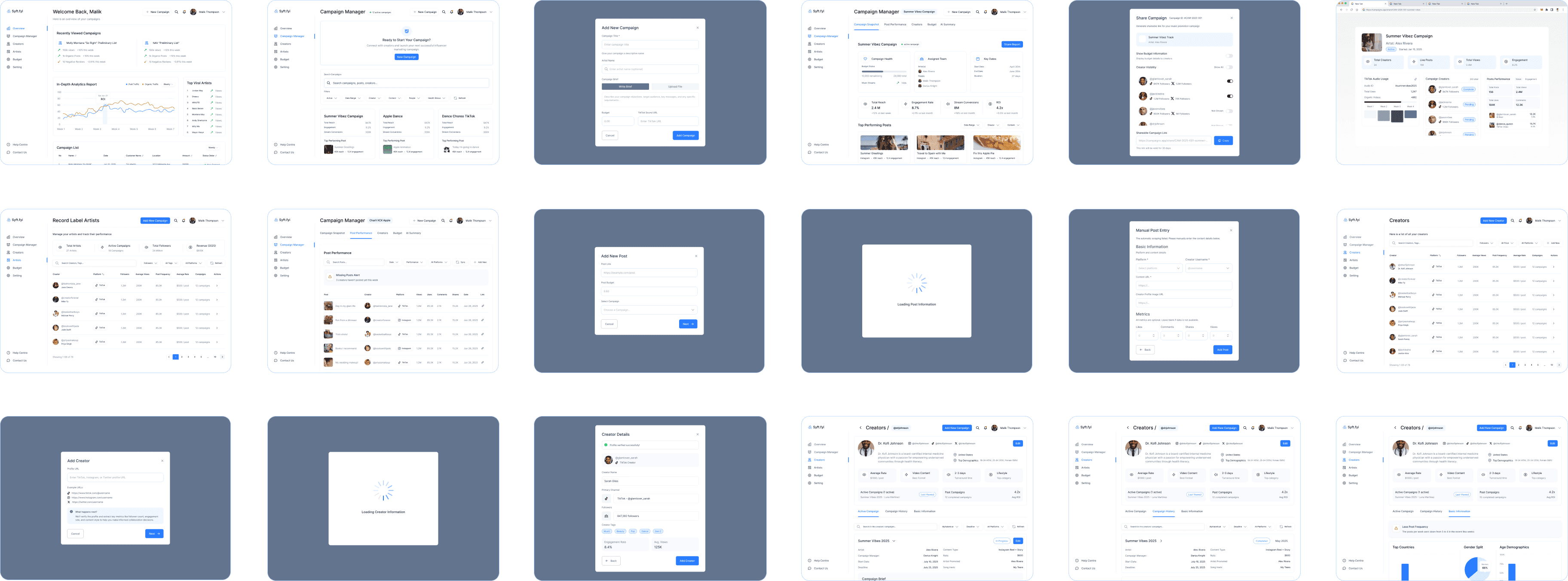
Prototype Walkthrough
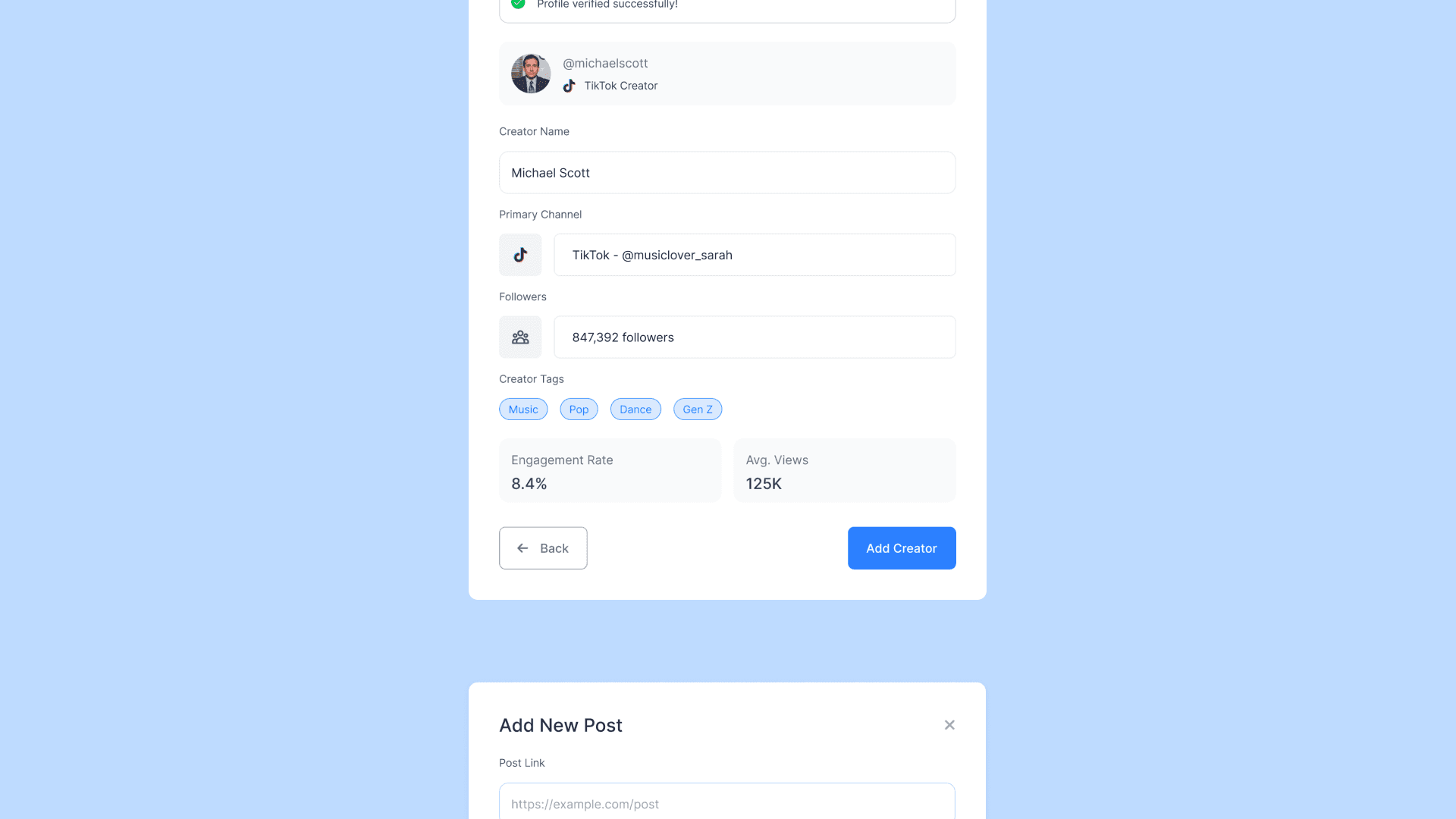
Screens: Landing Page → Onboarding
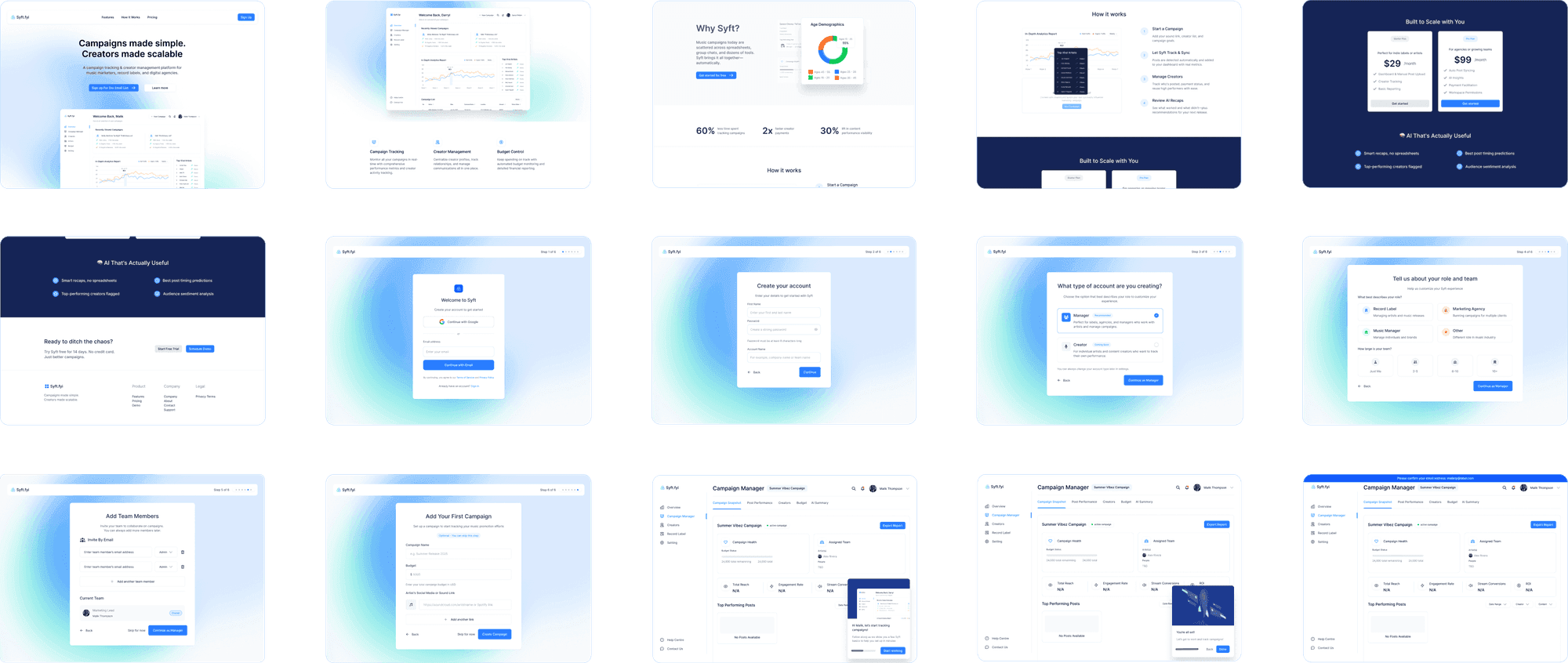
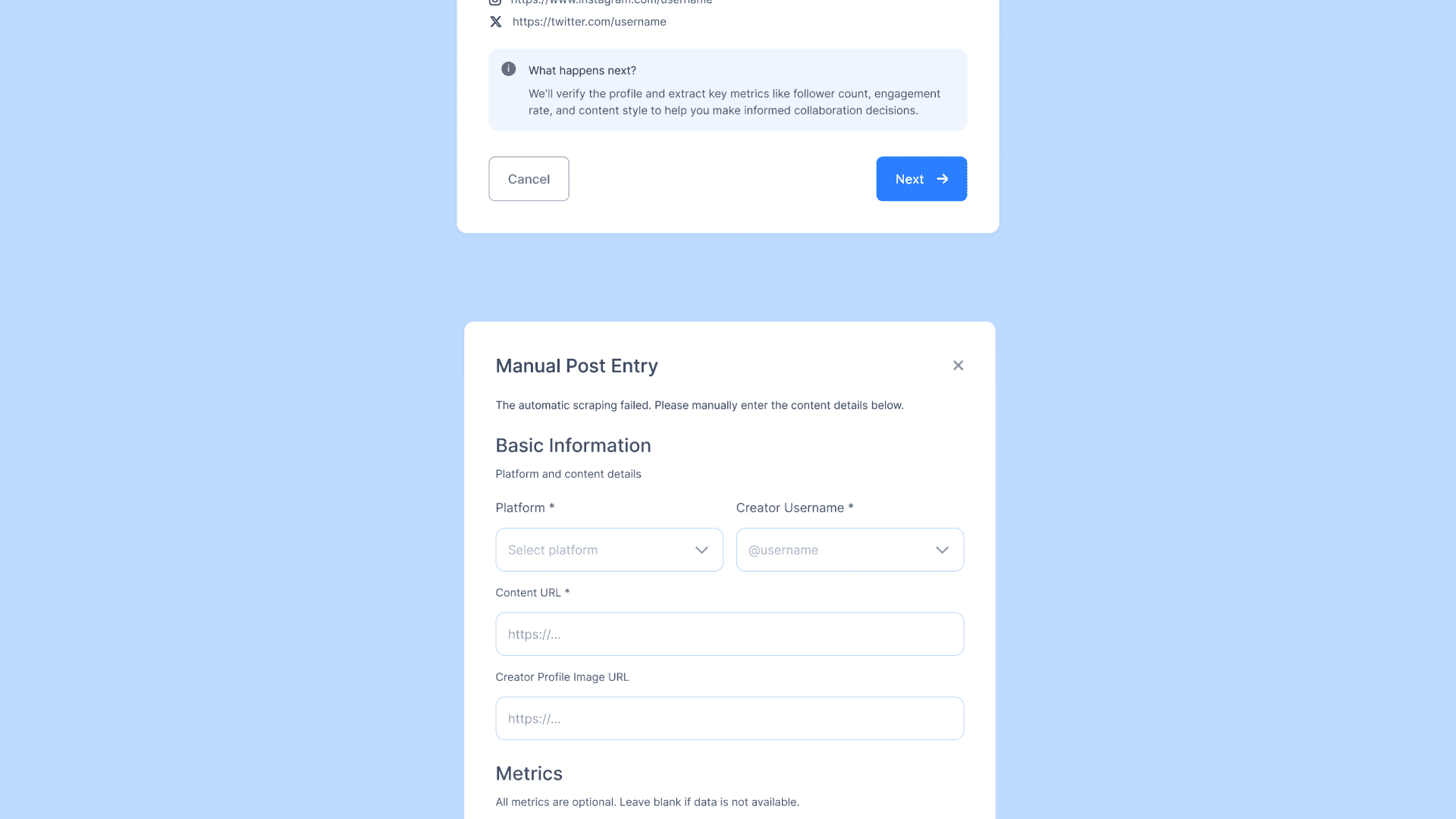
Screens: Existing User Dashboard → Modal Flows
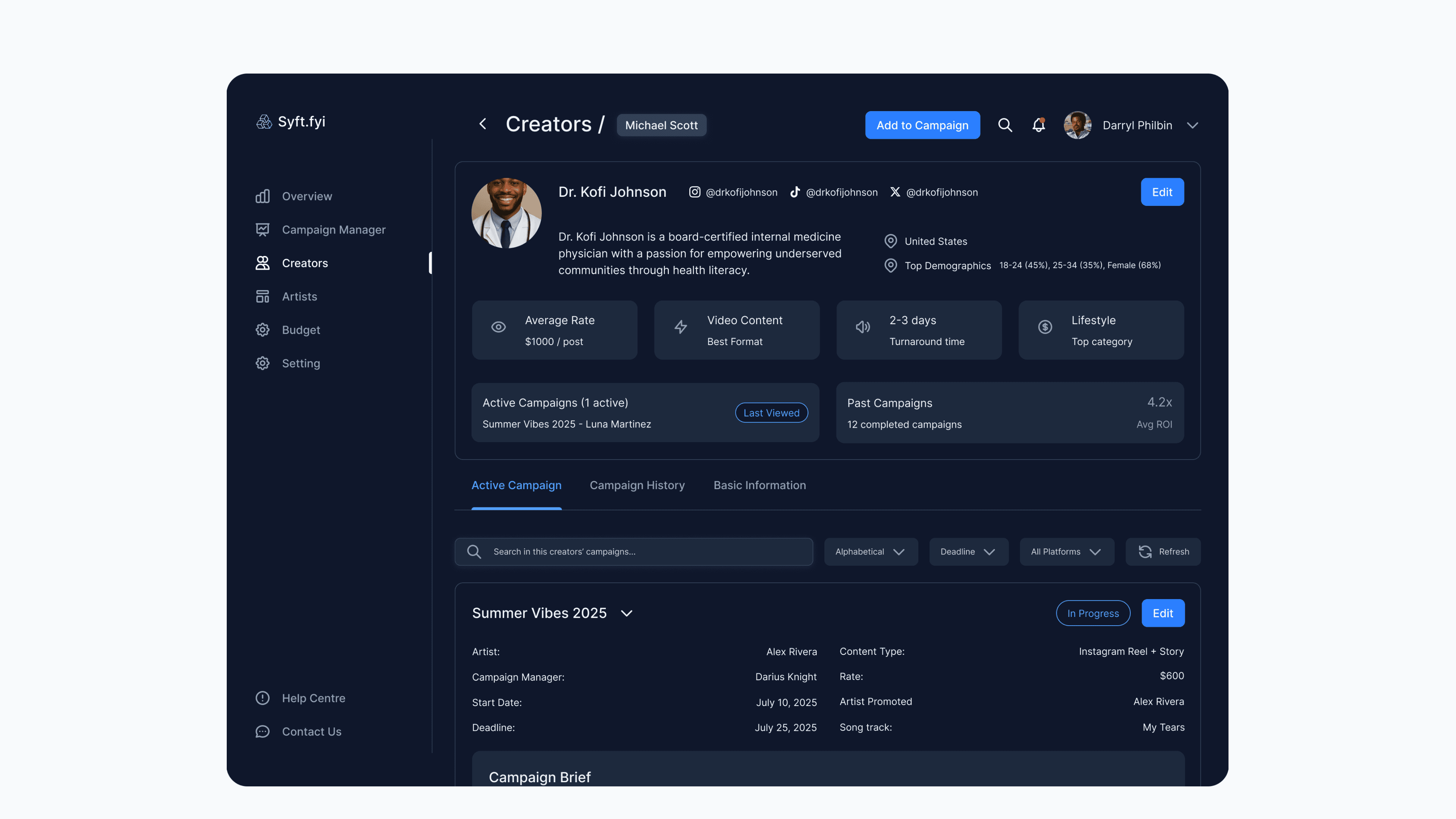
Dark Mode
Reflection
Joining as the first designer meant I wasn't just designing screens. I was establishing how design worked at the company. I introduced structured design process, built the component library from scratch, and earned enough trust from the founding team to influence product direction alongside the PM.
The MVP hadn't launched by the time my engagement ended, but the full design system and QA-ready prototypes were handed off to engineering and are being built. If I were to do it again, I'd push to run usability testing earlier in the process to prompt more iterations driven by customer feedback, not just the founding team.