Case Study
Social Comparison on LinkedIn
This UX Research project investigates whether user's experience social comparison on LinkedIn. If they do, we would like to learn the effects of it on the users. This project was done as a part of my studies at Sheridan College.
- My Role
- Researcher on a team of two
- Deliverables
- Research Plan, Executive Summary, Presentation
- Timeline
- 12 weeks, Fall term 2020
Table of Contents
- Research Plan — Background, Goal, Hypothesis, Methodology, and Participants
- Analyze Data — Highlights from Executive Summary
- Synthesize Data — Affinity Diagram, Insight Statements, and Solutions
- Reflection — Summary and reflecting on initial project goals
Research Plan
Background
Our problem and area of focus is social comparison. We are interested in determining if users experience social comparison on the social networking platform LinkedIn. We are interested in undertaking this research because we think it's important to explore how people react and feel when they experience social comparison. This is an important topic to research because of the effects social networking can have on a user's mental health and emotional wellbeing.
Goal
Our goals for this research are that we hope to uncover if users experience social comparison on the social networking platform LinkedIn. If they do, we would like to see how they feel and react when they experience social networking. We also hope to gain insights on how LinkedIn affects a user positively or negatively when reviewing others' profiles.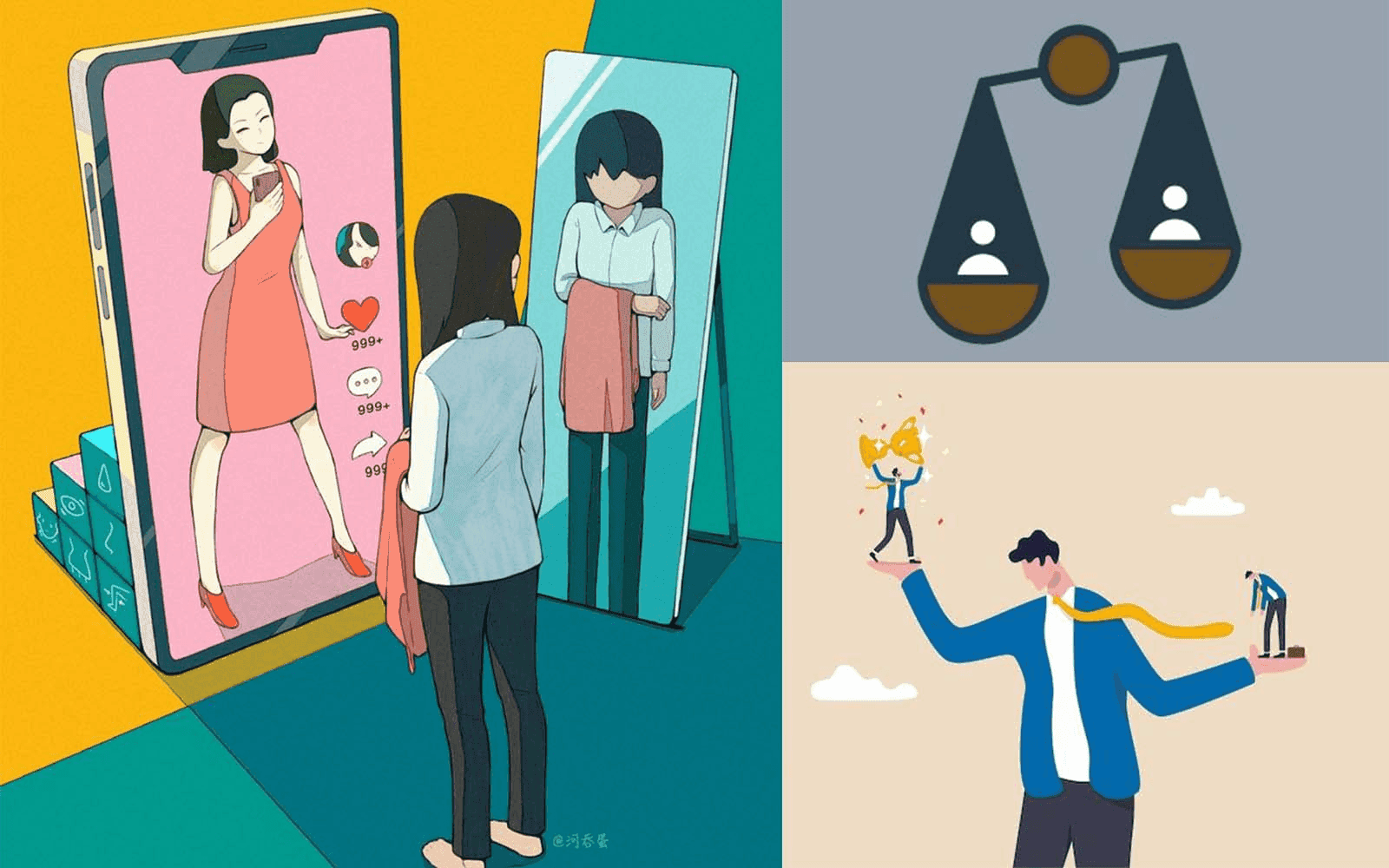
Hypothesis
Team hypotheses
Positive effectSocial comparison on LinkedIn can affect users positively — they compare peer profiles and improve their own.Negative effectSocial comparison can affect users' mental health and wellbeing negatively when they compare peer profiles with their own.Assumptions
Viewing triggerSocial comparison on LinkedIn happens when users view others' profiles.Identity projectionIt can lead to users projecting a professional identity, to the point where it's a false or exaggerated representation of themselves.DiscouragementIt can lead some users to become discouraged and depressed when viewing other people's profiles.UniversalSocial comparison happens to everyone, to varying degrees.Career motiveUsers use LinkedIn primarily to improve career prospects.Methodological Approach
Qualitative Surveys — We can use qualitative surveys to ask open-ended questions to a random sample of participants directly on LinkedIn.
Follow-up Interview — After a participant completes the qualitative survey, there will be a 10 minute follow-up qualitative interview where we can probe for more information.
Analyze Data
Most users are only checking LinkedIn weekly and yearly, with a noticeable number of daily and monthly users.
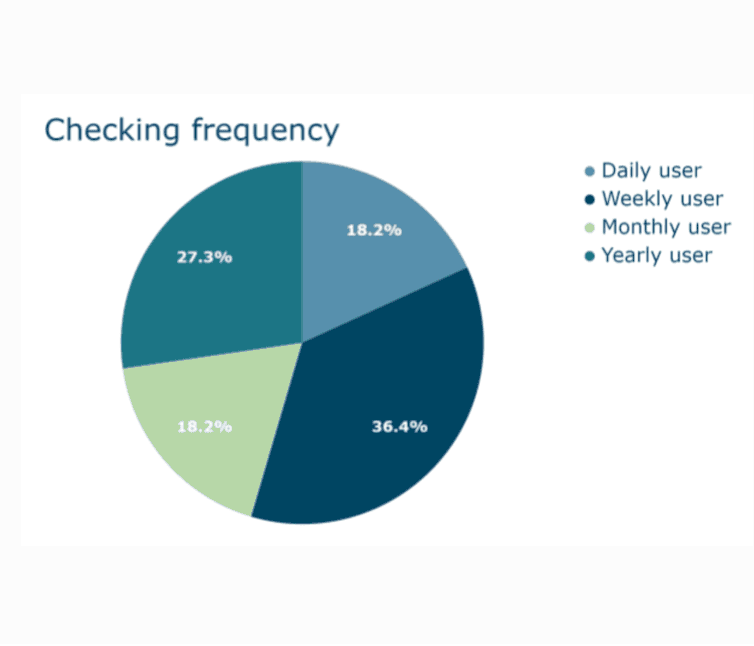 How often participants check LinkedIn.
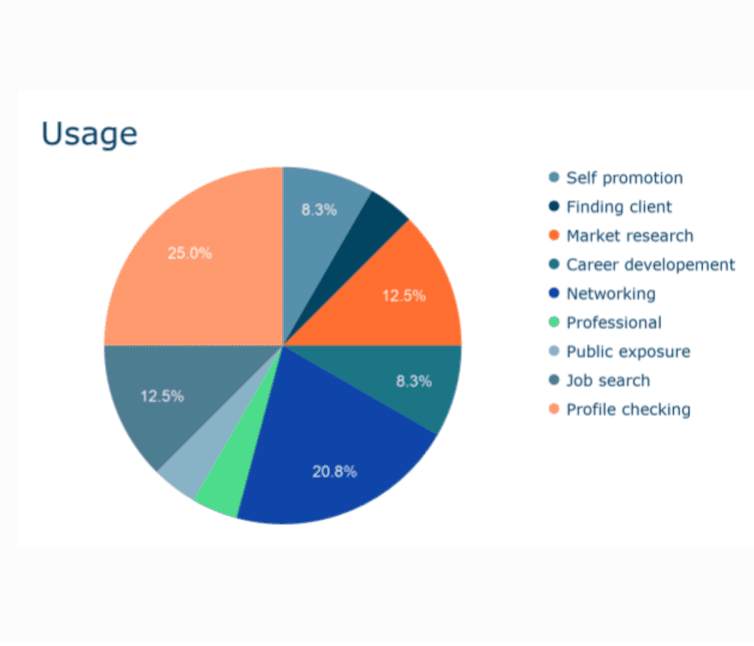 What participants use LinkedIn for.
LinkedIn users were generally interested in looking at one's education, accomplishments, skills, and images first — then bio, headlines, certifications, position, and interests. People mostly use LinkedIn for profile checking and networking, but also for career development, job search, and self-promotion.
What participants use LinkedIn for.
LinkedIn users were generally interested in looking at one's education, accomplishments, skills, and images first — then bio, headlines, certifications, position, and interests. People mostly use LinkedIn for profile checking and networking, but also for career development, job search, and self-promotion.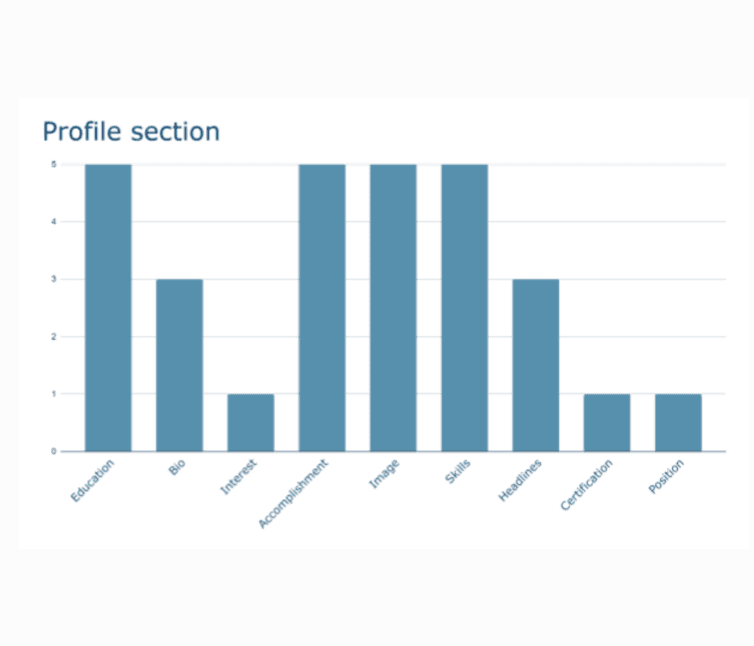 The overall impression of LinkedIn amongst the participants was positive — but every participant also expressed experiencing negative emotions relating to LinkedIn. Most negative emotions related to social comparison or spam; most positive emotions related to networking opportunities, job opportunities, gaining public recognition, seeing peers' success, or organized work history.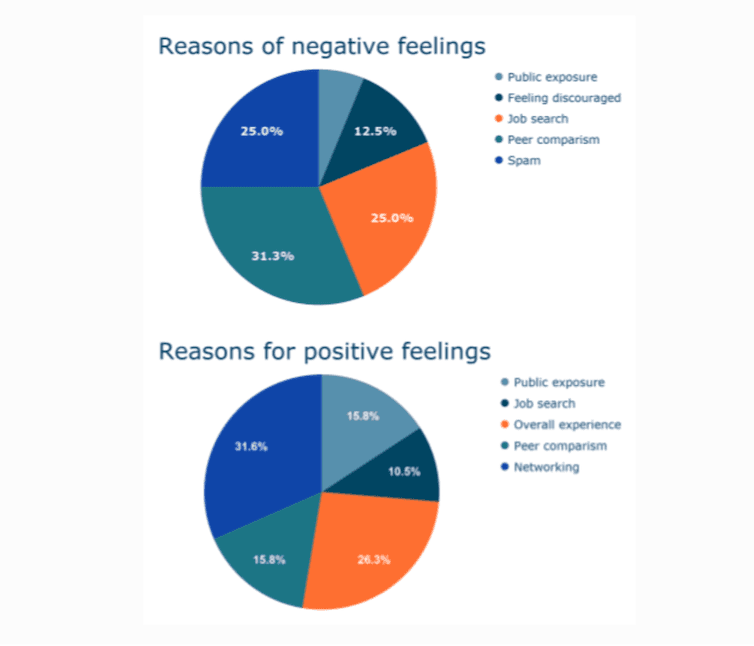
Data Overview
LinkedIn usage is categorized into the following 3 categories from our coding results:
- Job search — using LinkedIn for the direct purpose of acquiring a new job.
- Networking — using LinkedIn as a means of communication and staying in touch with others.
- Professional platform — using LinkedIn for professional activities unrelated to connecting with others or directly finding jobs.
Most participants use LinkedIn in all three of these categories to varying degrees.
Synthesize Data
To make sense of the coded interview data, we mapped how social comparison cascades through LinkedIn usage. The diagram traces both branches — positive feelings that increase engagement, and negative feelings that decrease it — and how each loops back into "Consequences" that shape future behaviour.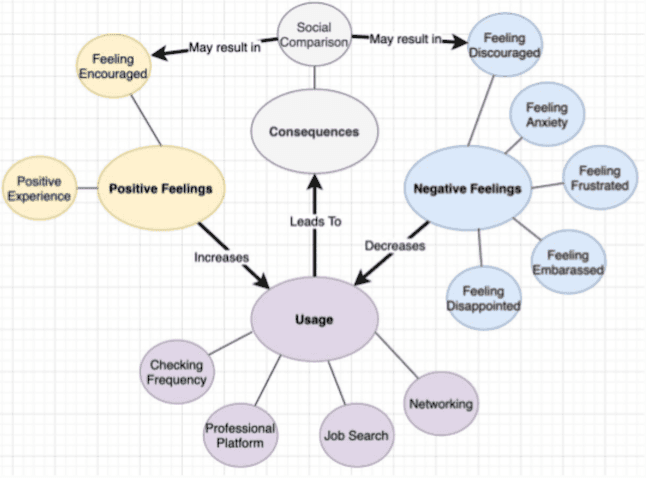
Affinity Diagram
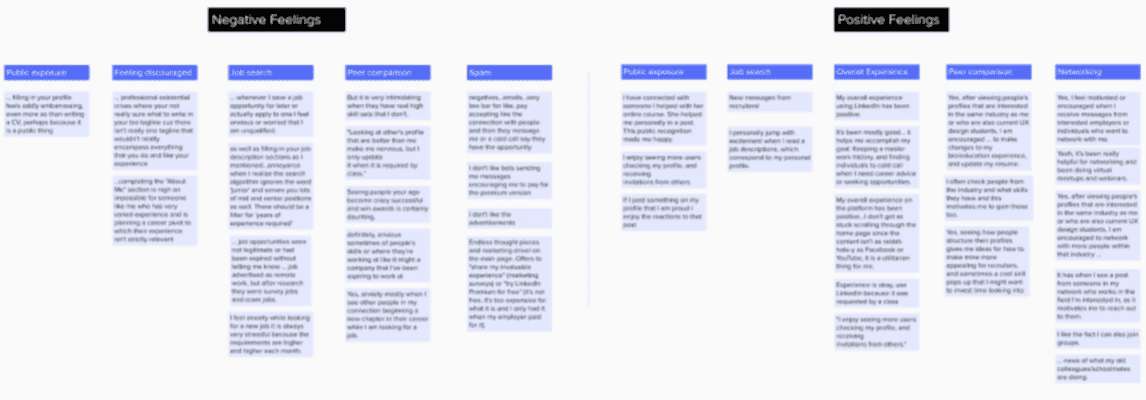
We used an affinity diagram to sense make our coding data. This was organized according to the coding sheet's themes and codes.
Insights
Insights for Networking Usage:
- Users want to network on LinkedIn because they enjoy keeping in touch with peers and people in the industry, but when they see other people's successes, they feel anxiety or other negative emotions.
- Users want to connect with professionals in their field so they can acquire a job, but when people don't respond or refuse their application they would experience negative emotions.
Insight for Public Exposure Usage:
- Users want to build a network on LinkedIn because they want to garner exposure for their own profile, but sometimes they feel self-conscious about their profile.
Insight for Checking Profile Usage:
- Users want to review others' profiles because they want a reference for building their own profile sections, but seeing peers' recent achievements and awards leads to feelings of inferiority.
Insight for General Usage:
- Users want to keep using LinkedIn because the platform is very functional, but with few alternatives for professional social networking platforms, participants feel that it could be a more enjoyable experience.
Solutions
Motivational messagingLinkedIn can promote messages encouraging users to not compare based on achievements. Everyone is at different stages of their life and career path; it's important to focus on their own progress. This positive messaging should be highlighted in InMail messages, feed highlights, and LinkedIn Learning video recommendations on mental health.Virtual profile critiqueA LinkedIn feature for one-time mentor critique sessions, similar to what's becoming common in the design community. It would let users be less self-conscious about their own profile when they realize there's a supportive community willing to help at all stages of profile development.Small group networkingA more personal community-building experience. From our data, users do not experience social comparison as much with close connections. Similar to Instagram's close friends, LinkedIn could let people create a small circle of connections to focus on professional growth together.Reflection
Summary
- Reflecting back upon initial research goals, we were able to establish the validity our hypotheses through our data.
- From the insights, we can see that users are being positively affected by social comparison and improving their own profile. We were able to establish that social comparison on LinkedIn may affect users' mental health and wellbeing negatively when users compare peer profiles with their own profiles.
- All of our assumptions from the secondary data were found to be reasonable in informing our original hypotheses.
- We found that the coding diagram was the most useful deliverable in helping to analyze and synthesize the early versions of data. This built the foundation we needed to create the insight statements.
- Our solutions were able to cover all of our insight statements.